Get in touch with FlexBlanket Company

Pipe Process Heating
Industrial Pipe Process Heating: Duty-Led Method Selection and Custom-Built Electric Heaters
Freeze protection, viscosity control and process temperature maintenance are the three industrial pipe process heating duties, not three names for one: each fixes a different set point, a different load and a different tolerance for drift, so each prices differently. Settle the duty first, then choose between four methods:
-
01/
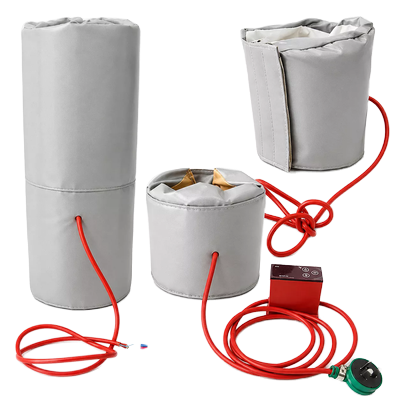
Removable electric surface heater — built by FlexBlanket to your drawings
-
02/
Heat trace cable — same resistance trace heating family; not supplied by FlexBlanket
-
03/
Steam tracing — needs an existing steam header and a trap maintenance programme
-
04/
Jacketed pipe — specified with the pipe, not retrofitted to it
Built to your pipeline drawings
Production in 7–15 days
120 VAC / 230 VAC
Send Your Drawing for a Quote
Start With the Three Duties
A dimensioned sketch or an annotated photo starts an engineering review as well as a drawing does.
- Production lead time
- 7–15 days for the released configuration
- Documents
- Proforma invoice, sales contract, commercial invoice, packing list, certificate of origin
- Supply voltage
- 120 VAC / 230 VAC; other voltages built on request
- Temp uniformity
- ±2 °C (±3.6 °F) with the PTFE-coated fiberglass jacket
- Min bending radius
- 0.5 cm (0.2 in), so the pad follows valve and flange contours
Three Pipe Heating Duties and What Each One Changes
Quotations stall when an enquiry says “heat this line” without naming the duty. Freeze protection guards an asset idle most of the year, viscosity control keeps a viscous liquid pumpable, and process temperature maintenance holds an industrial process variable to a written specification — each changing the engineering before anyone calculates a watt.
| Duty | Who sets the set point | What decides the load | Duty cycle | How tight the control has to be | Cost of getting it wrong | What sets the ΔT |
|---|---|---|---|---|---|---|
| Freeze protection | The freezing point of the fluid plus a margin — not the process | Design minimum ambient temperature and the insulation already on the line | Intermittent and seasonal; off for most of the year | A band is enough — the line has to stay above a threshold, not sit on a number | Burst pipe, lost containment, unplanned shutdown | Threshold temperature minus design minimum ambient |
| Viscosity control | The pump and the fluid’s viscosity curve | Line volume, throughput and the mass that has to be restarted from cold | Continuous while the line runs, with a heavier restart load | A window wide enough to keep the fluid moving | Cavitation, a blocked line, an off-specification batch | Target pumping temperature minus ambient |
| Process temperature maintenance | The process engineer, from the product or reaction specification | Steady-state heat loss at the process temperature | Continuous | Closed loop on a measured point | Product quality outside specification, and re-work of the batch | Process temperature minus ambient |
Why the duty label belongs on the enquiry
01
Freeze protection is an asset-protection utility duty. On refinery and petroleum sites it is budgeted, inspected and abandoned differently from process heat, and it often sits with the utilities group rather than the process owner.
02
Oil and gas industry drawings routinely carry both duties at once — a freeze-protected instrument or water line running beside a heated product line. Tag them separately or one circuit gets sized against the wrong problem.
03
An oil refinery sampling or additive line can move between duties with the season. Say so on the enquiry and the control philosophy is quoted once instead of twice.
04
On generating plant, NERC EOP-012 defines a Generator Cold Weather Critical Component as one susceptible to freezing and critical to the unit’s operation. Quoting the Joint Inquiry Report, NERC attributes most February 2021 outages and derates to freezing of instrumentation, transmitters, sensing lines or wind turbine blades.
SYS.EVAL / 09
PROJECT EVALUATION
SUBMIT PHOTO
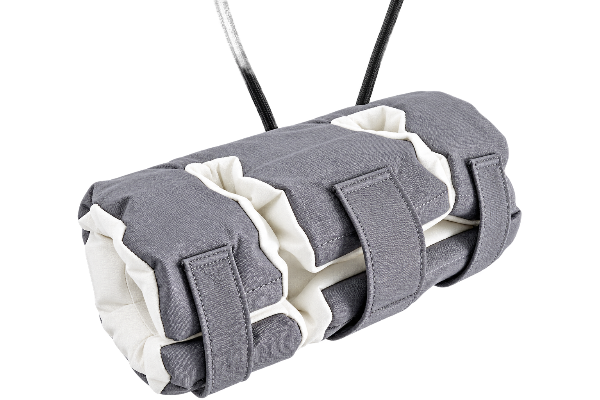
Send a photo of the pipe section and we will say whether a removable blanket fits before you produce a drawing.
Heating Methods for Process Lines
and Where Each One Fits
Four methods heat a process line. Geometry and future access usually decide between them well before wattage does.
| Method | How heat reaches the pipe | Geometry it suits | Maintenance access | Who owns the design | When it wins | Do we supply it |
|---|---|---|---|---|---|---|
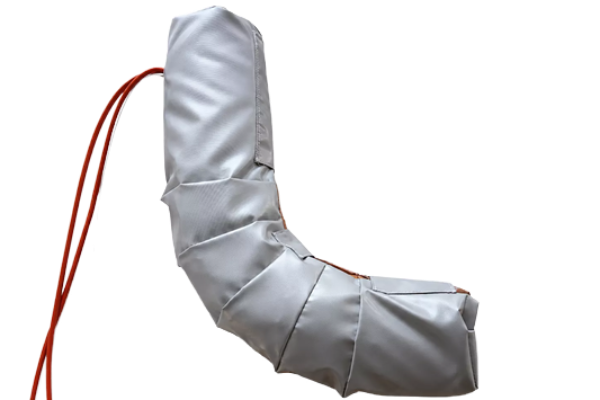
| Removable electric surface heater | A resistance element laminated into a shaped pad clamped against the surface | Valves, flanges, pumps, elbows, instrument bodies and short runs | Unfastens and refits without cutting insulation open | We work from your drawing; you own the process data and the electrical supply | The item is an awkward shape, or it has to come off for service | Yes — this is what we build |
| Heat trace cable | A resistance or self-regulating heating cable run along the pipe under separate insulation | Long, simple runs of consistent diameter | Cladding and cable are opened along the length of the run | A tracing designer sizes circuits, panels and controls against the site tracing standard | Hundreds of metres of straight pipe under one control philosophy | No — FlexBlanket does not supply heat trace cable |
| Steam tracing | A steam-based tube strapped to the pipe, sized by condensate load and steam trap capacity | Long runs a steam header already reaches | Traps and tubing need a standing maintenance programme | Plant utilities and piping engineering | Steam and trap maintenance already exist and electrical supply is the harder problem | No |
| Jacketed pipe | An outer pipe carrying steam or hot fluid around the process pipe | New construction on a fixed route | Replacing it is a piping job, not a heater job | Piping design — it belongs in the line specification | The line is being designed now and the heat is permanent | No |
In the current standards taxonomy a blanket and a cable are two forms of one family: IEC/IEEE 62395-1:2024 covers electrical resistance trace heating systems, and its scope names surface heaters such as heater pads and panels alongside cable. That scope excludes explosive atmospheres, which is why classified areas are handled separately below.
Tell us the maintain temperature and the design minimum ambient and we will name the core material and the jacket that apply.
Corrosion under insulation is the access argument
A Petroleum Safety Authority study reported by Norway’s regulator Havtil found corrosion under insulation behind roughly half of the hydrocarbon leaks recorded at onshore facilities. Havtil later reported that operators were qualifying inspection technology that checks pipe condition without stripping intact insulation; the lesson here is to treat inspection access as a design requirement, not to claim that any heater product prevents corrosion.
Counting factors beats arguing the general case
The factor review one level down lists the conditions that push a line toward a pad or toward cable and returns a count. It recommends nothing and calculates no heat loss.
Open the blanket versus heat trace factor review
// This matrix settles method selection. It does not size power — that comes from a heat-loss calculation against the design record set out below.
Control and Protection Decisions Made Before the Purchase Order
Indication, electric current and delivered heat are three different measurements. A display shows what one sensor sees, an ammeter shows the circuit is drawing current, and neither of them proves the pipe reached temperature. A line can read normal on the panel and still fail its duty.
| Decision the order settles | Which device measures what | What happens at the limit | Who resets it |
|---|---|---|---|
| Where the control temperature is taken | A thermocouple or RTD at a stated position on the pipe or on the pad | The controller modulates against that point and nothing else | Automatic, inside the control band |
| Whether anyone can see the circuit is live | Real-time current and temperature monitoring on the supply | An alarm or trip signal; monitoring adds no heat of its own | Set by the control panel you specify |
| What stops a runaway | A mechanical over-temperature switch, independent of the controller | The circuit opens | Confirm at order whether it self-resets or latches for manual reset |
| Whether the signal leaves the skid | An output to a distributed control system (DCS) instead of a local display only | Your distributed control system logic, not ours | Your operators |
Answer those four rows on the enquiry and ask for the control scope to be listed line by line, so the written quotation shows what is and is not included.
PID temperature control, current and temperature monitoring and the mechanical over-temperature switch — a thermostat, which opens on a switch point rather than holding a set point — are separate functions. Put the selected functions on the quotation rather than treating them as defaults; their supplied forms are described on the Pipe Heating Blankets page.
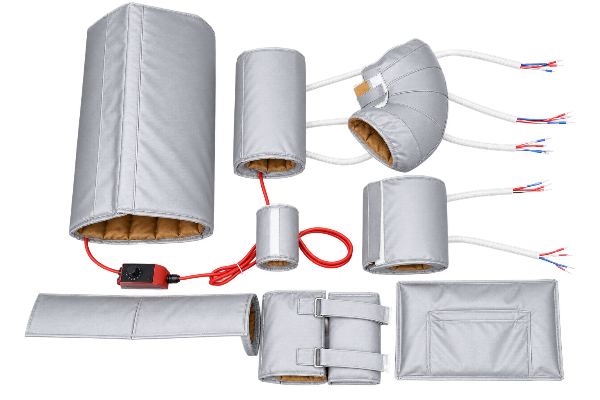
Specification and Supply Envelope
Every row below is a supply envelope: it is not a performance promise for your line, and is not a substitute for the heat-loss calculation that sets your wattage.
| Specification | Value | What it binds on your order |
|---|---|---|
| Supply voltage | 120 VAC / 230 VAC | Built to the voltage on the order; other voltages are built on request and confirmed in the quotation |
| Material temperature rating — silicone core | 220 °C / 428 °F | The rating of the construction, not a maintained process temperature |
| Material temperature rating — stitched construction | 300 °C / 572 °F | Same basis; the construction is selected against the exposure you state |
| Material temperature rating — high-silica core | 400 °C / 752 °F | Same basis; 400 °C is the top of the temperature range we build to, and above it we quote a different method instead of a hotter blanket |
| Surface temperature uniformity | ±2 °C / ±3.6 °F | Applies to the PTFE-coated fiberglass jacket configuration; uniformity is what keeps hot spots off a heat-sensitive fluid |
| Minimum bending radius | 0.5 cm / 0.2 in | The pad follows flange faces and valve bodies without a filler piece |
| Plug rating | 15 A (EU / UK / US) | Fitted as supplied unless the order calls for a hard-wired lead |
| Jacket options | PTFE-coated fiberglass or flexible PTFE | The quotation should identify the jacket selected for the stated exposure |
| Process maintain temperature | Set per application from a heat-loss calculation | The quotation should state the calculated figure and its assumptions rather than a catalogue maximum |
| Power rating | Sized to the maintained temperature and the pipe’s thermal load | The order should state the selected wattage; a change in pipe size or insulation requires review |
Pricing and Lead Time
A shaped heater is quoted against its drawing. Require the written quotation to identify the geometry, construction class, jacket material, control scope, quantity and any assumptions used to reach the price.
| Driver | Effect on cost | How to reduce it |
|---|---|---|
| Number of distinct shapes | Ask whether each unique geometry needs separate pattern or tooling work | Group genuinely identical items under one drawing revision |
| Construction class | Higher temperature exposure changes the material construction | State the real maximum exposure instead of selecting by catalogue maximum |
| Control and protection options | Ask for each selected function to appear in the written scope | Decide which functions the site will operate before order release |
| Jacket material | Ask the quotation to identify the jacket grade for each exposure zone | Separate chemically exposed sections from ordinary service |
| Stage | Lead time | What it covers |
|---|---|---|
| Production | 7–15 days | The released configuration at the ordered quantity |
Production is scheduled at 7–15 days for the released configuration. A written quotation confirms the schedule for the actual order; prototype availability, charges, transit and payment terms are confirmed there rather than assumed here.
How your quotation is produced
-
01
Send the drawing or an annotated photo with outside diameter, heated length, cutouts and the duty.
-
02
Require the quotation to state the proposed construction, wattage basis, control configuration and assumptions.
-
03
Review and approve the drawing revision before production release.
-
04
If a prototype is requested, put its availability, fit checks, charges and schedule in the quotation before release.
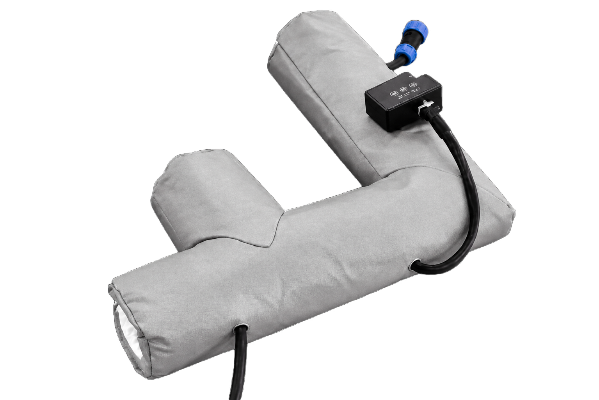
Pattern count and lead time planner
Paste the tag list to see how many distinct geometries may need separate pattern or tooling review.
Quality Records and Shipping Documents
A factory record and an installed-system acceptance are two different things. Before order release, require the quotation to state which checks create a factory record and which installed-system checks remain with the site.
[01]
Put the inspection record on the order
- Identify the drawing revision, dimensions, cutouts and lead exit that the supplier will inspect.
- State the electrical measurements and acceptance criteria that will appear on the factory record.
- List the control and protection functions that require a powered check.
- Name the dimensional, labelling and document records that must accompany release.
[02]
Material test record
The PTFE jacket fabric we specify was tested under SGS report AJFS2411014511FF to Fed. Test Method Standard 191A, Method 5903.1, with 0 s after-flame, 0 s afterglow and 11 mm average char length. That report covers the fabric sample submitted for the test, and the fabric mill commissioned it.
Ask for SGS report AJFS2411014511FF before you decide; we send the document as issued.
[03]
Documents with every shipment
Every shipment includes a proforma invoice, sales contract, commercial invoice, packing list and certificate of origin. Destination-specific documents are confirmed in the quotation before production.
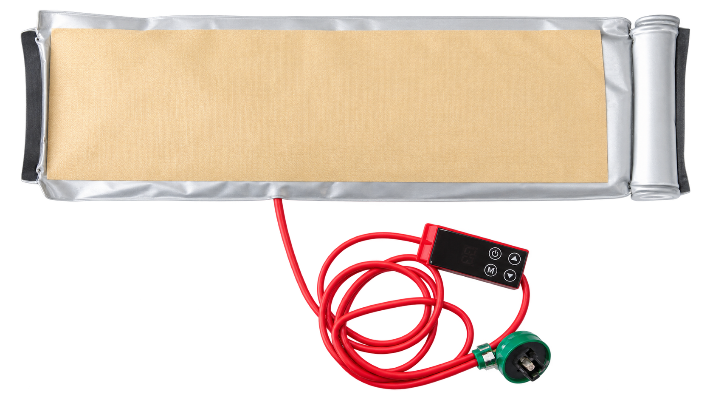
The Design Record That Turns a Duty Into a Quotation
For the quotation, size the heater from a heat-loss calculation tied to the approved pipe, insulation and ambient inputs rather than from a catalogue maximum. If those inputs change, review the wattage before production release. The thirteen inputs below determine the construction, wattage and control configuration; a missing one becomes an assumption.
“Different conditions found during and after installation necessitate different requirements for testing.”IEC/IEEE 62395-1:2024 scope
FIG. 01 / SPEC REFERENCE
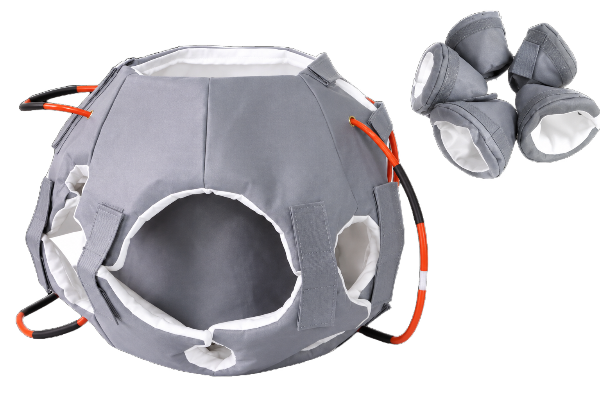
The thirteen inputs
- Outside diameter and wall thickness
- Heated length, or the overall dimensions of the item
- Cutouts for stems, brackets, flange bolts and instrument bosses
- Adjacent components the pad has to clear
- Which of the three duties is being bought
- Target temperature and the band that is acceptable around it
- Design minimum ambient temperature
- Pipe material and the insulation already fitted
- Indoor, outdoor or washdown exposure
- Supply voltage and frequency
- Control and protection options to be quoted
- Sensor position on the pipe or on the pad
- Lead exit direction, lead length and where it terminates
Three approval gates and where disposition is recorded
| Gate | What is decided there | Where responsibility and disposition are recorded |
|---|---|---|
| Drawing approval | Dimensions, cutouts, wattage basis and sensor position | The approved drawing and the commercial terms attached to the quotation |
| Prototype review, if ordered | Fit on the actual item, connector orientation and the agreed fit checks | The prototype scope, acceptance record and revision terms stated in the quotation |
| Production release | The configuration released for the ordered quantity | The approved order, drawing revision and any agreed quality plan |
Every blanket is designed to your pipeline drawings and process requirements, so the record above is asked for before a price, not after.
Design record completeness check — tick the thirteen inputs.Pipe Heating Blankets: Product Card
Once the duty and the method are settled, component-level answers live one level down. That page goes deeper on four things and links back here for the rest.
It does not choose your method or price your line – that is the duty table, the method matrix and the design record above. Specifying at component level before the duty is settled is the mistake that sends a quotation back.
-
01_
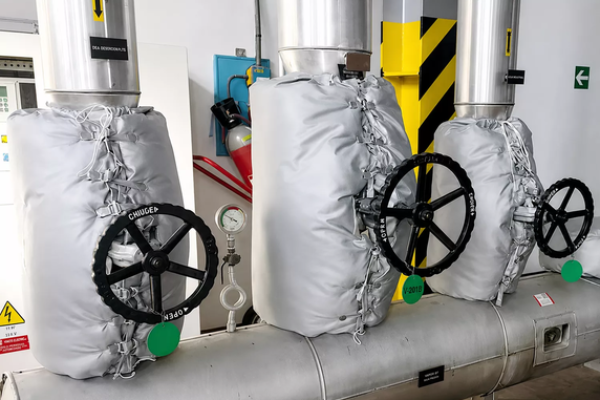
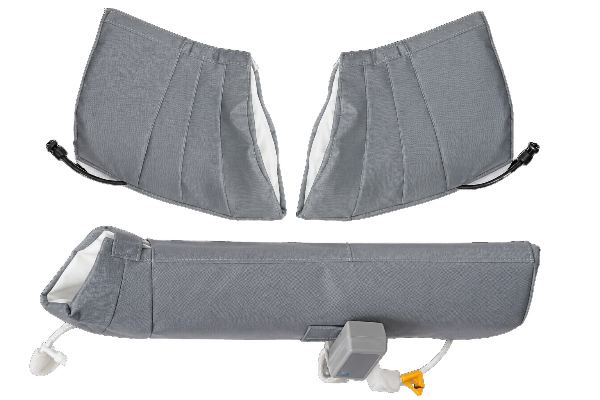
Shaped pieces are cut from the drawing, so elbows and straight runs arrive as one tagged set.
-
02_
Supplied form: closure, lead, plug and, when it is ordered, the inline controller.
-
03_
Awkward bodies are covered piece by piece, with operating points left reachable.
What the product page answers that this page does not
-
Which shape class your item falls into – straight run, elbow or bend, valve and flange, or pump and irregular body – and what changes in each
-
What each jacket material is for, layer by layer
-
How each rating is scoped: what is a material property, what is a quoted figure, and what is only true once the unit is installed
-
Ten product-level questions, from cutting and overlapping to reinstallation after maintenance
When A Removable Electric Heater Is Not The Right Answer
Six situations where a shaped electric heater is the wrong answer, each with the alternative that replaces it. The trade-off is ours to state rather than yours to discover at the fit check, and naming one at enquiry stage costs less.
Why it works against you
A long uniform run gains little from a shaped pad, while every joint between pads adds another connection to maintain
What to do instead
Have a trace-heating designer select an engineered cable system, or use steam tracing where a maintained header already reaches the run
Why it works against you
Construction is selected against the material rating, and there is no hotter fabric to move up to
What to do instead
Take the duty to an industrial process heating designer and choose a different heating method, rather than asking a heater fabricator for a hotter blanket
Why it works against you
Equipment for these areas is approved for a stated class, group and operating temperature. OSHA 1910.307 requires documented classifications to be available to authorized design, installation, inspection, maintenance and operating personnel. For Class I Zone systems, paragraph (g)(4)(i) separately requires classification and equipment selection under a qualified registered professional engineer’s supervision
What to do instead
Have the classification, class, group and temperature code in hand first. Include those documents with the enquiry and we will say plainly whether the item is in scope before anything is quoted
Why it works against you
Electric heating stops when the supply stops. If the steam plant depends on the same failed utility, steam can stop in that outage too, so independence has to be verified rather than assumed
What to do instead
Handle the outage case on its own: drain the line, lag the condensate leg, or put the circuit on the standby supply that already covers freeze-critical loads
Why it works against you
A removable heater is bought for the ability to remove it. Buried, that value disappears and a fault cannot be reached without excavation
What to do instead
Trace heating installed with the line during construction, or a re-route that keeps the heated section accessible
Why it works against you
Heat the process always needs belongs in the line specification, not in an accessory bought afterwards
What to do instead
Jacketed pipe, specified with the process piping. Corrosion risk under field-applied cladding also drops when the heat path sits inside the pipe specification
Pipe Process Heating Engineering Tools
Professional calculation and validation tools to streamline your heating system design workflow.
Duty and Delta T
Calculate the required heat duty and temperature differentials for your specific piping systems.
Open Tool
Design Record Check
Validate your heating system design specifications against industry safety and operational standards.
Open Tool
Construction Class
Determine the optimal equipment construction class based on environmental and operational constraints.
Open Tool
Pattern and Lead Time
Estimate heating cable layout patterns and accurately project your manufacturing lead times.
Open Tool
Is process heating the same thing as freeze protection?
No. Freeze protection holds an idle or intermittently used line above the fluid’s freezing point and is an asset-protection utility duty. Process temperature maintenance holds a process variable to a specification while the line runs. Set point, duty cycle and ownership of the number all differ, so sort the duty before comparing quotations.
How do I choose between electric heating and steam tracing?
The objection raised internally is usually installed cost: tapping an existing steam header looks cheaper than pulling a new electrical supply. Steam wins where that header and a trap maintenance programme already exist, and its running cost then follows the site’s fuel price rather than its electricity tariff. Electric wins where the geometry is awkward, where the item comes off for service, or where no steam reaches the line.
The line is already insulated. Do I still need a heater?
Insulation slows the rate of heat transfer to ambient; it does not add heat. An insulated line still cools to ambient given time, so freeze protection and temperature maintenance both need a heat source. Better insulation lowers the calculated wattage rather than removing it.
Who calculates heat loss and power?
Send the geometry, duty, target temperature, design minimum ambient and insulation. Require the quotation to state who performs the heat-loss calculation, which assumptions it uses and the wattage selected from it.
How is a custom pipe heating blanket priced?
Compare the written scope for geometry, construction class, jacket material, control options, quantity and any pattern or tooling charge. Group genuinely identical items under one drawing revision, then ask suppliers to price the same scope.
Which documents ship with the order?
Every shipment carries a proforma invoice, sales contract, commercial invoice, packing list and certificate of origin. Confirm any destination-specific documents in the quotation before production.
Can you supply for a classified hazardous area?
Bring the completed area classification with its class, group and temperature code. OSHA 1910.307 requires the documentation to be available to authorized design, installation, inspection, maintenance and operating personnel; for a Class I Zone system, paragraph (g)(4)(i) also places classification and equipment selection under a qualified registered professional engineer’s supervision. Attach the classification to the enquiry so the equipment scope can be checked before quotation.
Do you sell heat trace cable?
No. FlexBlanket builds removable electric surface heaters — shaped pads and jackets — and does not supply heat trace cable. Cable and shaped pad are the two forms worth comparing, and the matrix above says which one your line takes.
Can I request a prototype before production?
Ask for a prototype route in the enquiry. Its availability, quantity, fit checks, charges and schedule must be confirmed in the written quotation before production is released.
One line needs both freeze protection and process maintenance. Which duty do I quote?
Quote the more demanding duty and state that the other exists. The tighter control requirement sets sensor position and control philosophy; the colder ambient case usually sets the wattage. Tag both on the enquiry so one circuit is not sized against half the problem.