Get in touch with FlexBlanket Company

Container Heaters for Drums, IBC Totes and Pails
- Quotes returned within 24 hours
- 7-15 days standard lead time
- -20°C to 130°C working range
- 24-month warranty
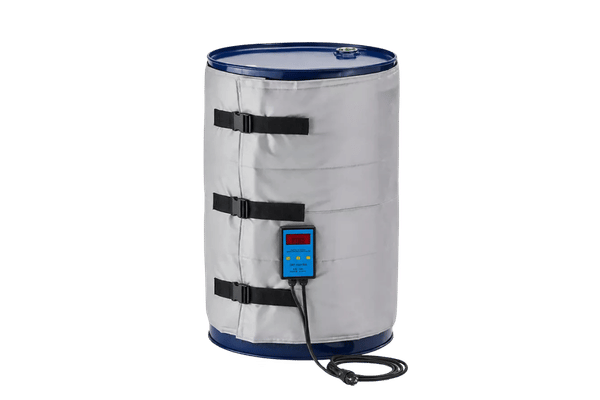
Container heaters wrap the outside of a drum, tote or pail and hold the contents at a working temperature, so viscous product pours instead of sitting in the container. FlexBlanket builds them in Qingdao for pails from 4 L up to 1,250 L caged IBC totes. Send us the container and the target temperature and we return a heater layout and a written quote.
Custom dimensions, voltages and wattages are quoted on request, and single units are accepted.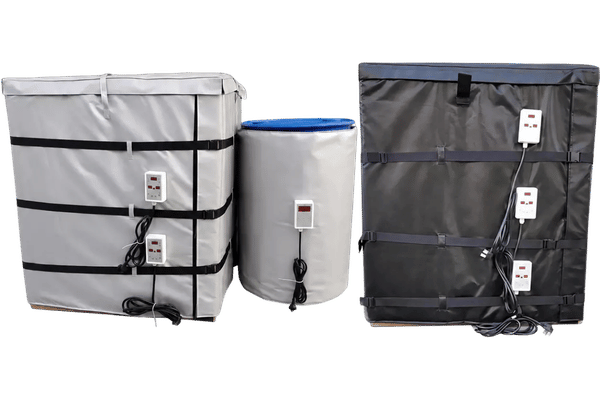
Quote turnaround: Within 24 hours
·
Standard lead time: 7-15 days from order confirmation
·
Minimum order: Single units accepted
·
Working range: -20°C to 130°C, IP42
·
Warranty: 24-month warranty on all products
·
Samples: A free sample with freight paid by the buyer
·
Three Container Families, Three Heater Builds
A pail, a drum and a caged tote are three different heating problems. Wall material, surface area and how the container is handled all change the answer. We build heaters for drums, tote tank heaters and small container heaters as three separate families, each with its own page of models and dimensions.
SYS-01
System Series
IBC Tote Heaters
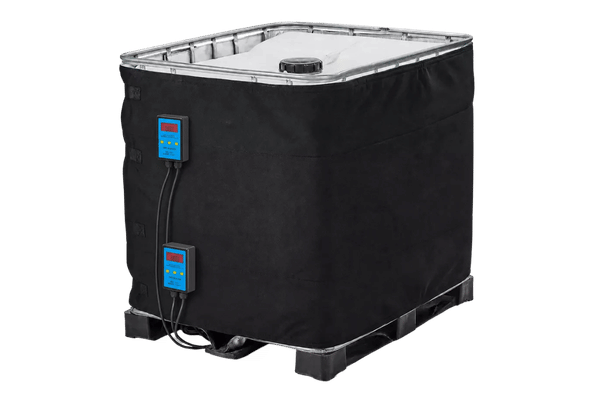
- 1,000 L / 275 gallon and 1,250 L / 330 gallon caged totes
- Full-wrap jacket, 4,400 mm long
- Two independent heating zones as standard
- 3,000 W at 230 VAC, 1,500 W at 120 VAC
- Optional IBC tote insulated cover, waterproof cover and bottom heater
An IBC tote heater blanket for larger vessels, such as 450 and 550 gallons, is built to order
IBC tote heaters
SYS-02
System Series
Drum and Barrel Heaters
- 60 L / 16 gal, 120 L / 30 gal and 200 L / 55 gal drums
- The drum heater blanket covers the full wall rather than a narrow band
- 800 W to 2,000 W depending on drum size
- Fits both steel and plastic drums
- Optional insulated drum lid
SYS-03
System Series
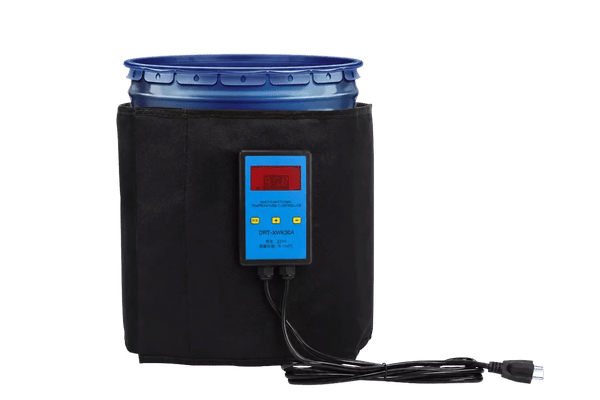
Bucket, Pail and Honey Heaters
- Pail heater sizes at 4 L / 1 gal, 8 L / 2 gal and 19 L / 5 gal
- 150 W to 400 W, 10 A plug
- Fits plastic and metal buckets
- Dedicated honey build holds 38°C (100°F) ±5°C, set under the Codex Alimentarius hydroxymethylfurfural cap
- Infrared carbon fibre element on the honey build
Jacket Construction and Insulation
Every jacket is built as four layers: an outer shell, a high-density polyester insulation layer, a silicone-insulated heating element and an inner face that sits against the container wall. Outer shells are supplied in Teflon-coated or silicone-coated polyester. Closure is by adjustable quick-release buckles rather than hook-and-loop.
Standard Build
- Teflon or silicone-coated polyester outer shell
- High-density polyester thermal insulation
- Silicone-insulated resistance heating element
- Adjustable quick-release buckles
- 2 m power cable, 16 A (EU/UK) or 15 A (US) plug
Flex Graphene Build
The graphene version replaces the wound resistance wire with a continuous graphene heating film across the wrap. We specify this build where the product scorches easily and the customer wants the element spread rather than run in tracks. Peer-reviewed flexible-heater modelling finds temperature uniformity tracks heat-source spacing and substrate conductivity, and that deformation itself creates local hot spots.
- FLB-IBC-275A — 1,000 L / 275 gal tote
- FLB-DH-200A — 200 L / 55 gal drum
- FLB-BH-5A — 19 L / 5 gal bucket
Heater Jacket, Heating Blanket or Blanket Heater
Buyers and suppliers use these names for the same product, which makes quotes hard to compare. We treat them as one thing and quote against the container, not the label.
- Heating jacket / heater jacket — the wrap that goes around the container wall
- Heating blanket / blanket heater — the same wrap, the term most common in North America
- Tote warmer / wrap around IBC heater — the tote size of the same product
- Drum heater band — a different product: a narrow band, not full coverage
Why the Closure and the Cable Exit Matter
Container heaters live on containers that get moved, strapped down and stacked against. Buckle closures survive that handling better than a spring clamp, and they let one jacket fit a range of wall thicknesses.
- Ratchet straps and the repetitive shear they put through a jacket are what the cable exit has to survive
- Tell us whether anything is stacked or leaned against the container while it is heated
- We place the cable exit and the controller pocket out of that path
Not sure which build suits your product. Send us your container dimensions and we will draw the heater layout at no charge.
Temperature Control, Zoning and Over-Temperature Protection
The most common control mistake on a heated container is putting the sensor in the wrong place. A probe mounted on the heater reads the heater, not the product inside. Surface temperature on a vessel wall is also location-dependent, because conduction along the wall and convection inside the container both shift the local reading.
“We size the zones around how the container empties, not around how it looks when it is full. A tote wrap that is perfect at 1,000 L is heating a container that is more empty than full by the time the operator is down to the last 200 L, and that is where scorching starts.”
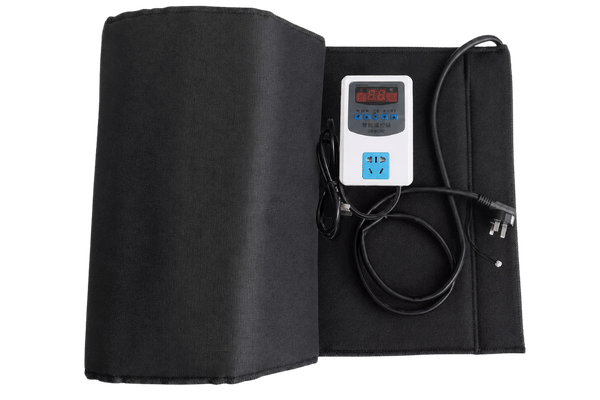
What Is Fitted as Standard
- Digital thermostat with a real-time temperature display
- Timer function for automated operation
- Built-in over-temperature protection
- Two independent heating zones on the IBC tote models
- Smart memory on the honey build, which retains the setting after a power interruption
Uniform Heating and Where Hot and Cold Spots Come From
Uniform heating is a function of where the element sits and how the jacket is held against the wall, not of the thermostat. An adjustable thermostat holds a set point; it cannot even out heat the construction never spread in the first place.
- Full coverage over the wall gives more consistent heat than a narrow band at one height
- The graphene film build spreads the element instead of running it in tracks
- An air gap from a loose closure is a cold zone; a fold or a trapped strap is a hot spot
- Two independent zones on the tote models let the lower zone work harder as the tote empties
Watt Density Is the Number That Sets Surface Temperature
Total wattage tells you very little on its own, and a higher rating is not necessarily a faster heater. What matters is watts spread over the heated area, because that is what drives the temperature at the container wall, and getting it wrong puts the risk on the wall rather than on the controller.
- IBC tote wraps at 230 VAC — around 450-700 W/m² across a 4.4 m² to 5.9 m² jacket
- Drum and pail wraps at 230 VAC — around 1,000-1,350 W/m² across a much smaller jacket
- On the 120 VAC versions — the figure drops to half on most models, and to about three quarters on the graphene tote build
- The graphene tote build — 2,000 W over the same 4.4 m² jacket, the gentlest figure in the range
That difference is deliberate. A tote holds far more thermal mass behind a much larger wall area, so a gentler watt density still moves the contents while keeping the wall cool enough for temperature-sensitive material.
Models, Container Fit and Power Ratings
Every model below is built to the same electrical and environmental specification. Dimensions are the flat jacket size before it is wrapped.
General Specification
| Specification | What we supply |
|---|---|
| Working temperature range | -20°C to 130°C (-4°F to 266°F) on all standard models |
| Voltage | 120 VAC or 230 VAC, selected at order |
| Ingress protection | IP42 on all eleven models |
| Power cable | 2 m (6.5 ft), 16 A (EU/UK) or 15 A (US) plug; 10 A plug on bucket models |
| Heating zones | Two independent zones on IBC tote models; single zone on drum and bucket models |
| Container range covered | 4 L (1 gal) pail to 1,250 L (330 gal) caged IBC tote |
| Power range | 150 W to 3,000 W depending on container size and voltage |
| Standard lead time | 7-15 days from order confirmation, ex works Qingdao |
| Warranty | 24-month warranty with free replacement parts for manufacturing defects |
IBC Tote Models
| Model | Fits | Jacket size (L × W) | Power rating |
|---|---|---|---|
| FLB-IBC-275 | 1,000 L / 275 gal IBC | 4,400 × 1,000 mm | 3,000 W (2 × 1,500 W) at 230 VAC; 1,500 W (2 × 750 W) at 120 VAC |
| FLB-IBC-330 | 1,250 L / 330 gal IBC | 4,400 × 1,350 mm | 3,000 W (2 × 1,500 W) at 230 VAC; 1,500 W (2 × 750 W) at 120 VAC |
| FLB-IBC-275A | 1,000 L / 275 gal IBC, graphene build | 4,400 × 1,000 mm | 2,000 W at 230 VAC; 1,500 W at 120 VAC |
Drum, Barrel, Bucket and Honey Models
| Model | Fits | Jacket size (L × H) | Power rating |
|---|---|---|---|
| FLB-DH-200 | 200 L / 55 gal drum | 1,860 × 860 mm | 2,000 W at 230 VAC; 1,000 W at 120 VAC |
| FLB-DH-120 | 120 L / 30 gal drum | 1,400 × 650 mm | 1,000 W |
| FLB-DH-60 | 60 L / 16 gal drum | 1,200 × 550 mm | 800 W |
| FLB-DH-200A | 200 L / 55 gal drum, graphene build | 1,860 × 860 mm | 2,000 W at 230 VAC; 1,000 W at 120 VAC |
| FLB-BH-5 | 19 L / 5 gal bucket | 1,000 × 400 mm | 400 W |
| FLB-BH-2 | 8 L / 2 gal bucket | 800 × 250 mm | 200 W |
| FLB-BH-1 | 4 L / 1 gal bucket | 650 × 190 mm | 150 W |
| FLB-BBH-20 | 20 L pail / 5 gal bucket, honey build | 960 × 310 mm | 400 W, held at 38°C (100°F) ±5°C, 0.30 m² heated area |
Power consumption — the rated wattage in the table above, with no standby draw beyond the controller
Surface area contact — what separates these builds from a band; the heated area is listed against every model
IP42 under IEC 60529 means the enclosure keeps out solid objects larger than 1 mm, and that vertically dripping water causes no harmful effect with the enclosure tilted up to 15° from its normal position. These are electric container heaters for ordinary, non-classified indoor and sheltered outdoor locations. Every IBC heater in the range carries the same rating.
Request a QuoteIntermediate Bulk Container Sizes We Fit as Standard
An intermediate bulk container is sold under several names, and the two standard footprints cover most of what arrives on a yard. Anything outside them is a custom build, not a stock size.
- 1,000 litre IBC tank — the 275 gallon IBC, caged or uncaged
- 1,250 litre IBC tank — the 330 gallon IBC
- 200 litre metal drum — the 55 gallon drum, steel or plastic
- Pails from 4 to 20 litres — 1, 2 and 5 gallon buckets
Pricing, Lead Times and Ordering
Price follows container family and jacket area, power rating and voltage, control architecture, insulation and outer material, and quantity. There is no fixed price list for a wrap that is built to your container. Your figure comes back in a written quote.
What Moves Your Price
| Driver | Effect on cost | How to reduce it |
|---|---|---|
| Jacket area | Sets material and element length, the largest single input | Wrap only the wetted height rather than the full container where the product allows |
| Number of control zones | Each zone adds a circuit, a sensor and controller capacity | Use a single zone where the container is emptied in one go |
| Controller type | A digital controller with display and timer costs more than a fixed thermostat | Specify fixed-setpoint control for freeze protection duty |
| Outer material and covers | Teflon coating, waterproof covers and insulated lids each add cost | Skip the covers on indoor-only installations |
| Quantity | Tooling and setup are spread across the run | Consolidate container sizes so one jacket design covers more of the fleet |
- Send the container type, dimensions, target temperature, local voltage and quantity
- An engineer reviews it and returns a written quotation within 24 hours
- Free heating solution design is included: you get a heater layout drawing, not just a price
- Single units are accepted, and custom dimensions, voltages and wattages are quoted on request
- Standard production runs 7-15 days from order confirmation, ex works Qingdao
- Container-load quantities are scheduled case by case at order review
- Export paperwork covers the proforma invoice, sales contract, commercial invoice, packing list and certificate of origin
- Spare heating elements and critical components are available for large overseas projects
Testing, Certification and Factory Access
Every heater is electrically tested before it leaves the floor. Our test bench covers resistance, temperature distribution, dielectric strength, leakage current and insulation resistance. Results are recorded against the order.
How Every Order Is Checked
1
Element resistance
measured on DC resistance testers against the design value
2
Temperature distribution
logged on multi-channel temperature testers across the wrapped jacket
3
Dielectric strength
confirmed on withstand voltage testers, then leakage current measured under power
4
Insulation resistance
testers used as the final electrical check before packing
Manufacturing Equipment on Site
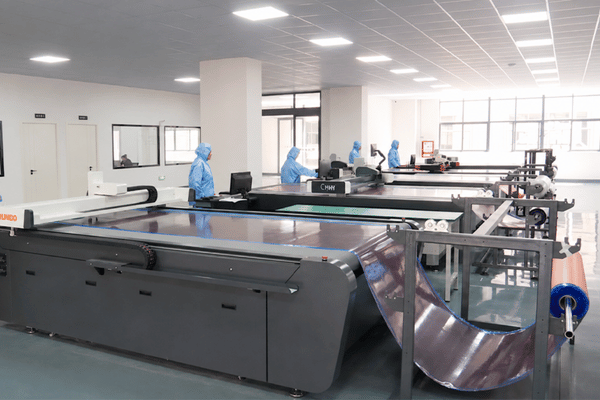
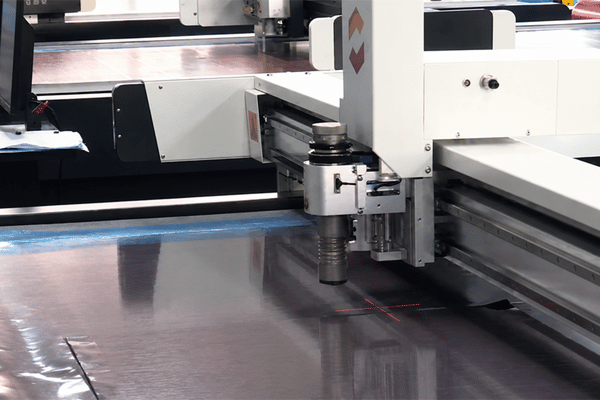
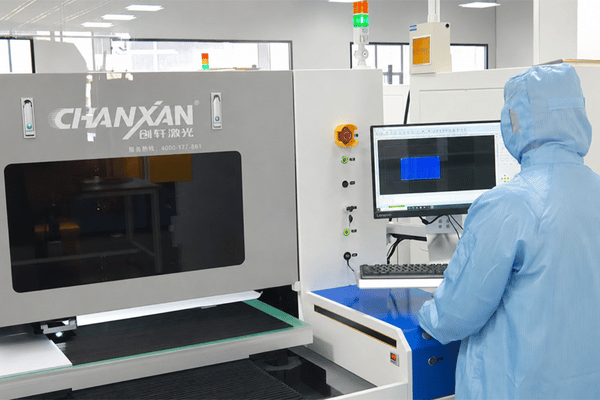
- Precision laser cutting machines
- Die cutting machines
- Wire winding machines
- Flat vulcanizing presses
- Industrial high-temperature ovens
Company and Compliance
- ISO 9001 quality management system certification
- CE marking, which is the manufacturer’s declaration of conformity under the applicable EU directives
- RoHS, a restriction on hazardous substances in the materials used
- Founded 2019 in Qingdao, China, 5,000 m² plant, a team of up to 50
What You Can See Before You Pay
- Production progress, quality inspection and container loading photos and video are shared through the build
- Customer representatives are received for in-process inspection and pre-shipment acceptance
- Remote technical support covers installation, commissioning and controller setup by video
The Five-Decision Container Heating Selector
Buyers rarely struggle to find a container heater. They struggle to tell the options apart, because every supplier describes the same wrap in the same words. Five decisions narrow it down to one model.
DECISION 01
Container family and fill level — a pail, a 55 gal drum and a caged tote need different jacket geometry. Decide what the container looks like when it is half empty, not when it is full, because that is when a full-height wrap starts heating headspace.
DECISION 02
The ceiling temperature of your product — this is the hard limit, and it is often much lower than the heater’s. Hotter is not always faster: the Codex Alimentarius Standard for Honey caps hydroxymethylfurfural after processing at 40 mg/kg, or 80 mg/kg for declared tropical origins, and that marker rises with both temperature and time. Our honey build is fixed at 38°C (100°F) ±5°C for that reason rather than run hot to finish sooner.
DECISION 03
Heat-up duty against hold duty — bringing a cold drum up to temperature and holding a warm one are different power problems. What sits between the jacket and the product also changes the answer: a bladder inside corrugate takes far longer than bare steel. Log the actual heat-up time once on the first unit and you can size the rest of the fleet from it.
DECISION 04
Control architecture and sensor location — choose fixed thermostat, digital controller, or two independent zones. Then decide what the sensor should represent, because a probe on the heater reports the heater and not the contents.
DECISION 05
Installation environment — indoor, sheltered outdoor, or wet area, and whether the container is moved, strapped or stacked against while heated. IP42 covers dripping water at up to 15° off vertical; it is not a wash-down rating. Any site requirement that goes beyond that belongs in the enquiry, not in the commissioning.
How an Order Runs
1
Send the container details — type, dimensions, contents, target temperature, local voltage and quantity
2
Free heating solution design — we return a heater layout drawing with the quote
3
Written quotation within 24 hours — with the model, power rating and lead time stated
4
Build and test- with production and inspection photos and video shown as it runs
5
We stand behind the result — 24-month warranty with free replacement parts for manufacturing defects
6
Packing and export documents — including the packing list and certificate of origin
Materials and Industries We Heat
The commercial case for a container heater is usually written in what stays behind. Contrary to the as a common assumption that a drained container is an empty one, the US rule for hazardous-waste containers gives a useful yardstick for how much legitimately stays put: a container of 119 gallons or less may hold up to 3% of its capacity by weight and still count as empty, a larger one such as an IBC tote up to 0.3%.
What That Residue Represents
On a 55 gal drum that yardstick is 3%. A product that pours at working temperature and sets solid at store temperature is the difference between recovering that material and paying to dispose of it.
- Material recovered instead of disposed of
- Heated floor space released, because otherwise the product has to occupy a hot room while it comes up to temperature
- Fewer stalled batches waiting on a cold drum
Products That Become Viscous
Most enquiries start with a discharge problem rather than a freezing one. A product that is still liquid but too thick to pump costs the same downtime as one that has frozen solid.
- Epoxies, varnishes and coatings that thicken below room temperature
- Fats, waxes and syrups that set and make the container difficult to empty
- Waste product that has to stay pumpable until collection
- Anything the pump can no longer draw at ambient
Materials We Heat
- Resins, epoxies and curing agents
- Adhesives, sealants and coatings
- Grease, lubricants and vegetable oils
- Waxes, syrups and honey
- Diesel exhaust fluid and water-based chemicals
- Soaps, surfactants and detergent concentrates
Industries Using These Container Heaters
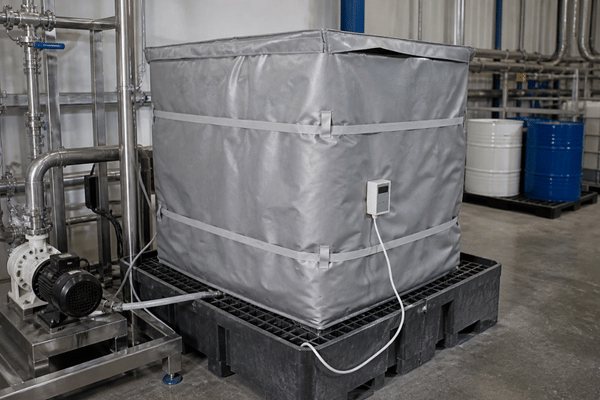
Chemical Blending and Storage
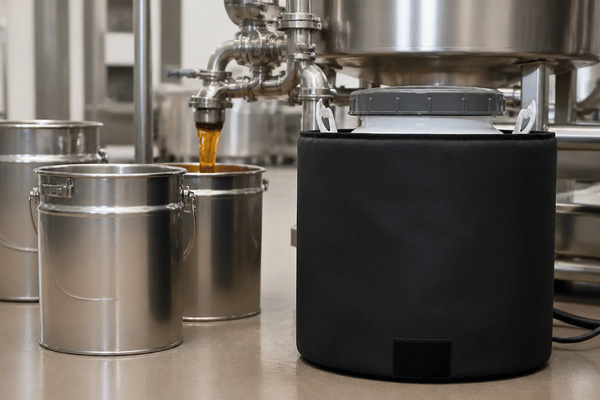
01Viscosity control on resins and surfactants held in drums and totes in unheated stores.
Food and Beverage
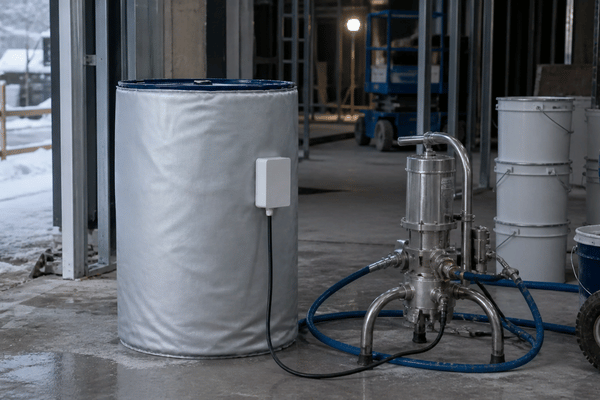
02Honey, syrups and edible oils held at a pourable temperature without pushing them past their quality ceiling.
Construction and Coatings
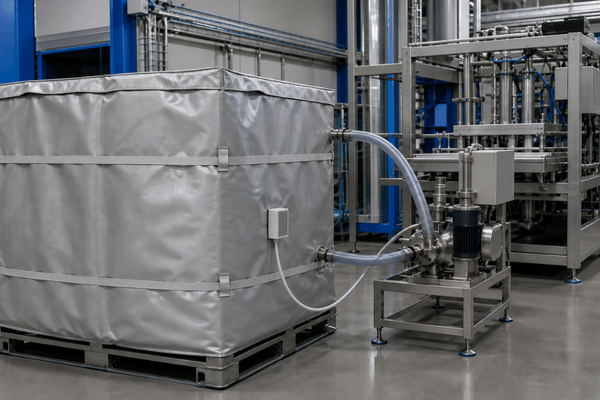
03Adhesives and sealants kept workable on winter sites where a cold drum stops the crew.
General Manufacturing
04Process temperature maintenance on drums and totes feeding a mixing or dosing line.
Beekeeping and Agriculture
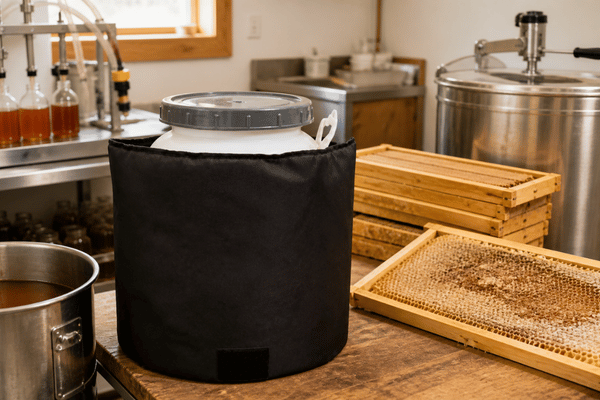
05Decrystallising honey in pails at a controlled low temperature before bottling.
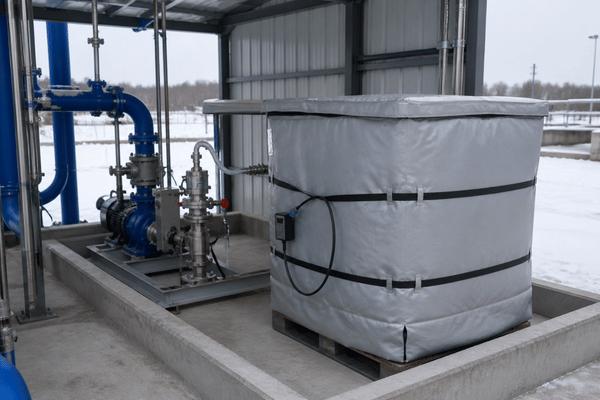
Water Treatment
06Freeze protection on chemical totes and drums stored outside through winter.
Engineering Utilities
Engineering Tools & Calculators
Select the right heating solution, calculate power requirements, and estimate operational efficiency with our technical toolset.
Container Heater Selector
Configure the exact jacket geometry and power specifications based on your specific container family and fill level.
Launch Tool
Watt Density Calculator
Determine the safe power output per square inch to prevent material degradation and stay within ceiling temperature limits.
Launch Tool
Heat-Up Energy Estimator
Calculate the required thermal energy and estimated time to bring your cold drum up to the target processing temperature.
Launch Tool
Residue Value Estimator
Quantify the material and disposal cost savings achieved by maintaining optimal discharge viscosity.
Launch Tool
Process Initiation
Request a Container Heating Quote
Send the container type, its dimensions, what is inside it and the temperature you need to hold. Quotes are returned within 24 hours and include a heater layout drawing at no charge. Single units are accepted, and all products carry a 24-month warranty.
Request a Quote
// SYSTEM STANDBY FOR INPUT
Container Heater FAQs
A drum heater is a flexible electric jacket that wraps the outside of a drum and warms the contents through the wall. A heater band is a narrow strip that clamps around part of the drum. The jacket covers the whole wall, so the same total wattage is spread over a much larger area.
Yes, our drum and bucket wraps are built for both steel and plastic containers. Plastic walls conduct heat far more slowly than steel, so the risk is a hot spot at the contact face rather than slow heating. Full-wall coverage and a controlled setpoint are what keep the wall temperature down, which is why we do not recommend a narrow band on a plastic drum.
It depends on what you want the controller to hold. A probe mounted on the heater reports the heater’s own temperature, which is useful for protecting the element but is not the temperature of your product. If the contents matter, the sensor has to represent the container wall or the product itself, and the reading will vary with where on the wall it sits.
Your product and the tote itself set the limit, not the heater. Our tote wraps run between -20°C and 130°C and are held by a digital thermostat with over-temperature protection. Set the controller to your product’s ceiling, and confirm the tote manufacturer’s own temperature limit before you go above 60°C on a plastic bottle.
Yes, and it is the variable most people forget. The thickness of the corrugate or the bladder wall dictates how long the contents take to reach temperature, so a bagged ingredient inside a corrugate case runs far behind the same volume in bare steel. Fit the jacket at goods-in rather than when the material is needed, and log the first heat-up with a data logger so you know the real number.
Lower than most people expect. The Codex Alimentarius Standard for Honey caps hydroxymethylfurfural in processed honey at 40 mg/kg, rising to 80 mg/kg only for declared tropical origins, and that marker climbs with both temperature and time. That is a limit on the honey you sell, not on the heater, which is why our honey build holds 38°C (100°F) ±5°C instead of heating harder to finish faster.
The outlet valve and the discharge line, not the body of the container. There is far less thermal mass at the valve and it is fully exposed, so it can be solid while the bulk is still liquid. Heat the container and protect the valve and pipe separately.
Every jacket already includes a high-density polyester insulation layer, so the heat goes inwards rather than into the room. For outdoor use through winter we also supply an insulated top cover for totes and an insulated lid for drums. Heat loss from an uncovered top is the largest single leak on a heated container.
Tell us the handling environment at enquiry and we will place the cable exit and controller pocket out of the strap path. Buckle closures cope with repeated fitting better than clamps, and the cable exit is the part that fails first when a container is ratchet-strapped for transport. We do not publish an abrasion rating because we have no third-party test to quote.
Single units are accepted, so you can order one jacket for one container. We supply a free sample with freight paid by the buyer for a standard catalogue size. Custom-built samples are quoted per project.
Yes. Custom dimensions, voltages and wattages are quoted on request, and free heating solution design is included, so you receive a layout drawing with the quote. Send the tank dimensions, the contents, the target temperature and your local voltage.