Get in touch with FlexBlanket Company

Flexible pail heating by FlexBlanket
Bucket Heating Blankets & Honey Warmers
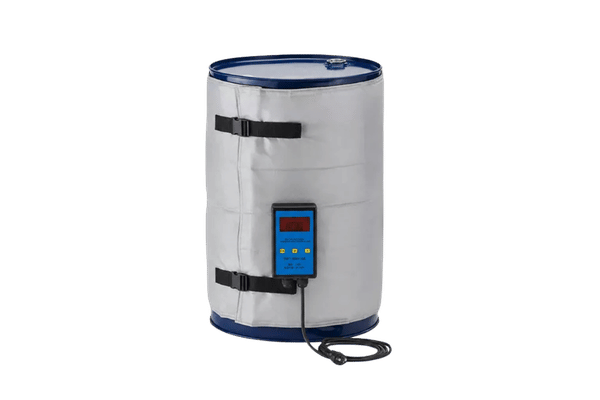
Select a full-wrap bucket heater for industrial materials or a dedicated honey bucket heater for 5 gallon pails. FlexBlanket configures the insulated blanket around the container dimensions, controller, voltage and product-temperature requirements stated in your request.
- 1, 2 & 5 gallon models
- 120 / 230 VAC
- Digital control
- Custom builds
Send the pail circumference, height, material, fill mass, target product temperature, ambient range, voltage, plug and operating environment. We will use those inputs to confirm the model and quotation scope.
4–19 L
Standard pail capacities
150–400 W
Standard model wattage
120 / 230 V
Available supply voltage
7–15 days
Scheduled production lead time
Container-to-controller fit matrix
Bucket Heater Build Capabilities and Model Selection
A bucket warmer is suitable only when the blanket geometry, electrical input and control method match the actual container. Start with the material and process, then match the pail volume instead of choosing by the word “heater” alone.
General-Purpose Bucket Heaters
CLICK OR HOVER TO INSPECT
General-Purpose Bucket Heaters
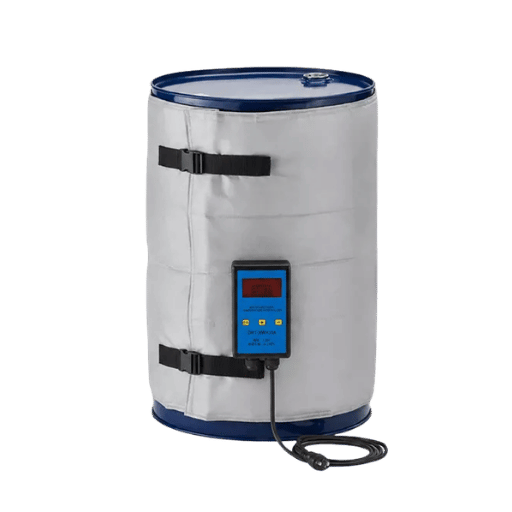
We build silicone-insulated resistance elements into a Teflon- or silicone-coated polyester shell with high-density polyester insulation. Adjustable quick-release buckles help the blanket fit plastic or metal buckets while keeping the lid and handles accessible.
- 1, 2 and 5 gallon standard models
- Digital thermostat with live display
- Timer and over-temperature functions
- Custom dimensions, voltage and wattage
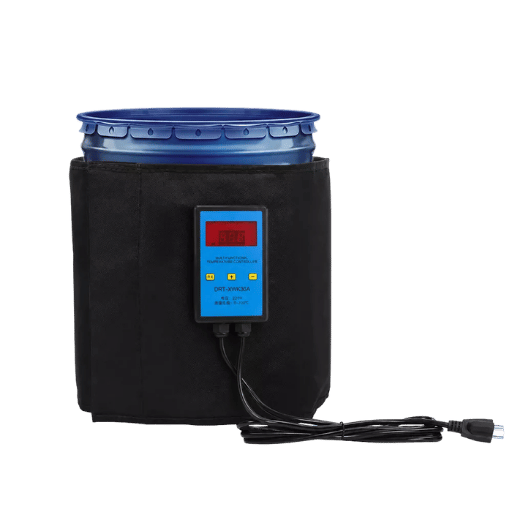
Honey Warming Blanket
CLICK OR HOVER TO INSPECT
Honey Warming Blanket
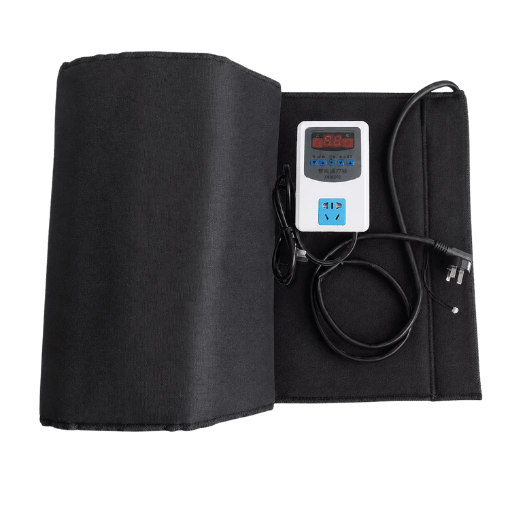
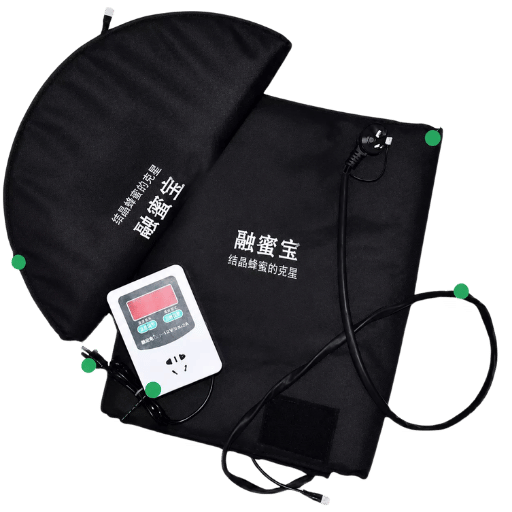
Our 5 gallon honey warmer uses an infrared carbon-fiber heating structure with double insulation, a wrap-around body and adjustable temperature control with memory. Its listed 38°C ±5°C operating target is a manufacturer setting band, not a universal honey-quality limit.
- Nominal 20 L format for the 5 gallon pail class
- 400 W at 120 or 230 V
- US, EU or UK plug options
- Independent bulk-honey checks required
PROCESS WARNING
A 5 gallon pail heater and a drum heater or tank heater are not interchangeable, so they cannot share one heat-up assumption. In beekeeping operations, a bee blanket should be sized to the pail rather than the hive and used under a documented plan before freezing conditions make the batch harder to handle. The best honey bucket heater is the one matched to the actual pail and verified against the batch limit.
Heating a 275 or 330 gallon tote is a different process duty from warming a 1–5 gallon pail. Use the IBC tote heater guide for tote-scale geometry, control and quotation inputs.
| Decision point | General bucket heater | Honey heater |
|---|---|---|
| Application | Warm or maintain the temperature of oils, resins, coatings, adhesives and other compatible materials. | Gently warm honey in a 5 gallon pail under a batch-specific temperature plan. |
| Standard sizes | 1, 2 and 5 gallon bucket formats. | 5 gallon / 20 L pail format. |
| Heating structure | Silicone-insulated electric heating element. | Infrared carbon-fiber heating structure. |
| Control focus | Broad adjustable range for compatible industrial materials. | Conservative process control plus independent honey-temperature checks. |
Wrap, insulate, control
What We Build Into a Full-Wrap Bucket Heater
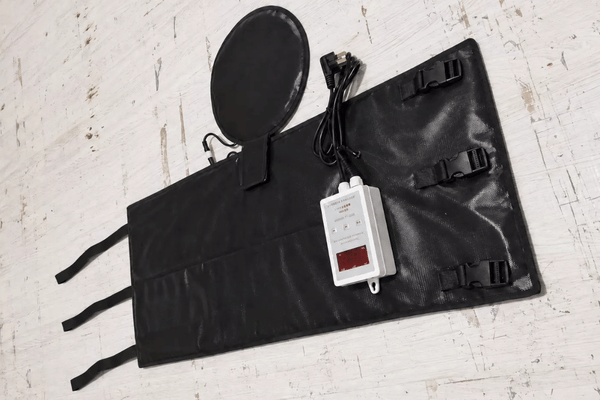
A full-wrap heating blanket transfers heat through the vessel wall rather than placing an immersion element in the product. The outer shell, insulation, heating circuit, buckles and controller form one assembly, so changing one variable can alter the required build.
-
Outer shell
Teflon- or silicone-coated polyester provides the flexible enclosure used on the general bucket heater family.
-
Insulation layer
High-density polyester insulation directs more of the heater output toward the pail and reduces exposed hot hardware.
-
Full-height coverage
The wrap covers the bucket sidewall rather than heating one narrow band, while adjustable straps hold the assembly in place.
-
Separate control
A digital thermostat, display, timer and over-temperature function make the operating condition visible to the user.
Standard model baseline
Bucket and Honey Heater Specification Table
This table provides a starting point for model selection, but the chosen pail and application still require dimensional confirmation. Pail taper, handles, fittings, lid shape, supply voltage and material limits also belong in the request for quotation.
| Model | Application | Nominal capacity class | Blanket size | Power | Voltage |
|---|---|---|---|---|---|
| FLB-BH-1 | General bucket heating | 4 L / 1 gallon class | 650 × 190 mm | 150 W | 120 / 230 VAC |
| FLB-BH-2 | General bucket heating | 8 L / 2 gallon class | 800 × 250 mm | 200 W | 120 / 230 VAC |
| FLB-BH-5 | General bucket heating | 19 L / 5 gallon class | 1000 × 400 mm | 400 W | 120 / 230 VAC |
| FLB-BH-5A | Graphene bucket-heater option | 19 L / 5 gallon class | 1000 × 400 mm | 400 W | 120 / 230 VAC |
| FLB-BBH-20 | Honey warming | 20 L / 5 gallon class | 960 × 310 mm | 400 W | 120 / 230 VAC |
| General range | Compatible qualified materials | Custom by container | Custom available | Application-specific | −20 to 130°C control range |
| Standard connection | General bucket heater | — | 2 m cable | 10 A plug | Supply-specific |
| Ingress baseline | Dry indoor use | — | — | — | IP42 |
A 5 gallon bucket is not one universal shape. Measure around the actual pail at the blanket position and confirm straight-wall height, taper, handle lugs, gate valve and any bottom pad before release.
Controller reading ≠ bulk temperature
A Safe First-Batch Warming Method
The risk of local overheating exists because the thermostat responds to its sensor location while the blanket surface, pail wall and center of the product can sit at different temperatures. In honey, viscosity, crystal structure, fill mass, ambient conditions and agitation also influence the heating curve.
01
Define the material limit
Use the material owner’s permitted product-temperature range, not the blanket’s maximum control range, as the governing limit.
02
Start conservatively
Fit the heater smoothly, close the insulation, and begin below the confirmed product limit with the correct supply and controller.
03
Measure the product
Check bulk temperature with an independent, suitable instrument at a consistent location and record the controller reading alongside it.
04
Build a batch record
Record fill mass, starting and ambient temperatures, elapsed time, setpoint and product checks before approving a repeatable operating instruction. Include the heater’s watt rating and every degree of setpoint change.
Honey temperature boundary
A higher controller number does nothing for process control if the bulk product is not measured. FlexBlanket’s listed 38°C ±5°C target therefore needs a conservative setpoint and independent product-temperature checks; it must not be treated as a guarantee that every point in the honey stays within that band.
“Heat it very gently. Never heat honey over 100 degrees.”— University of Minnesota Bee Lab
Qualification before energizing
Operating Boundaries and Exclusions
Standard IP42 construction is a dry-area baseline. It is not evidence of suitability for washdown, sustained splash, outdoor exposure, explosive atmospheres or another classified hazardous location.
01
Container condition
- Use a compatible plastic or metal bucket.
- Keep the blanket flat and fully supported.
- Do not fold, crease, overlap or trap the heating area.
- Inspect the cable, plug, controller and shell before use.
02
Electrical match
- Match 120 or 230 VAC to the site supply.
- Confirm plug style and circuit protection.
- Keep connections away from liquid exposure.
- Do not bypass the thermostat or protection functions.
03
Application review
- Confirm the material temperature limit.
- Review flammability and hazardous-area classification.
- Check ambient and cleaning conditions.
- Stop if the heater, pail or process behaves unexpectedly.
Under 29 CFR 1910.307, equipment used in a classified hazardous location must be suitable for that location. A standard heater should not be specified there merely because it is electric and insulated; without the site classification and a matching approval, it is the wrong choice.
Bronze evidence tier
Cost Drivers and RFQ Boundaries
There is no responsible universal price, payback period or energy-saving percentage for a custom pail-heating application. Each trade-off varies with the container, heating circuit, controller, supply, plug, quantity, environment and documentation scope.
Fields that shape the build
- Blanket circumference, height, taper and openings
- Material, fill mass, starting temperature and target
- 120 or 230 V supply, wattage and plug
- Controller, sensor and timer requirements
- Dry-area, splash, cleaning and hazardous-location conditions
- Quantity, packaging and custom marking
Fields needed for an energy comparison
- Existing method and measured baseline energy
- Required batch temperature and hold time
- Ambient temperature and exposed surface area
- Duty cycle, insulation and heat losses
- Local tariff and operating schedule
- Acceptable warm-up window and process constraints
Published competitor prices describe those sellers’ listed configurations and terms. They are not a reliable FlexBlanket price comparison until quantity, voltage, controller, dimensions and commercial terms are aligned.
Product evidence
Bucket Heater Equipment We Manufacture
Photographs show the flexible wrap, controller lead, buckle locations and fitted pail geometry supplied in the customer’s bucket and honey heater materials. They do not guarantee a specific customer result, certification or universal heating rate.
We configure
Dimensions, voltage, wattage, controller and plug can be adapted around the confirmed application.
We manufacture
FlexBlanket focuses on industrial electric heating blankets and flexible heating solutions for global industrial buyers.
We document
Model, electrical input, dimensions and agreed options can be aligned in the quotation before production release.
We keep boundaries visible
Unsupported certifications, guaranteed honey quality and fixed heat-up time are excluded from the selection promise.
Engineering handoff
How We Scope a Bucket Heater RFQ
A short but complete summary lets us distinguish a standard 5 gallon pail heater from a custom blanket and avoids confusing a controller range with a product-temperature requirement. Attach drawings or photographs if handles, a valve, a lid or a tapered wall interrupt the wrap.
Container
- Capacity and material
- Outside circumference and height
- Taper and handle lugs
- Valve, base and lid clearance
Process
- Material name and safety data
- Fill mass or level
- Start, ambient and target temperature
- Warm-up and hold objective
Electrical and site
- Voltage and plug
- Controller and sensor needs
- Indoor, wet or cleaning exposure
- Hazardous-area status
From review to export pack
How We Work from Quotation to Export
We review the container and operating inputs before confirming a standard model or custom build. Production runs are scheduled at 7–15 days, confirmed with your quotation.
01
1. Application review
We check the pail, material, target temperature, environment and electrical supply.
02
2. Configuration
We align blanket dimensions, power, voltage, controller, plug and optional features.
03
3. Production
The agreed configuration is released against the quotation and scheduled lead time.
04
4. Export preparation
Commercial invoices, packing lists, certificates of origin, and other customs-clearance documents are prepared for export orders.
Engineering Resources
Bucket & Honey Heaters Configuration Tools
Utilize our interactive engineering calculators and selectors to define your process limits and configure the exact heating blanket required for your specific container.
Container & Model Selector
Input your specific pail dimensions, material limits, and ambient conditions to identify the most suitable standard or custom heating blanket.
Launch SelectorIdealized Heat-Up Estimator
Calculate the estimated time required to reach your target batch temperature based on fill mass, wattage, and the thermal properties of your product.
Open EstimatorRFQ Brief Builder
Compile your process requirements, electrical constraints, and site conditions into a structured engineering handoff document for accurate quoting.
Start Builder
Next step
Request a Bucket Heater Model Match
Send the container dimensions, material, fill mass, target temperature, ambient range, electrical supply and site conditions. FlexBlanket will confirm whether a standard bucket heater, honey warmer or custom heating blanket fits the request.
Final sizing, electrical selection and application suitability remain subject to engineering review and the agreed quotation.
Fastest useful submission
- Container photo or drawing
- Circumference and usable wrap height
- Material and fill mass
- Start, target and ambient temperatures
- Voltage, plug and destination country
- Quantity and operating environment
Procurement questions
Bucket and Honey Heater FAQ
FLB-BH-5 is the standard 19 L general-purpose 5 gallon bucket heater, while FLB-BBH-20 is the dedicated 20 L honey heater. Confirm actual circumference, straight-wall height, taper, handles and fittings before release.
The standard bucket heaters are listed for compatible plastic and metal pails. The plastic’s temperature limit, wall condition, product limit and site procedure must still govern the setpoint.
No. It reflects the controller’s sensor location, so verify bulk honey with an independent suitable instrument during the first batch.
FlexBlanket lists a 38°C ±5°C target for its honey heater, while the University of Minnesota Bee Lab advises gentle heating and never over 100°F. Treat the lower material boundary as controlling and validate the actual product temperature rather than relying on the controller alone.
There is no universal time because honey type, crystal state, mass, starting temperature, ambient conditions, container geometry, wattage and mixing all matter. Establish the cycle from a documented first batch.
No universal outcome should be promised from the blanket alone. Time and actual honey temperature affect quality indicators, so the operator must define and verify the process.
A heating blanket warms through the container wall and does not place an element directly in the product. The right choice depends on heat path, hygiene, material compatibility, access and required warm-up time.
An electric honey warmer targets one pail, while a warming cabinet can handle multiple bottles, jars or containers in an enclosed space. Compare batch count, air circulation, energy baseline, cleaning and temperature verification before choosing.
Do not infer that from the standard IP42 rating. Share splash, rain, cleaning and connection exposure so the operating boundary can be reviewed.
Not unless the exact heater and installation are approved for the site classification. The standard products on this page are not presented as hazardous-location equipment.
Yes. We can review custom dimensions, voltage, wattage, controller and plug requirements against the container and application.