Get in touch with FlexBlanket Company

Composite Curing Blankets
Composite Curing Blankets should be released against the part, heat path, control interface, sensor plan, and acceptance scope—not selected from an outer size alone. FlexBlanket organizes those inputs into a reviewable blanket quotation for composite repair and manufacturing work.
Flexible MOQ
Most orders ship within 2–6 weeks
Configured to written project inputs
CUSTOM GEOMETRY
PRECISE FIT
Minimum order
Flexible MOQ
Company-level lead time
Most orders ship within 2–6 weeks.
Quotation basis
Geometry, heated area, zones, controls, sensors, leads, attachment, quantity, and acceptance scope.
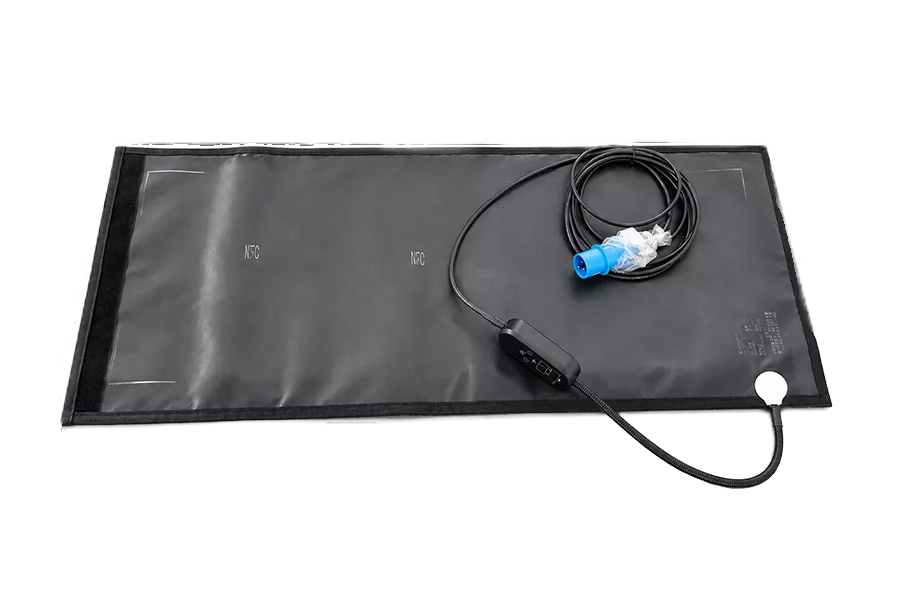
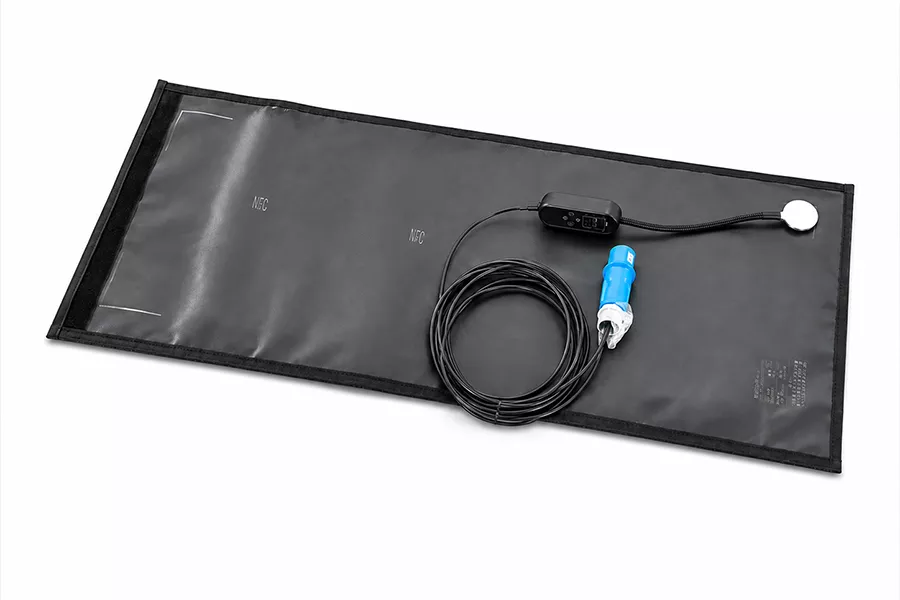
Composite Curing Blanket Configuration
The blanket fits the outer repair outline, yet that alone does not release the thermal interface. A blanket outline and active heated area are not interchangeable when edges, contours, gaps, or local heat sinks change contact with the composite.
Geometry and contact, heated area and zones, material construction, power interface, sensing measurement, and vacuum stack define the complete assembly.
NODE.01
Geometry and contact
We review the surface outline, contour, local steps, obstructions, contact method, and any horizontal or vertical installation constraint that changes how the blanket sits on the work.
NODE.02
Heated area and zones
Define the active heated area separately from overall size. Zone boundaries belong on the drawing when the thermal plan requires more than one controlled region.
NODE.03
Material and construction request
State whether silicone rubber construction, insulation, a seal feature, strain relief, or another project requirement is called out. We confirm only the construction written into the quotation.
NODE.04
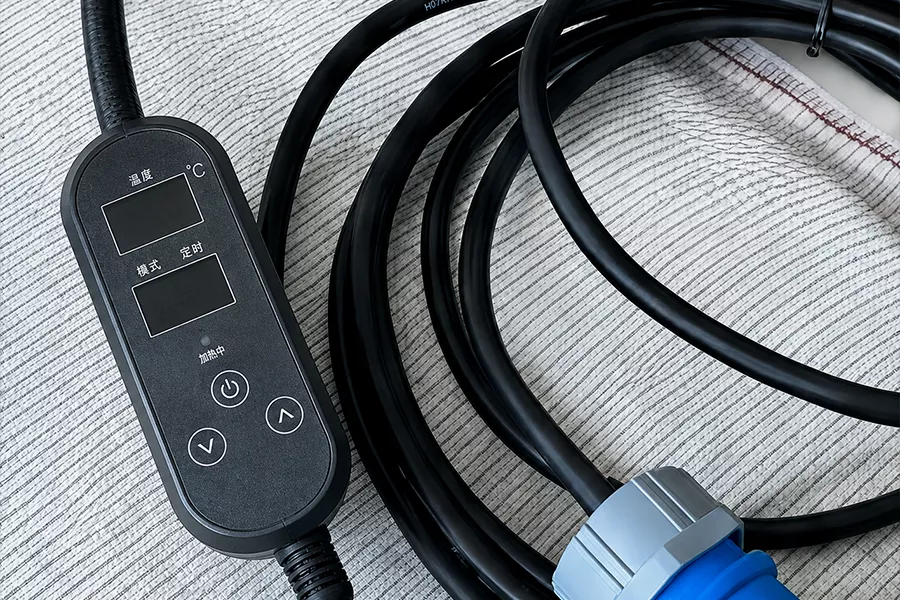
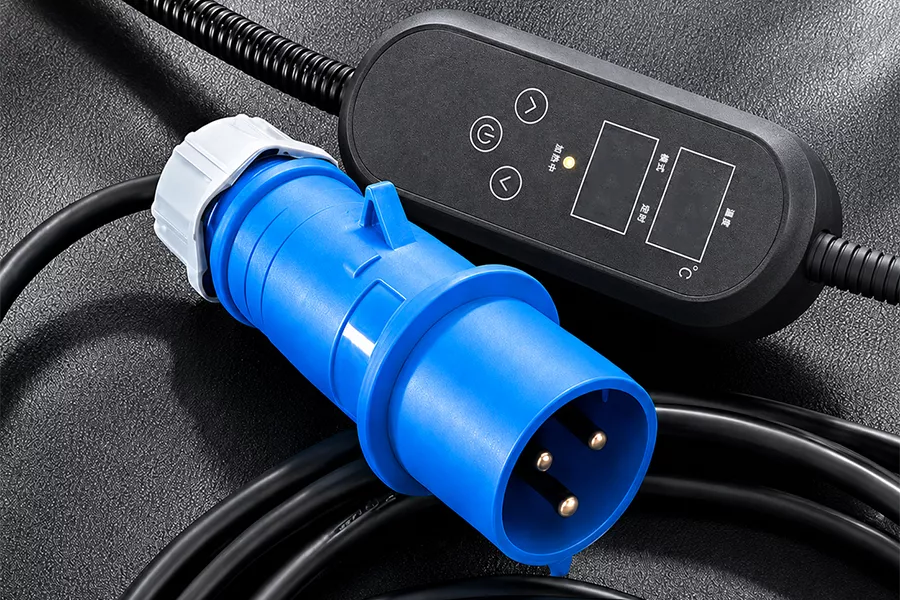
Power and control interface
A buyer has a controller in mind, but supply, output, zone load, connector, pinout, and plug details still have to be matched as one interface. A voltage name by itself does not release the configuration.
NODE.05
Sensing and measurement
Thermocouple type, circuit, location, identification, and calibration expectation should be defined before production. ASTM E220 and ASTM E230 provide useful calibration and type context without setting a product acceptance value.
NODE.06
Vacuum and insulation stack
Vacuum bagging, insulation, breather layers, tooling, and the composite surface alter heat transfer. The quotation should record the stack that matters to fit and interface review.
What a complete pack does not do
It does not guarantee a quote, approval, performance, or site acceptance. It reduces avoidable quotation revisions and gives the responsible parties a common evidence set for the decision.
For custom work
FlexBlanket offers custom dimensions and shapes, custom voltage and wattage, custom temperature control, and custom sensors and monitoring. Every option remains subject to the propane evidence gate; “custom” describes configuration flexibility, not unlimited application permission.
SYSTEM ROUTES
Product Routes and System Fit
Composite materials do not create one universal thermal problem. Epoxy or resin chemistry, fiberglass or carbon reinforcement, laminate thickness, tooling, and access conditions change the review route.
ROUTE.01
Generic composite curing
Use this page for a custom composite curing heating blanket request where geometry, interfaces, and acceptance inputs need to be assembled for quotation.
ROUTE.02
Localized composite repair
Provide the approved repair or process data, the repair stack, heat-sink features, and the measurement plan. Heat application in commercial-aircraft repair remains subordinate to approved repair data or the relevant original-equipment-manufacturer or regulatory agreement.
ROUTE.04
Other custom heating applications
For a non-composite duty, use the custom heating blankets route. Full controller, hot-bonder, or vacuum-system procurement should be scoped separately from the blanket.
ROUTE.03
Wind-turbine blade work
Route blade-specific contour, field access, and repair questions to the dedicated wind turbine blade curing blanket solution. That child page owns the blade-specific buying intent and distinct process geometry.
Explore Blade CuringCompany-Wide Custom Program
- We provide ODM/OEM Service and private-label manufacturing for custom industrial heating projects.
- We support Worldwide Shipping, with shipping terms fixed in the quotation.
- We provide engineering support and configure custom dimensions and shapes against the project drawing.
- We review custom voltage and wattage, custom temperature control, and custom sensors and monitoring as written interface requirements.
Cure-Interface Release Map
This release map turns an early inquiry into a visible decision state. It does not calculate heat distribution or approve the curing process; it shows whether the information needed for a written blanket review is present. The disclosed unofficial copy of N242-072 specifically identifies unknown active heating area and inadequate edge heating as hot-bond repair problems.
Ready for quotation
The buyer input is defined well enough to place in a quotation.
Engineering review needed
A named interface or geometry needs engineering alignment before release.
Input missing
The quotation would rest on an assumption, so the input should be supplied first.
Input Parameter
Ready for quotation
Engineering review needed
Input missing
Heated geometry
Ready for quotation:
Dimensioned outline supplied
Engineering review needed:
Compound contour or obstruction shown
Input missing:
No drawing or usable dimensions
Surface contact
Ready for quotation:
Contact face and orientation identified
Engineering review needed:
Gaps, transitions, or heat sinks present
Input missing:
Contact condition unknown
Zone boundary
Ready for quotation:
Each requested zone marked
Engineering review needed:
Zone logic needs load review
Input missing:
Zone count absent
Sensor location
Ready for quotation:
Type and measurement points shown
Engineering review needed:
Mapping method needs alignment
Input missing:
Sensor plan absent
Lead exit
Ready for quotation:
Direction and available path shown
Engineering review needed:
Tight access or movement affects routing
Input missing:
Exit direction absent
Connector
Ready for quotation:
Mating details or pinout supplied
Engineering review needed:
Controller interface needs confirmation
Input missing:
Connector requirement absent
Attachment
Ready for quotation:
Retention method and keep-out areas shown
Engineering review needed:
Surface condition affects the method
Input missing:
Attachment expectation absent
Insulation and vacuum stack
Ready for quotation:
Stack described
Engineering review needed:
Stack or tooling changes locally
Input missing:
Thermal stack unknown
Cure-Interface Release Map
This release map turns an early inquiry into a visible decision state. It does not calculate heat distribution or approve the curing process; it shows whether the information needed for a written blanket review is present. The disclosed unofficial copy of N242-072 specifically identifies unknown active heating area and inadequate edge heating as hot-bond repair problems.
Ready
The buyer input is defined well enough to place in a quotation.
Review
A named interface or geometry needs engineering alignment before release.
Missing
The quotation would rest on an assumption, so the input should be supplied first.
Heated geometry
Dimensioned outline supplied
Compound contour or obstruction shown
No drawing or usable dimensions
Surface contact
Contact face and orientation identified
Gaps, transitions, or heat sinks present
Contact condition unknown
Zone boundary
Each requested zone marked
Zone logic needs load review
Zone count absent
Sensor location
Type and measurement points shown
Mapping method needs alignment
Sensor plan absent
Lead exit
Direction and available path shown
Tight access or movement affects routing
Exit direction absent
Connector
Mating details or pinout supplied
Controller interface needs confirmation
Connector requirement absent
Attachment
Retention method and keep-out areas shown
Surface condition affects the method
Attachment expectation absent
Insulation and vacuum stack
Stack described
Stack or tooling changes locally
Thermal stack unknown
Configuration Inputs for a Written Quote
A quotation can fix only the inputs that are actually defined. Use the following sequence as the specification handoff; it replaces a generic product table with project-specific fields that a buyer can verify.
What you supply
Material-owner target, ramp, dwell, and permitted limits
What FlexBlanket confirms
The design input used for the blanket review
What you supply
Dimensioned active area, contour, orientation, and keep-outs
What FlexBlanket confirms
The quoted blanket outline and heated-area interpretation
What you supply
Requested zone count and boundaries
What FlexBlanket confirms
The zone arrangement included in supply
What you supply
Available supply and control output
What FlexBlanket confirms
The electrical interface fixed in the quotation
What you supply
Thermocouple type, circuit, locations, and mapping intent
What FlexBlanket confirms
The sensor and lead scope included with the blanket
What you supply
Exit direction, length requirement, pinout, and mating detail
What FlexBlanket confirms
The quoted lead arrangement and connector interface
What you supply
Retention method, access restrictions, and contact face
What FlexBlanket confirms
The attachment features included in supply
What you supply
Tooling, insulation, breather, vacuum, and adjacent heat sinks
What FlexBlanket confirms
The stack assumptions used during review
What you supply
Order quantity and any repeat-order requirement
What FlexBlanket confirms
The quantity band and production scope
What you supply
Method, limits, record format, and approval owner
What FlexBlanket confirms
The evidence scope included in the quotation
Pricing, MOQ and Lead Time
Price follows geometry, heated area, zone count, electrical and control interface, sensor and lead design, attachment, quantity, and acceptance scope. The trade-off is simple: an early generic number is fast to read, but it hides the variables that decide whether two heat blankets are actually comparable.
DRIVER 01
Contour and active area
Why it changes the quotation
They set the physical heating footprint and contact problem.
Best buyer action
Send a dimensioned drawing with the heated boundary marked.
DRIVER 02
Zones and control interface
Why it changes the quotation
They change circuits, leads, connector details, and review effort.
Best buyer action
Provide controller output and pinout information.
DRIVER 03
Sensors and acceptance scope
Why it changes the quotation
They define what must be supplied, identified, and recorded.
Best buyer action
State the required method, limits, and record owner.
DRIVER 04
Quantity and repeatability
Why it changes the quotation
They change production setup and documentation needs.
Best buyer action
Separate initial and repeat-order quantities.
Flexible MOQ
FlexBlanket publishes Flexible MOQ for custom solutions.
Most orders: 2–6 weeks
Most company orders ship within 2–6 weeks; the project schedule is fixed in the written quotation.
Bronze cost view
Compare the cost of waiting for missing inputs: engineering rework, connector changes, remade drawings, delayed acceptance, and an incomplete measurement plan. Do not apply a generic savings percentage or payback period to a blanket purchase.
Acceptance Scope to Define
Uniform heater construction is not the same as uniform heat distribution through the part. The method, sensor layout, operating stack, limits, and record owner must be stated together because a controller setpoint is not a substitute for tool, bond-line, surface, or through-thickness laminate temperature evidence.
Identity and traceability
SCOPE // 01
- Blanket or project identifier
- Zone and sensor identity
- Drawing and quotation revision
- Required record format
Electrical review
SCOPE // 02
- Resistance or continuity method
- Electrical test method and limits
- Supply and control interface
- Lead, connector, and strain-relief scope
Thermal review
SCOPE // 03
- Temperature-mapping method
- Sensor count and placement
- Insulation and vacuum-bag stack
- Heat-sink and edge conditions
Release record
SCOPE // 04
- Visual and dimensional checks
- Acceptance limits and approver
- Nonconformance route
- Records required with the order
Measured distribution belongs to a defined setup
An unofficial published copy of N242-072 reports active-area uncertainty and inadequate edge heating in hot-bond repair; the official SBIR award record independently lists edge heating without heat sinks or dead spots and conformance to complex features as design targets. Define the test setup instead of treating even heating as a property that transfers unchanged to every part.
SYS.BOUNDARY
Blanket and System Responsibility Boundary
The blanket, controller, thermocouples, vacuum stack, material cure schedule, and acceptance record are separate responsibility objects. Putting the owner beside the required input prevents a heat blanket quotation from being mistaken for approval of the entire composite curing process. For commercial-aircraft repair, SAE ARP5144A keeps heat application subordinate to an approved repair document or an agreement with the original equipment manufacturer or regulator.
Blanket Responsibilities
Buyer and FlexBlanket
Quoted geometry, zones, leads, and interfaces
Material cure approval
Controller or hot bonder
System owner
Supply, output, connector, and control arrangement
Measured laminate response
Thermocouples
Process or acceptance owner
Type, circuit, identity, and connection scope
An approved measurement layout
Vacuum and insulation stack
Process owner
Contact and stack assumptions used in review
Vacuum integrity or consolidation acceptance
Material cure schedule
Material or approved-process owner
Design input stated for the project
Material storage, out-time, or moisture control
Acceptance record
Buyer or applicable authority
Quoted evidence and record format
Final part or repair release
Controller, Thermocouple and Vacuum-Bag Interfaces
A mismatched control loop creates a release risk because the supply, output, heater circuit, connector, thermocouple input, measurement location, and vacuum-bag contact arrangement may describe different configurations. FlexBlanket confirms the quoted interface as one written system boundary. ASTM E220 is cited only for thermocouple-calibration context; it does not set a blanket, controller, or composite-process acceptance criterion.
Control interface
We review the available output, requested zones, connector, and pinout against the blanket scope. Compatibility is confirmed for the quoted interface, not inferred from a controller brand.
Measurement interface
ASTM E220 treats thermocouple calibration as a comparison against a reference and stated tolerance. The buyer should define which measurement supports process acceptance.
Part interface
Heat sinks, local thickness, tooling, insulation, pressure, and contact redistribute thermal energy. A study of self-heating tooling also found that material and package assumptions changed required power and system response.
Qualified Cure Process Boundaries
A configured blanket is one element of controlled heating, not a shortcut around process qualification. Blanket selection is the wrong answer when approved cure data, material condition, surface preparation, consolidation, measurement, competent personnel, inspection, or the applicable release route is still unresolved.
SITUATION 01
Approved structural repair
Why blanket selection is insufficient
The repair data governs materials, preparation, cure, inspection, and release.
Next decision owner
Approved repair authority or original equipment manufacturer.
SITUATION 02
Moisture or contamination concern
Why blanket selection is insufficient
Heating may move volatiles or create void risk without resolving material condition.
Next decision owner
Material and process owner.
SITUATION 03
Thick laminate or large area
Why blanket selection is insufficient
Through-thickness response and heat loss differ from a small surface repair.
Next decision owner
Responsible process engineering team.
SITUATION 04
Undefined acceptance method
Why blanket selection is insufficient
Uniformity cannot be judged without a setup, sensors, limits, and records.
Next decision owner
Buyer quality or acceptance owner.
SYS.OPT // MAPPING
Field application context
The European Commission CORETO project combined customized heating blankets with vacuum bagging, thermocouples, control equipment, and recorded data on wind-turbine blades. The lesson for a generic request is the system boundary, not a transferable product performance claim.
Project Configuration And Engineering Tools
Blanket System Scope Builder
Assemble geometry, interfaces, and acceptance inputs for quotation.
Open BuilderCure Interface Release Check
Confirm the quoted interface as one written system boundary before production.
Run CheckQuote Input Readiness Check
Find the next missing field in your configuration inputs for the specification handoff.
Start CheckComposite Curing Blanket FAQs
What information is required to quote a composite curing blanket?
Send the 10 configuration fields listed above: cure schedule, heated geometry, zones, supply, sensor plan, leads and connector, attachment, thermal stack, quantity, and acceptance scope.
How are heated area and surface contour defined?
Mark the active heated boundary separately from overall blanket size, then show contours, obstructions, orientation, keep-outs, edges, and local heat sinks on a dimensioned drawing.
Does a curing blanket include a controller or hot bonder?
Treat the blanket and control equipment as separate quotation objects. State the control scope you need, and FlexBlanket will confirm what is included in writing.
How should the controller output and connector be matched?
Provide supply, output, zone load, connector, pinout, and sensor-circuit information. Matching those 6 interface elements is more reliable than selecting by voltage name alone.
Who specifies thermocouple type and measurement location?
The applicable process or acceptance owner should define type, locations, calibration expectation, mapping method, and limits. ASTM E220 and ASTM E230 provide measurement context but do not set a FlexBlanket product criterion.
How is heat-distribution acceptance defined for a project?
Define the operating stack, sensor layout, mapping method, acceptance limits, and record format. Uniform heat at the heater surface does not automatically prove uniform temperature through the composite.
What changes the price of a custom curing blanket?
Geometry, heated area, zones, electrical and control interface, sensors and leads, attachment, quantity, and acceptance scope drive the quotation.
What are FlexBlanket’s MOQ and lead-time terms?
FlexBlanket publishes Flexible MOQ, and most orders ship within 2–6 weeks. The project schedule is fixed in the written quotation after its configuration and acceptance scope are defined.
Where should wind-turbine blade repair requirements go?
Use the dedicated wind turbine blade curing blankets page for blade geometry and field-repair depth.
Does selecting a curing blanket qualify the composite cure process?
No. The blanket request does not replace approved cure instructions, material and moisture controls, surface preparation, vacuum or consolidation, calibrated measurement, inspection, competent personnel, or sector-specific qualification.