Custom Gas Cylinder
Heating Jackets

It starts with a heating location and cylinder equipment data and a operating duty – not a wattage estimate. Flex creates a full-wrap gas cylinder heater jackets around proven fit and specified electrical/control inputs, then records the project specification in the quotation.

Documented 800 W model references

  • 120 VAC or 230 VAC options
  • Digital adjustable thermostat and built-in over-temperature protection
  • Custom dimensions, voltages and wattages available for engineering review
Configure My Cylinder Heating Jacket
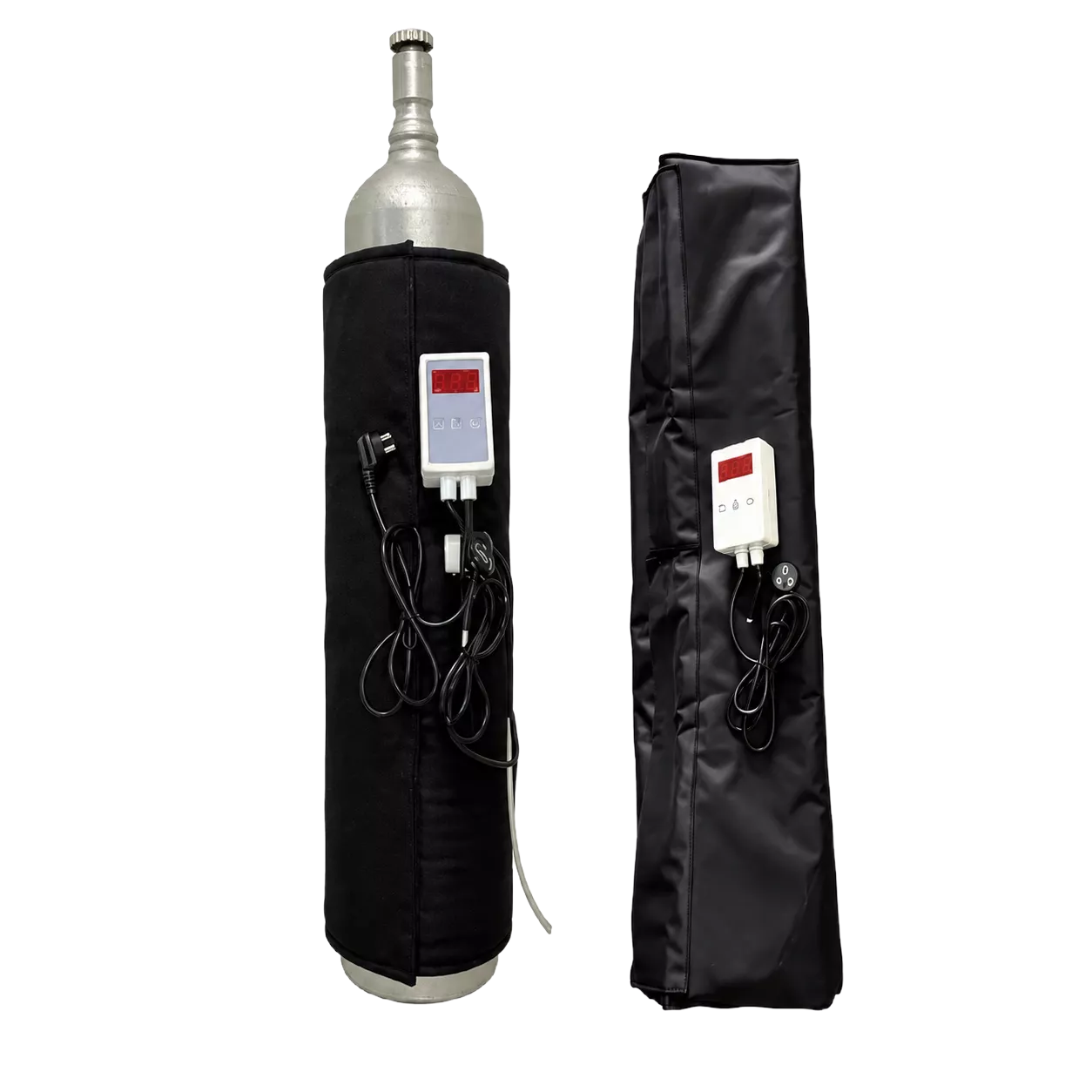
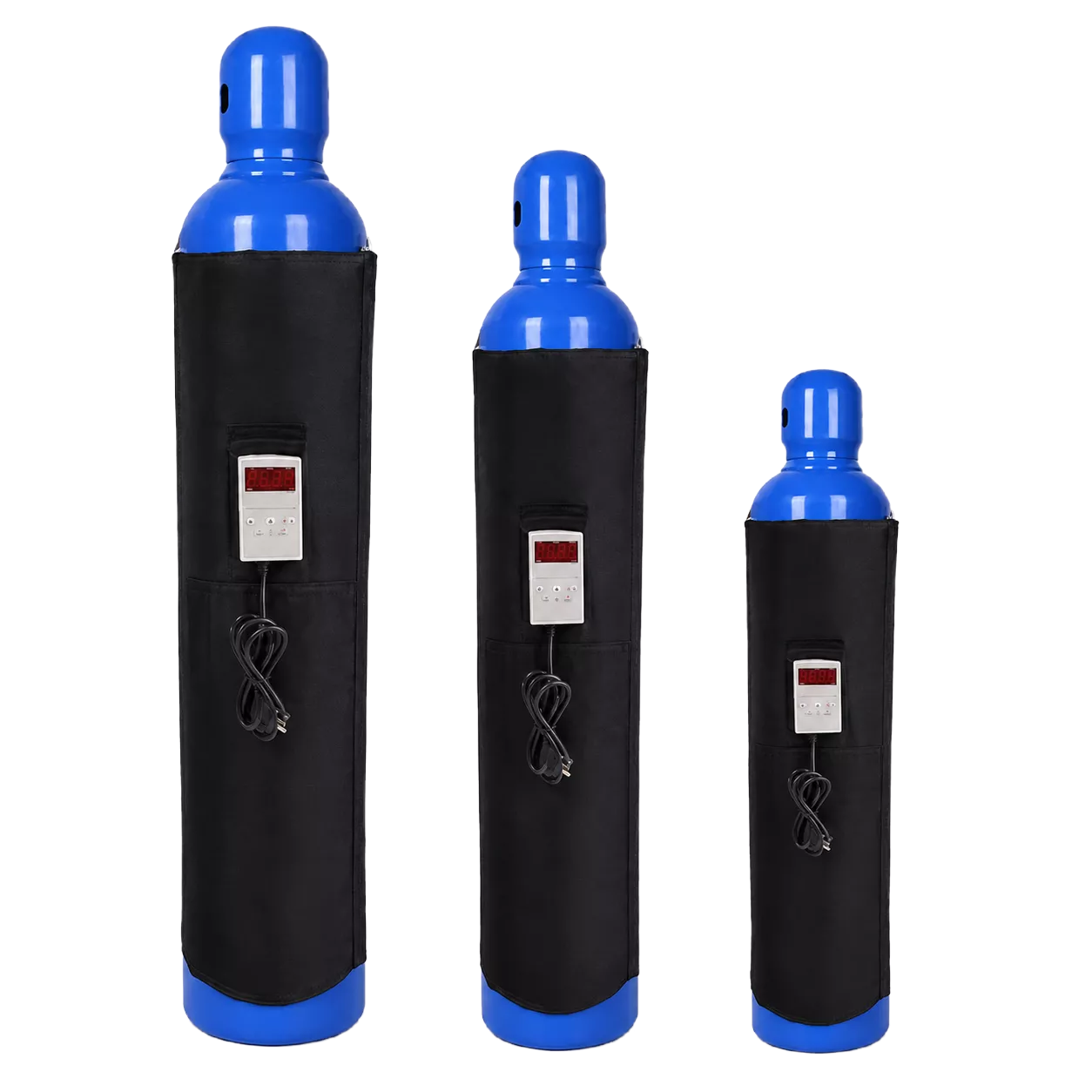
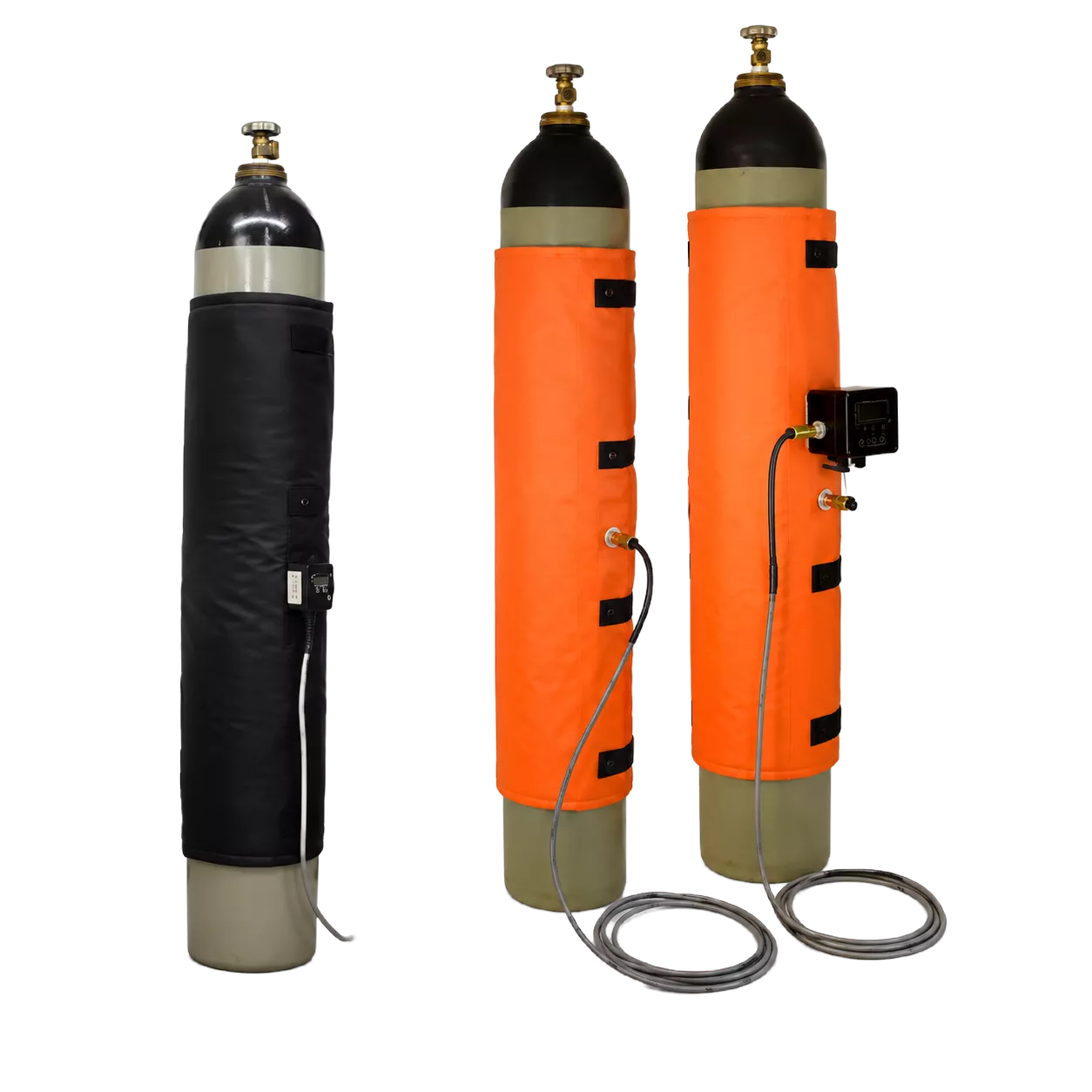
Flex black gas cylinder heating jacket fitted to a metal cylinder beside an unfitted jacket, with digital controllers and power cables visible

Full-wrap jacket form with visible controller and cable routing. Cylinder and installation fit remain project-specific.

Documented Models
FLB-GCH-1086
1086I / 1086A

3 documented models

Dimensions
1050 × 860 mm

Documented model size; final circumference and coverage need confirmation

Power Rating
800 W

Documented model power, not a universal duty recommendation

Supply Options
120 / 230 VAC

Common supply options subject to order and site review

Heater Location and Gas-Service Boundary

The Heater Location Decision Map helps industrial buyers choose the right review path before discussing a model. Gas cylinder heater blanket, gas cylinder heating blanket and gas bottle thermal jacket searches are not interchangeable: the cold point may be the cylinder wall, regulator, line or surrounding environment.

Heating a cylinder is not a substitute for defining the allowable cylinder-surface temperature, pressure-relief access and downstream thermal condition.

The buyer can solve the wrong thermal location when the equipment is chosen from a gas name alone. A nominal jacket size does not establish fit, and treating the heater’s operating range as a cylinder setpoint is the wrong choice.

REFERENCE STANDARD

Engineering rule derived from CGA cylinder-safety guidance and US Patent 6,076,359

SYS_01

Full-wrap jacket review

Use this route when the intended heat-transfer surface is the outer cylinder wall. Document cylinder material, fill state, acceptable surface temperature, relief configuration and valve clearance.

SYS_02

Inline or regulator review

Use this route when the restriction or freezing problem occurs at the outlet, regulator or gas line. Record the required flow, pressure and downstream temperature conditions.

SYS_03

Insulation-only review

Use this route when the intent is to reduce heat loss without active electrical heating. Record hold time, ambient conditions and the allowable temperature change.

SYS_04

Engineering and EHS review

Use this route for an unknown location or classification, unusual gas service, undocumented cylinder restrictions or incomplete approval evidence.

A gas designation does not select a heater. LPG, CO2, nitrogen and process-gas inquiries pass through this location screen before a jacket type can be identified.

A workable solution must maintain the required process condition across the stated ambient temperature range. Defined temperature control inputs help prevent a heater-location error.

Flex Gas Cylinder Heating Jacket Models

These rows are documented product references, not universal cylinder equivalents. EIGA cylinder-heating guidance shows why cylinder material and owner restrictions remain separate from a jacket model row.

Buyers searching for a gas cylinder heater for sale may also encounter the labels electric gas cylinder heater blanket and gas cylinder heating pad. Use those terms only as sourcing synonyms: model selection still depends on measured fit, duty, controls and the installation boundary.

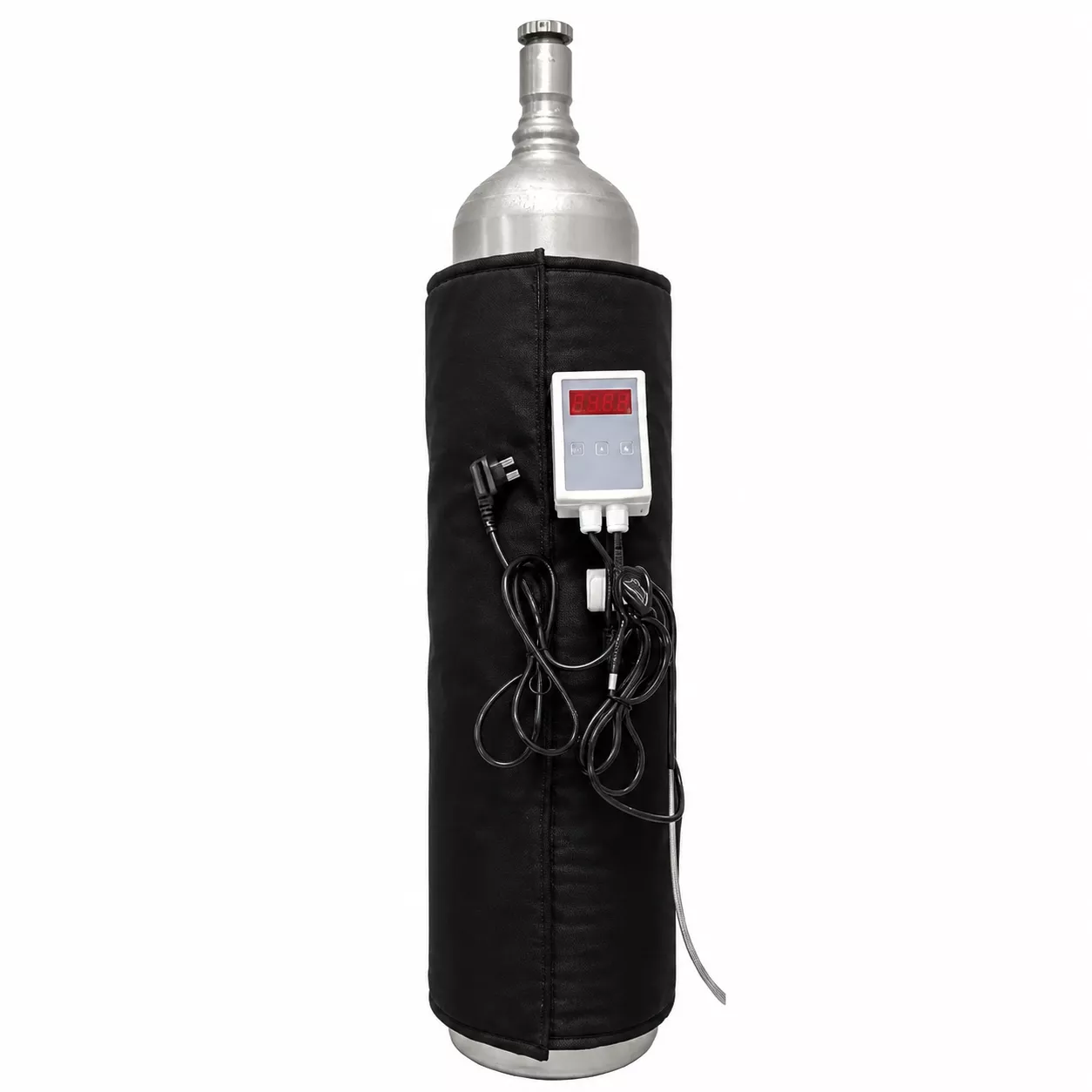
Flex gas cylinder heater jacket product view showing the black flexible cover and controller

Flex gas cylinder heater jacket product view showing the black flexible cover and controller

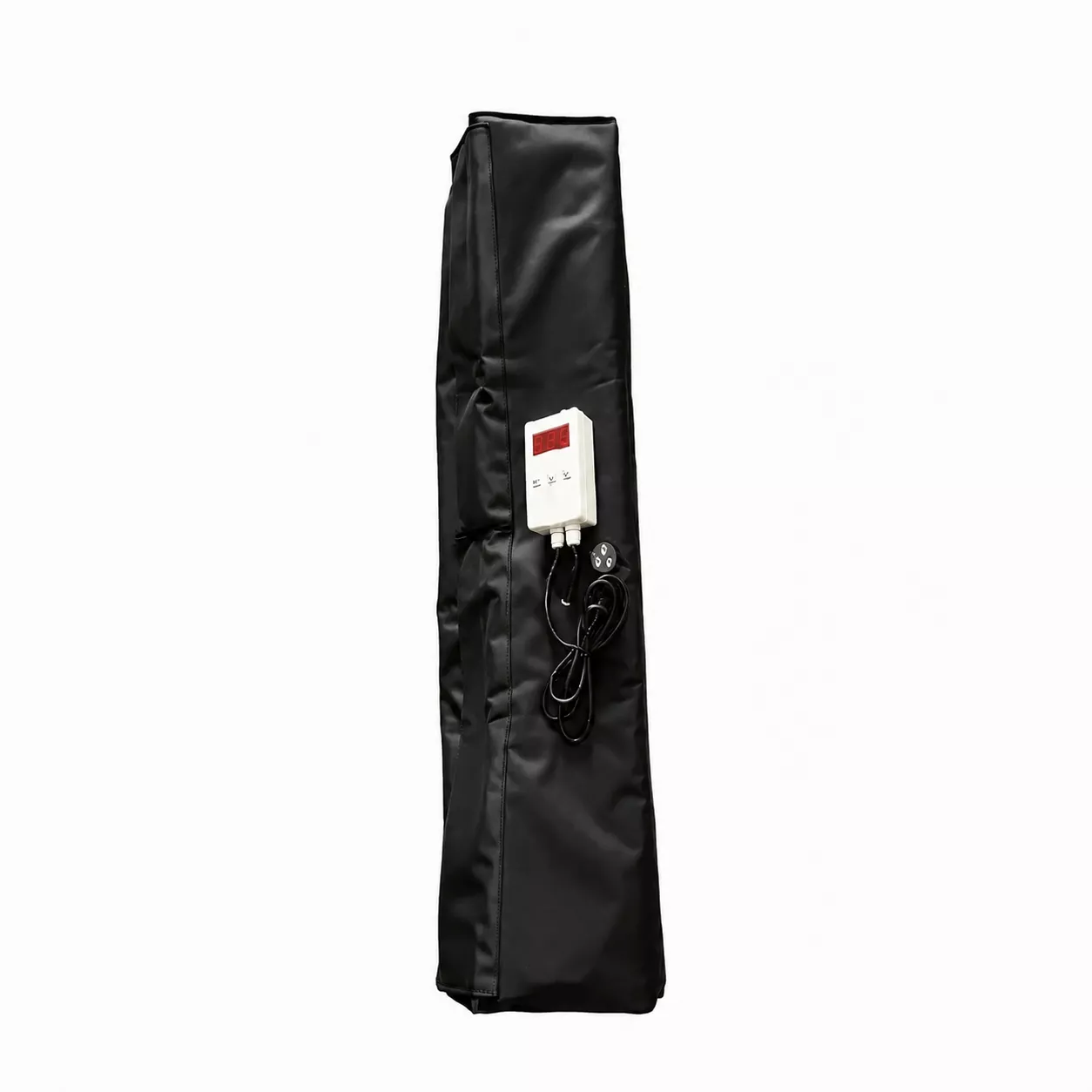
Close product view of a Flex gas cylinder heating jacket surface and fastening construction

Close product view of a Flex gas cylinder heating jacket surface and fastening construction

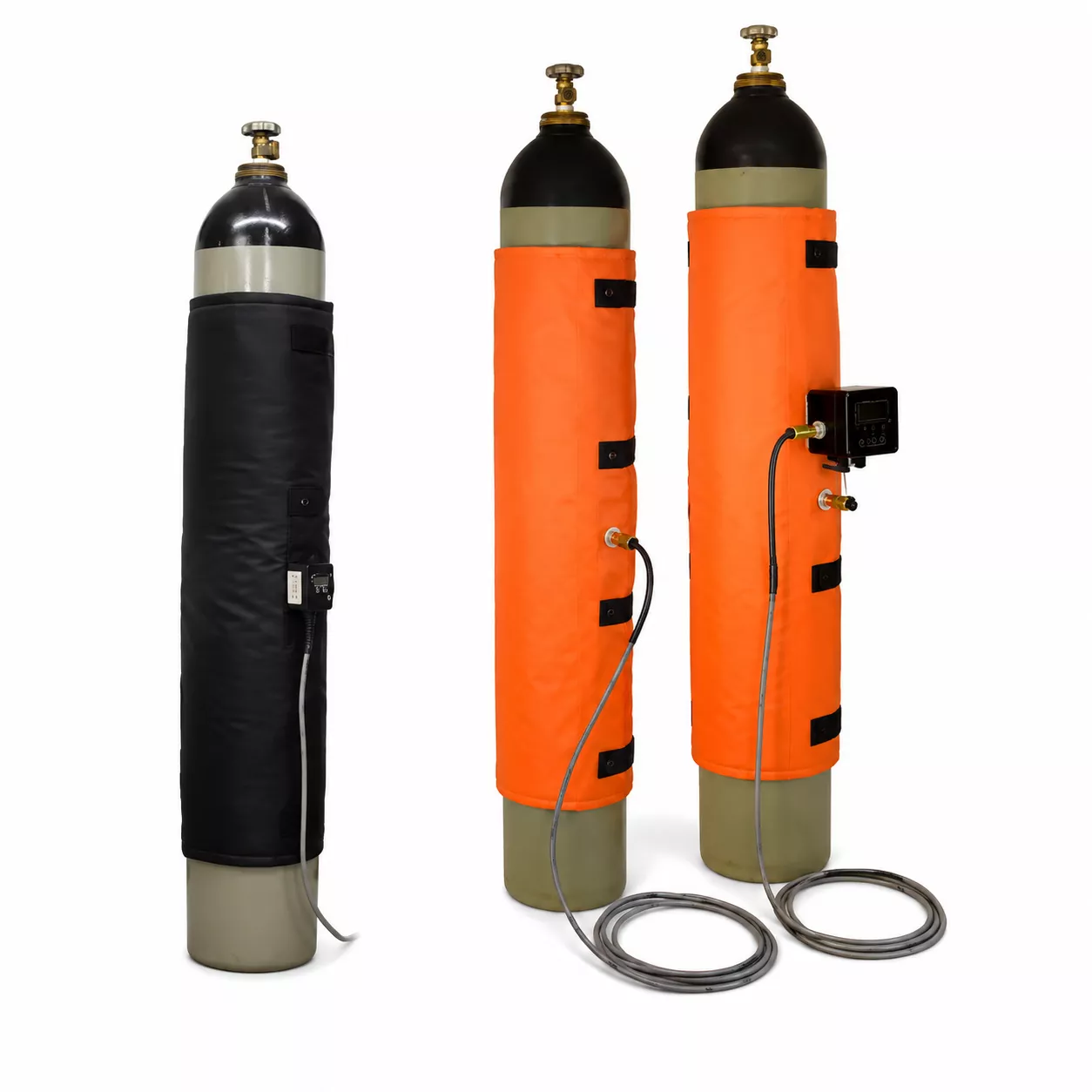
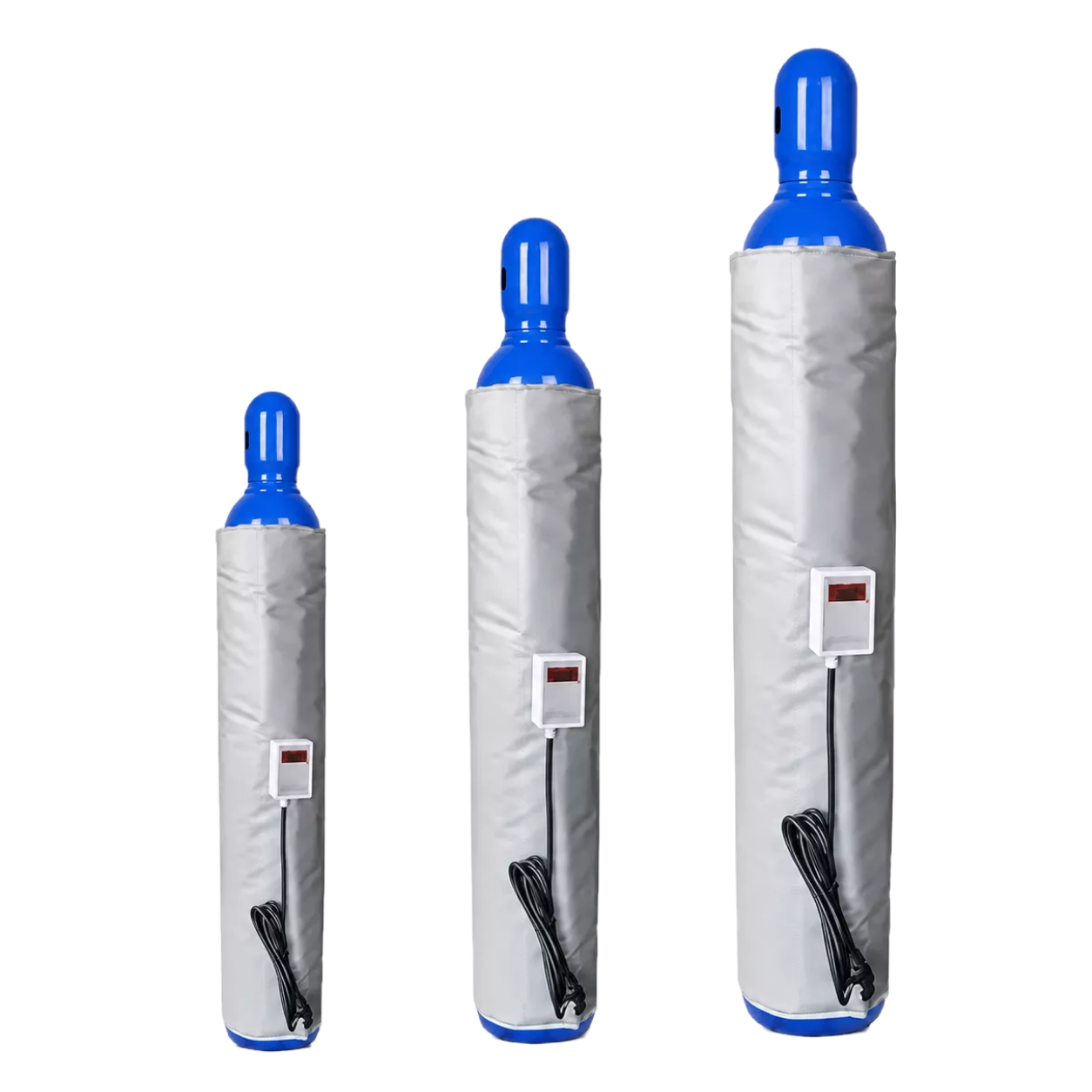
Flex flexible gas cylinder heating jacket shown with control and power components

Flex flexible gas cylinder heating jacket shown with control and power components

Fit confirmation

Confirm usable circumference, heated height, overlap, valve clearance and cable orientation before treating a row as a fit candidate.

Model / Element Documented size / Order Power / Voltage Configuration Selection task
FLB-GCH-1086 1050 × 860 mm 800 W Standard construction without fiberglass insulation Check cylinder contact, coverage and duty
FLB-GCH-1086I 1050 × 860 mm 800 W Insulated version with fiberglass layer Check whether reduced heat loss suits the operating cycle
FLB-GCH-1086A 1050 × 860 mm 800 W Graphene version Request configuration evidence; no efficiency uplift is claimed here
Supply option Order-specific 120 VAC Common documented voltage Confirm frequency, plug and site circuit
Supply option Order-specific 230 VAC Common documented voltage Confirm frequency, plug and site circuit
Power connection 2 m (6.5 ft) cable 10 A plug Documented common hardware Confirm routing and market standard
Industrial Heating Cylinder Matrix Application

15-Input Cylinder Fit-Duty-Control Matrix

This hidden bottleneck is generally an input defined later in the product discussion, after some basic jacket features are known. This 15-input matrix uncovers a missing fact before a quotation is frozen by engineering and procurement.

The matrix keeps the cylinder user’s handling responsibility visible while engineering and procurement define the jacket scope.

Evidence sequence

The risk persists because a size and wattage row cannot qualify the cylinder, relief access or control method. Flex engineers use these 15 inputs to identify the root cause of a scope gap and record acceptance criteria before a quotation is frozen.

Qualification covers fit; gas service and heater location; cylinder specification and material; fill state; allowable cylinder-surface temperature; service-pressure marking, relief configuration and valve clearance; owner restrictions; voltage; wattage; sensor; controller; area classification; approved method and fail-safe evidence.
SPEC SHEET
01 / 13
INPUT 01

Diameter, circumference, height and coverage

Engineering decision Contact area, overlap and heated zone
EHS / electrical Valve, relief and inspection clearance
Procurement record Standard reference or custom drawing
INPUT 02

Gas service and heater location

Engineering decision Cylinder wall, regulator/line or insulation path
EHS / electrical Gas hazard and installation boundary
Procurement record Application statement without compatibility claim
INPUT 03

Cylinder specification, material and owner restrictions

Engineering decision Permitted contact and heating constraints
EHS / electrical Manufacturer and authority evidence gaps
Procurement record Required documents and approvals
INPUT 04

Fill state, withdrawal orientation and duty

Engineering decision Thermal load inputs
EHS / electrical Operating restrictions
Procurement record Use-case and acceptance conditions
INPUT 05

Pressure marking, relief configuration and valve clearance

Engineering decision Physical interface limits
EHS / electrical Relief access and pressure-system review
Procurement record Drawing and photograph requests
INPUT 06

Allowable cylinder-surface temperature

Engineering decision Project limit supplied by the responsible party
EHS / electrical Independent limiting and fail-safe evidence
Procurement record Acceptance limit; never inferred from heater range
INPUT 07

Ambient and target operating condition

Engineering decision Duty definition
EHS / electrical Exposure review
Procurement record Quotation assumption
INPUT 08

Voltage, frequency, plug and cable

Engineering decision Electrical configuration
EHS / electrical Supply and installation review
Procurement record Destination-market requirement
INPUT 09

Wattage and heat-up objective

Engineering decision Engineering calculation input
EHS / electrical Protection architecture
Procurement record Cost and scope driver
INPUT 10

Sensor, controller and measurement point

Engineering decision Control task and response
EHS / electrical Controller location and circuit evidence
Procurement record Option list
INPUT 11

Area classification and IP exposure

Engineering decision Product boundary
EHS / electrical Heater, wiring, plug, sensor, controller, gas group and temperature marking review
Procurement record External evidence requirement
INPUT 12

Approved method and fail-safe evidence

Engineering decision Not inferred from a model number
EHS / electrical Approval and shutdown gap
Procurement record Hold point before release
INPUT 13

Quantity, market and timeline

Engineering decision Configuration batching
EHS / electrical Market-document scope
Procurement record Quotation and production schedule

Electrical Supply,
Sensors and Controllers

The published −20°C to 130°C value is the heater operating range. It is not an allowable cylinder-surface setpoint; NYC Fire Code 5303.5.6 illustrates why the applicable cylinder limit and approved method require separate evidence.

Check Electrical and Control Inputs
  • 120 VAC or 230 VAC
  • 10 A plug
  • 2 m (6.5 ft) power cable
  • Digital adjustable thermostat
  • Built-in over-temperature protection
  • Sensor type and measurement point
  • Controller type and location
  • Voltage, frequency and plug standard
  • Alarm, output and local/remote needs
  • Wattage and duty
  • Cylinder-surface limit
  • Independent shutdown and fail-safe evidence
  • Area and exposure requirements
  • Installation wiring and protection
  • Market-specific approval scope

Blanket Construction and Installation Checks

The documented construction combines silicone-coated fabric, fiberglass insulation where specified and Teflon heating wire. The scope summary for UL Subject 4300 shows that cylinder-cover evaluation extends beyond construction materials.

Detailed Flex gas cylinder heating jacket product image showing the flexible body, fastening area and controller
EHS ALERT

Use the physical product details to confirm routing and access; do not infer site approval from construction alone.

CHK_01

Measure usable circumference and heated height.

CHK_02

Ensure access for valves, relieve devices, marking, and inspection points.

CHK_03

Secure overlap and fastening in a manner which doesn’t introduce undulation contact with the controlled component.

CHK_04

Orient the cable in the desired 2-meter configuration without strain, wear, or high spot pinch points.

CHK_05

Provide access to the sensor and controller at locations dictated by control system strategy.

CHK_06

Record the pre-energization inspection and approved operating limit.

Ordinary-Area Offer and
Area-Classification Review Boundary

IP40 is the documented product rating. It does not establish outdoor, wet-location or hazardous-area suitability; the UL Subject 4300 scope explicitly separates its covered installations from outdoor use.

One common purchasing failure is treating a standard jacket listing as proof that the complete installed heating circuit suits the site. Send the area classification, exposure conditions, gas service, controller location and required approval evidence with the RFQ; Flex can then identify whether the ordinary-area offer remains in scope or must be held for a qualified site review.

Specification Note

No hazardous-location or product-certification claims are made in this specification.

  • 01

    Documented ordinary-area input

    Use IP40, supply, plug, cable and controller facts as the starting product record.

  • 02

    Exposure not yet defined

    Do not select configuration elements until all required water/dust protection levels, washdown needs, outdoor designation and controller locations are provided.

  • 03

    Classified-location requirement

    Require an installation checkout of the heater, wiring connections, plug types, sensor type, controller function, gas group specification, jacket surface marking and position within the installation.

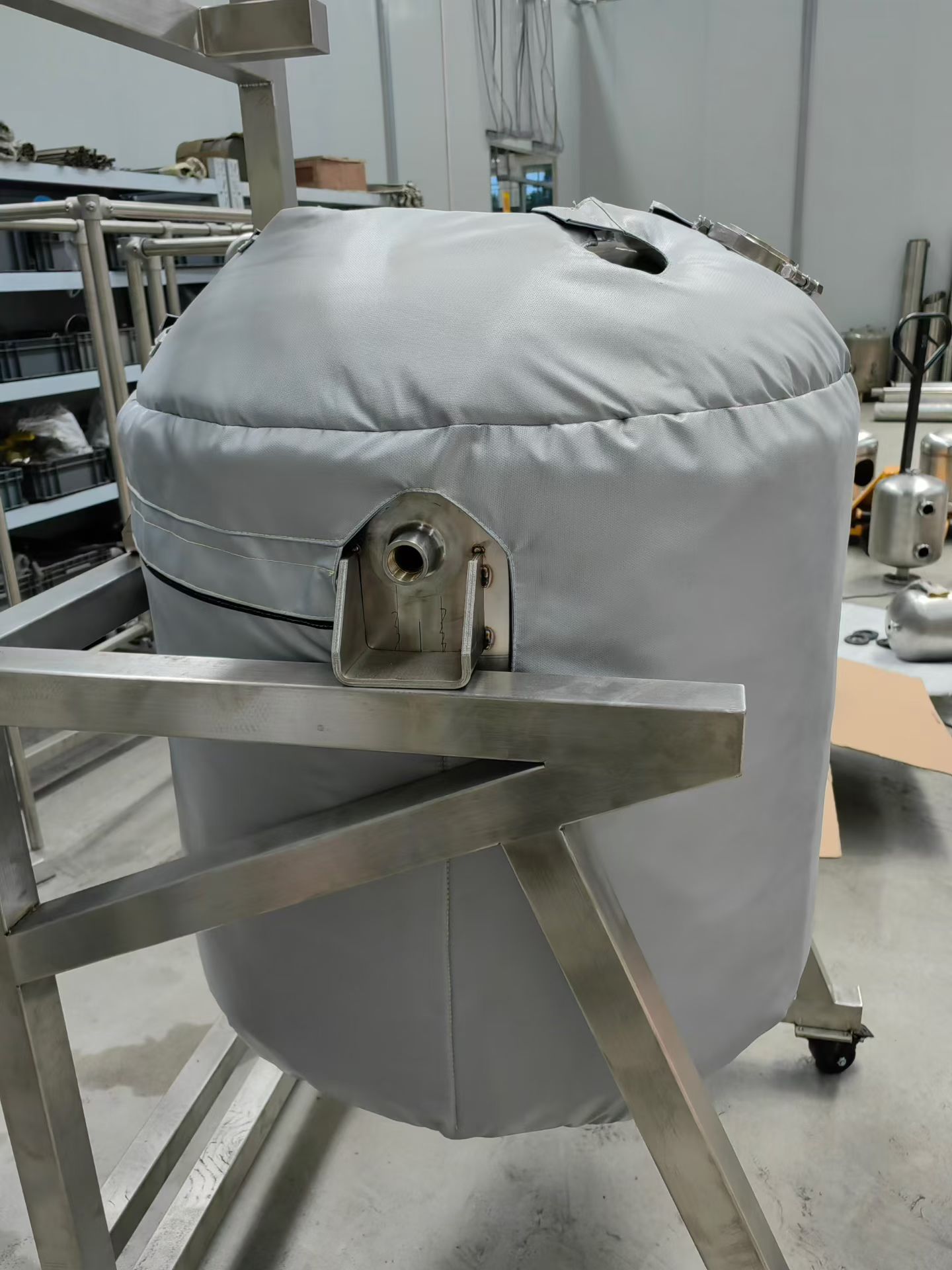
Industrial heating jacket application and installation environment
THERMAL // EVALUATION
RISK_MAP_SYS

Quote Inputs, Schedule and Documentation

The finalized price is based on the specified and approved fit, electrical system, control functions, and documentation scope. Flex provides no pre-estimate as price can vary dramatically based on jacket configuration, wattage requirements, sensor/controller types, shipping destination and any specialized certification needed.

PROCESS // TIMELINE

Send the RFQ brief and cylinder evidence.

Flex checks fit, duty, electrical and control scope.

Open evidence items are resolved in the engineered quotation.

Production schedule is confirmed after scope freeze.

PI, sales contract, commercial invoice, packing list and certificate of origin requirements can be confirmed for the order. State the required document set in the RFQ rather than assuming every document applies automatically.

DATA MATRIX

Quote Reopen Risk Map

Missing input
Scope it reopens
What closes the gap
Cylinder dimensions and usable coverage
Fit and custom pattern
Dimensioned drawing or measurement sheet
Allowable surface temperature and owner restriction
Duty, control and approval
Cylinder owner/manufacturer evidence
Supply, plug and controller location
Electrical design
Site electrical schedule
Area classification and exposure
Complete-installation suitability
EHS/electrical classification record
Acceptance and document requirements
Testing and shipment package
Purchase specification before order release
Industrial quality assurance and inspection process for heating solutions

Quality Assurance and Acceptance Inputs

A verified completion record correlates a confirmed specification to observable results. This doesn’t, however, imply that a general-purpose test checklist transforms it into a guarantee that every parameter is measured with every jacket.

01 //

RFQ requirement

Record the model or custom designation, size, voltage, wattage, thermostat and control functions, cable and plug specification, label content, required documents and acceptance criteria.

02 //

Supplier confirmation

Confirmed specifications, list of any deviations or compromises, responsible parties for approvals, schedule of product(s), and any reports that are to be delivered in supply.

03 //

Acceptance record

Initial heat appearance, marking requirements, electrical identification and interface, controller operation, cable and plug integrity, and the scope of required documentation.

Industrial Heating Equipment Field Application

When a Full-Wrap Jacket Is Not the Right Heating Method

OPERATIONAL MANUAL // REV.A
01 / 04
EXCEPTION 01

Outlet or regulator is the cold point

A cylinder jacket is not a substitute for an inline or regulator heater. US Patent 6,076,359 describes downstream recondensation as one reason to define the entire thermal path.

EXCEPTION 02

Only passive hold time is needed

Proceed to an insulation review and identify the ambient profile and allowable temperature drift.

EXCEPTION 03

Geometry blocks safe coverage

Proceed to a custom drawing review that protects valve, relief, label and inspection access. The trade-off is greater design effort in exchange for a verifiable fit.

CRITICAL 04

Approval evidence does not match the location

Proceed to an EHS and certified-product review before selecting a commercial jacket. Choosing first and checking approval later is the wrong choice.

Gas Cylinder Heating Jackets
Configuration Tools

MOD 01

Cylinder Jacket RFQ Builder

Open Builder
MOD 02

Heater Location Screen

Open Screen
MOD 03

Electrical Control Checklist

Open Checklist

Frequently Asked Questions

Provide diameter or circumference, overall height, usable heated height, valve and relief-device positions, label/inspection areas and the intended overlap. Photographs are helpful for identifying cable and controller routing constraints.

The answer depends on the location of the thermal problem. A cylinder-wall duty starts with a full-wrap review; outlet, regulator or downstream freezing starts with an inline or regulator review.

FLB-GCH-1086, FLB-GCH-1086I and FLB-GCH-1086A are documented at 1050 × 860 mm and 800 W. These values are references, not an automatic fit or duty recommendation.

Both are documented common options. For the RFQ, document the frequency, plug standard, circuit, cable route, and market required.

Specify the measurement point, sensor type, controller location, control operation (local or remote), alarms/outputs, and require limiting or fail-safe behavior. Local or remote duty limits will not satisfy The heater’s operating range allowable cylinder-surface condition limit.

It is the documented product rating. It does not assure suitability for outdoor service, wet environments, washdown applications or in a hazardous location.

A generic model fact can’t lead to a conclusion. The complete installation should present evidence for the heater, wiring, plug, controller, sensor, gas group, temperature marking and installation location.

Projects including LPG, CO2, nitrogen, or process-gas may be submitted as conditional RFQ. Presenting a gas-name alone isn’t equivalent to a compatibility claim; the following must be present: cylinder, duty, temperature-limit, pressure/relief, and the owner evidence.

Key drivers include the Fit and coverage; wattage, voltage; sensor/controller scoping; area exposure/classification; approval documentation; quantity, market, and documents required.

Schedule is confirmed once Fit, Electrical, Control, and the Evidence scope are locked for an engineered quotation.

Enclose everything into the Fit-Duty-Control Matrix, documentation or cylinder Drawing, market, quantity, documents required, and the responsible approving party.