Get in touch with FlexBlanket Company

Ground Thawing Blankets for Construction | FlexBlankets
- Quotes returned within 24 business hours
- Samples in 5-10 working days
- 120 VAC or 230 VAC
- IP67 rated
Ground thawing blankets thaw frozen ground right where the work area sits, which keeps excavation, backfill and cold-weather concrete work moving. We build them to order in our own plant: send us the heated area, the supply voltage and the plug you use, and the quote comes back built around those numbers. Every blanket holds a fixed 70 °C (158 °F) surface temperature and carries an IP67 rating for open-site work.
Drawings, site layouts and heated-area sketches stay confidential with us, and we will sign a non-disclosure agreement whenever you ask for one.
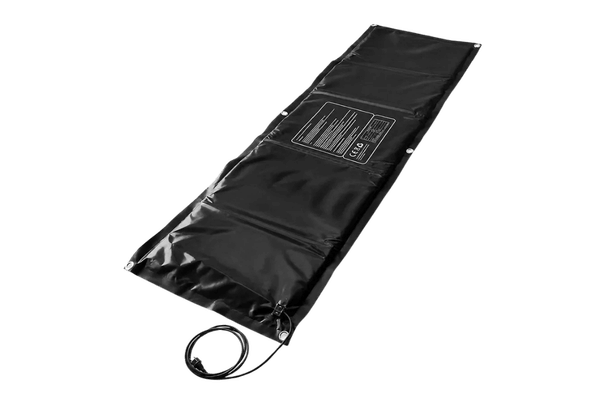
What a ground thawing blanket does: it is an electrically heated, insulated mat laid directly on frozen soil, snow or fresh concrete, and it adds heat to the ground instead of only holding in what is already there. Our blankets run on 120 VAC or 230 VAC, hold a fixed 70 °C (158 °F) surface temperature, and are rated IP67 for wet, outdoor sites. Blankets link together to cover larger areas, and sizes, voltages and wattages are made to order.
Supply voltage: 120 VAC or 230 VAC
·
Operating temperature: 70 °C (158 °F), fixed
·
Ingress protection: IP67
·
Quote turnaround: Within 24 business hours
·
Sample lead time: 5-10 working days
·
Payment terms: 30% T/T deposit, balance before shipment
·
Supply voltage: 120 VAC or 230 VAC
·
Operating temperature: 70 °C (158 °F), fixed
·
Ingress protection: IP67
·
Quote turnaround: Within 24 business hours
·
Sample lead time: 5-10 working days
·
Payment terms: 30% T/T deposit, balance before shipment
·
Applications for Ground Thawing Blankets
Lay the blanket heated-side down on the work area, run it from a site outlet or a generator, and leave it working. Heat travels downward by conduction, so coverage and run time settle the result rather than the blanket on its own.
- Electric ground thawing blankets fit work areas where open flame is barred, and where the ground thawing equipment has to move between locations inside one shift.
- Every unit is rated IP67 to IEC 60529, published in Europe as EN 60529, which is what lets it sit on wet ground.
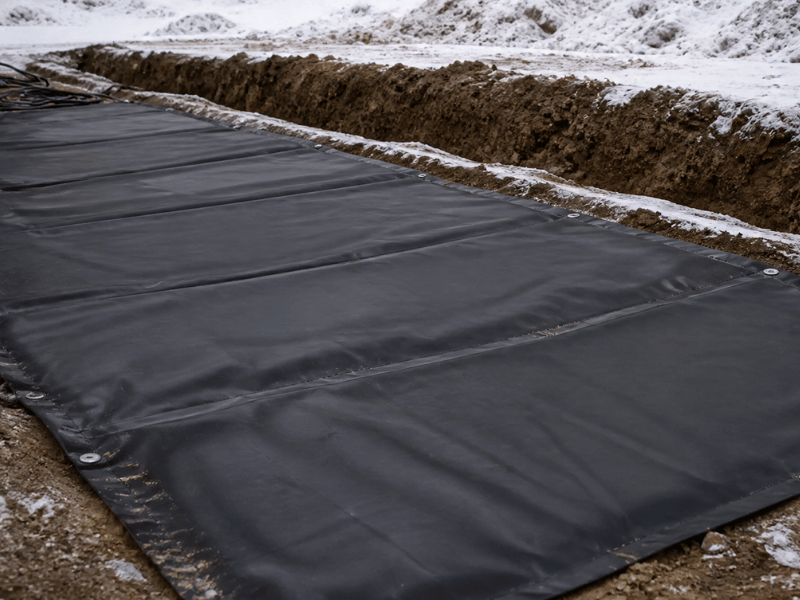
SYSTEM VISUALIZATION
IP67 rated / IEC 60529 compliant
TECHNICAL INSIGHT // SWITCHER
Why a heated blanket is not the same as an insulated cover
An insulated blanket keeps heat in. It slows the escape of heat the ground or the fresh concrete already holds, and contributes none of its own.
A heated blanket puts heat in. It draws electrical power and lifts the temperature of the surface underneath, which is what clears frost from soil that has already frozen through.
The two belong together. An insulated cover laid over a running heated blanket keeps more of that heat in the ground and less of it in the air.
An insulated cover is not a substitute for a heated one. Contrary to the common assumption that any construction blanket thaws ground, an insulated cover does nothing for soil that has already frozen through, whatever its R-value.
01
Frozen ground before excavation
Trenches, service laterals, pile locations and grave sites get warmed before the machine arrives, so the crew can prep the ground and dig soil rather than frost. Narrow and scattered work areas suit blankets, because every unit brings its own power lead. One utility crew put the constraint plainly on a trade forum: “we cannot use fire or anything like that.”
02
Frost removal before a pour
Subgrade has to be above freezing before concrete goes down, and the frost has to leave the surface first. A blanket pulls that frost out of the pour footprint with no open flame anywhere near the work.
03
Cold-weather concrete curing
The same blanket holds a slab, footing or patch inside its protection period once the pour is finished. Section 5 covers how that is set up.
04
Snow, ice and access ways
Ground thawing applications run past the trench: the same blanket will melt snow and ice on walkways, ramps, stair landings and equipment pads across construction areas, without salt and without manual chipping. Each blanket is reusable, and it rolls up for the next location when the job moves.
Models, Sizes and Wattages
One catalogue size covers the common trench and pour footprint, and everything else is built to the dimensions you send. Size, voltage and wattage are the three axes we change.
FLB-GTB-3010 STANDARD MODEL
Heated size
3100 × 1100 mm (122 × 43 in)
Power rating
1500 W
Supply voltage
120 VAC or 230 VAC
Current draw
12.5 A at 120 VAC; 6.5 A at 230 VAC
Coverage per blanket
3.41 m² (36.7 sq ft)
Best suited to
Single trench runs, footing footprints, post and pole holes
Built to your dimensions CUSTOM
Custom dimensions, voltages and wattages are available, so a blanket can be cut to a trench width, a slab edge or an access ramp instead of forcing the work area to fit a catalogue size.
- Size: heated length and width to your layout drawing
- Voltage: 120 VAC or 230 VAC supply
- Plug: 16 A (EU/UK) or 15 A (US)
- Wattage: matched to the heated area and the circuit you have on site
Tell us the heated area and the supply you have on site, and the quote arrives with wattage and current draw already worked out for you. Custom builds keep the same IP67 rating to IEC 60529 (EN 60529) as the catalogue size.
Covering a larger area
Blankets link to one another, so several units cover one continuous work area. What limits you is the circuit rather than the blanket, because total current draw has to sit inside the breaker feeding it.
Work out how many blankets a work area needs and what they draw:
Open the blanket sizing and run-cost worksheet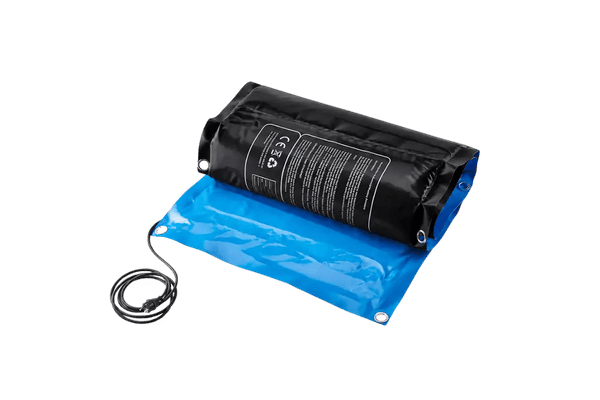
● DIMENSION SCALED
Cold-Weather Concrete Curing With the Same Blanket
The blanket that clears frost before the pour doubles as a heated concrete curing blanket once the slab is down. Heated concrete curing runs on rules set out in ACI 306R-16, and one of those rules gets misquoted constantly.
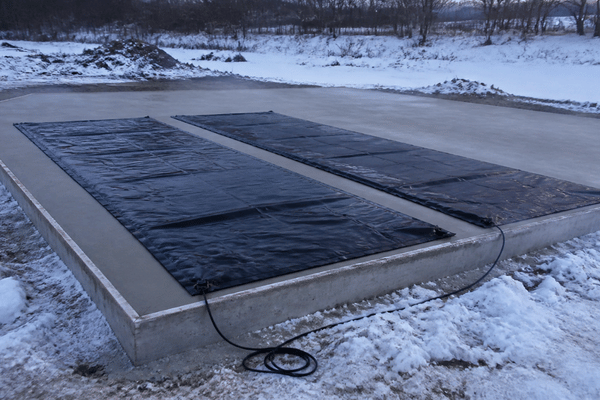
Curing concrete in winter is a temperature problem before it is a time problem
A slab has to stay warm enough for long enough, and a passive concrete blanket cannot manage that alone once both the ground and the air sit below freezing.
Three ACI thresholds circulate on job sites
They come from three different ACI documents. Check which one your contract names before you plan protection.
DOC // 306R-16
Guide wording, from ACI 306R-16, Guide to Cold Weather Concreting: cold weather conditions exist when the air temperature has fallen to, or is expected to fall below, 40 °F (4 °C) during the protection period.
DOC // 306.1-90
Older specification wording, from ACI 306.1-90: an average daily air temperature below 40 °F for more than three successive days. That version leaves protection untriggered when nights drop below freezing while the daily average stays above 40 degrees.
INFO // PUBLIC
ACI’s public pages state the threshold differently again depending on which page you land on, which is exactly why the document number named in your contract is what settles it.
RULE // ENFORCE
Guides and specifications carry different weight. A guide is advisory; a specification is mandatory where a project cites it. Read the document your contract names rather than the number you remember.
Cold weather begins at 40 °F (4 °C) during the protection period
ACI 306R-16 (guide)
Protection is planned from the forecast, not from a three-day average
Specification documents may still carry the older definition
ACI 306.1-90 and ACI 301-20 (specifications)
Check which document your project specification cites before you plan protection
Concrete must reach 500 psi (3.5 MPa) before it freezes
ACI (published on concrete.org)
The protection period runs until that strength is reached, not for a fixed number of hours
Do not place concrete on frozen ground
ACI 306R-16
Subgrade is thawed first; later thawing causes settlement and cracking
Minimum 55 °F (13 °C) placement temperature for sections under 12 in.
ACI 306R-16 Table 5.1
Mix temperature and surface protection are planned together
Remove protection gradually at the end of the period
ACI 306R-16
Power down and uncover in stages so the surface does not drop sharply
Edges and corners need extra protection
ACI 306R-16
Overlap coverage at slab edges, which lose heat on two faces
Electric concrete curing blankets and concrete blankets for cold weather are often shopped as the same thing, and the difference is the same one as on frozen ground: one adds heat, the other only slows its loss.
Setting a blanket up over fresh concrete
-
Lay a thin polyethylene sheet between the blanket and the fresh surface so nothing sticks or marks.
-
Run the blanket heated-side down and weight the perimeter so wind cannot lift an edge.
-
Overlap coverage past the slab edge, because edges and corners lose heat faster than the middle.
-
Add an insulated cover on top to hold the heat against the concrete instead of the air.
-
Monitor the in-place concrete temperature and shut down in stages when the protection period ends. Fresh-mix temperature at placement is measured by the test method in ASTM C1064.
These blankets hold a fixed 70 °C (158 °F) surface temperature, so the thermal gradient at the concrete face is controlled by how the blanket is covered and staged, not by turning a dial. Where a job calls for a lower or higher surface temperature, that is a wattage decision made when the blanket is built.
Technical Specifications
Every figure below describes how the blanket is built. Thaw depth and thaw time stay off the table because the soil decides them, and a single published depth figure is where most winter groundwork schedule risk begins. We state the IP67 classification against IEC 60529, published in Europe as EN 60529, so you can check it instead of taking it on trust.
SYSTEM ARCHITECTURE // SPECIFICATION
Supply voltage
120 VAC or 230 VAC
Operating temperature
70 °C (158 °F), fixed setpoint
Ingress protection
IP67, classified to IEC 60529 (EN 60529)
Plug type
16 A (EU/UK) or 15 A (US)
Power cable
2 m (6.5 ft), supplied with every blanket
Outer jacket
PVC, heat-welded seams
Earthing
Safety-grounded heating element
Standard heated size
3100 × 1100 mm (122 × 43 in), 1500 W
Current draw, standard model
12.5 A at 120 VAC; 6.5 A at 230 VAC
Linking
Multiple blankets connect for larger coverage areas
Custom build
Dimensions, voltages and wattages made to order
Standard lead time
10-25 days for small batches; 15-25 days for production runs
Fixed setpoint against rise above ambient
Two different temperature specifications circulate in this product category, and they are not interchangeable. A fixed setpoint states the surface temperature the blanket holds, whereas a rise above ambient states how far above the surrounding air it climbs, so its real surface temperature moves with the weather. The higher-sounding number is not always the hotter blanket on the day you need it.
Ours is a fixed setpoint: 70 °C (158 °F) at the heated face, in any ambient condition.
Ratings written as a rise above ambient read high on a mild day and much lower at −20 °C, because they state a temperature interval rather than a temperature.
NIST treats the two as different quantities, since a temperature and a temperature interval convert differently, so comparing one against the other is an arithmetic error rather than a preference.
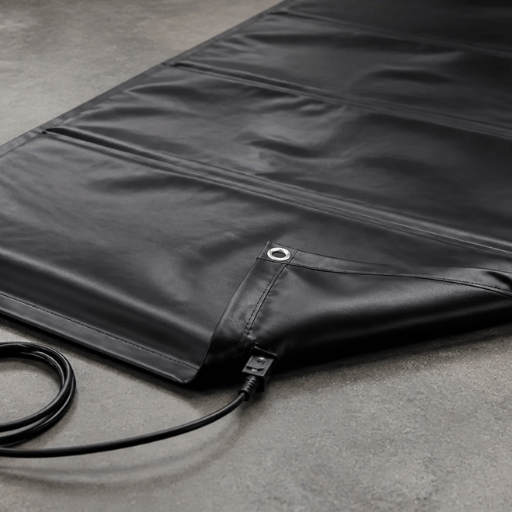
● THERMAL IMAGING
Pricing, Lead Times and Ordering
Price tracks heated area, wattage, supply voltage and order quantity instead of a fixed price list. That is also why a quote comes back with the electrical figures worked out rather than a catalogue number.
Stage
What we commit to
Quotation
Quotes are returned within 24 business hours of your enquiry.
Sample
Samples ship in 5-10 working days. The sample itself is free and you cover express freight.
Small batch
Small-batch orders ship in 10-25 days after the specification is approved.
Production run
Production runs are scheduled at 15-25 days, confirmed with your quotation.
Payment
30% T/T deposit, with the balance due before shipment.
What moves the price
- Heated area, meaning the element length inside the blanket rather than the finished outside dimension
- Wattage, since a hotter or faster build costs more element and more copper
- Voltage variant, because 120 VAC and 230 VAC builds use different element and plug sets
- Quantity, which spreads tooling and setup across the run
- Packaging and marking, covering private-label printing, cartons and cable labelling
Running cost sits apart from purchase price, and the arithmetic is yours to do: take the blanket wattage, multiply by the hours it runs, divide by 1000, then multiply by your electricity rate. Running one 1500 W blanket for 24 hours uses 36 kWh.
Put your own tariff and run hours into the numbers:
Open the sizing and run-cost worksheet
SYSTEM STATUS
VARIABLE PARAMETERS
Quality Control on Every Blanket We Ship
These are mains-powered units working outdoors on wet ground, so the checks that count are electrical and mechanical rather than cosmetic. A blanket that fails in the field fails for one of three reasons — a broken element, a compromised seal or a damaged cable entry — and FlexBlanket tests all three before anything is packed.
INSPECTION PROTOCOL // 5-STEP
-
Element continuity
The heating circuit is measured end to end before the jacket is closed.
-
Insulation and earth check
Insulation resistance and the earth path to the grounded element are verified.
-
Seal integrity
Heat-welded PVC seams and the cable entry are inspected against the IP67 build defined in IEC 60529 (EN 60529).
-
Power-on test
The blanket is energised and the surface is confirmed to reach and hold 70 °C (158 °F).
-
Dimensional and marking check
Heated size, plug type and cable length are confirmed against the order.
“The failures we see in the field are almost never the element. They are a lifted edge, a crushed cable entry or a blanket left folded while energised — which is why the seal and the cable gland get their own inspection step rather than riding along with the electrical test.”
If a blanket arrives damaged, or fails on site inside the agreed terms, send us the order number and the fault and we repair or replace it under the terms recorded in your quotation. That conversation beats watching a crew improvise with an open-flame heater.
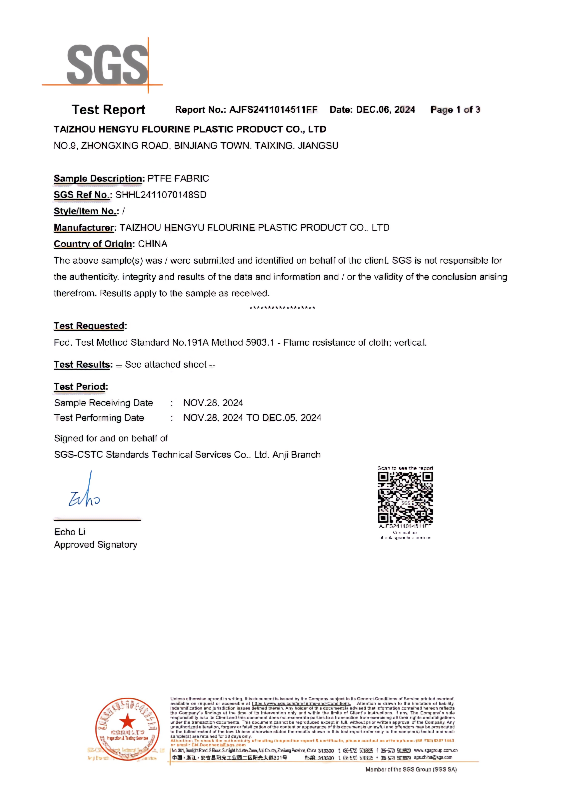
What to Check Before You Choose a Ground Thaw Blanket Supplier
Most listings in this category publish a size and a price, then stop. The checks below decide whether a blanket is usable on your site, and you can run every one of them against any supplier, ourselves included.
Check
Why it decides the purchase
Current draw per blanket, in amperes
Circuit capacity, not blanket area, sets how many units you can run at once. Suppliers who publish only wattage make you do the division.
Whether the temperature is a setpoint or a rise above ambient
The two specifications are not comparable, and the difference grows as the weather gets colder.
Ingress rating with the standard cited
IP ratings are classified to IEC 60529, published in Europe as EN 60529. Ratings quoted without the standard are marketing numbers.
Plug and cord specification
Site cord sets must be three-wire and rated for hard or extra-hard use, and plugs must not allow connection across incompatible voltage or current ratings.
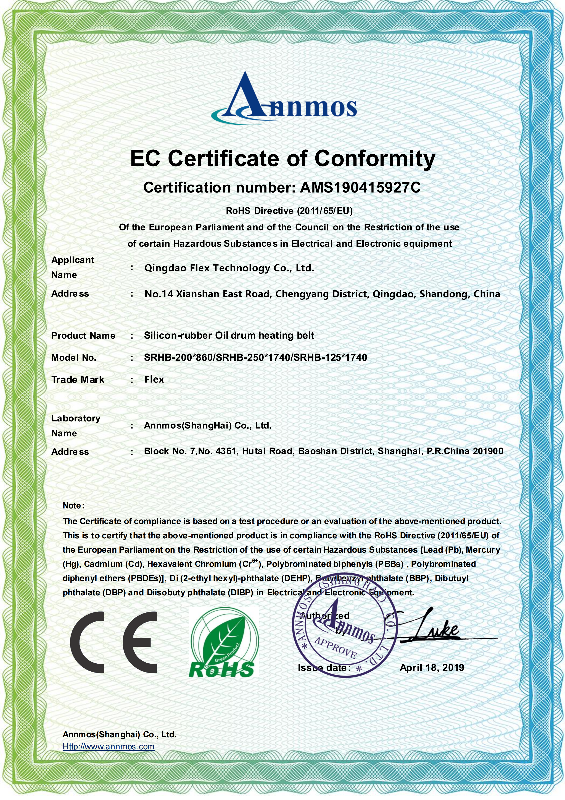
Approval evidence for your jurisdiction
Construction electrical equipment must be approved for use, and suitability is evidenced by listing, labeling or certification. Ask any supplier what documentation they can produce for your authority having jurisdiction.
Marking on the unit
Equipment has to carry durable markings giving voltage, current or wattage ratings so the site electrician can size the circuit.
Linking limits
Ask how many blankets can be connected on one circuit, and whether that figure is a product limit or a breaker limit.
Customisation axes
Size, voltage and wattage are the three that matter. Suppliers who can only change size are resellers.
Run these checks against your own shortlist:
Open the supplier comparison checklistHow We Work With You
Ordering is a specification conversation rather than a catalogue pick. Six steps carry a site sketch through to a blanket on the ground.
Send the work area
Heated length and width, the supply voltage and the plug type you use on site.
We size the build
Wattage and current draw are calculated and returned inside 24 business hours.
Sample if you want one
Samples ship in 5-10 working days so you can prove the fit before the batch.
Approve the specification
Dimensions, wattage, voltage, plug and markings are confirmed in writing.
We build and test
Every unit runs the five-step check above before packing.
We ship on the confirmed date
If anything on our side slips, you hear it from us before the date, not after.
Planning the power before the blankets arrive
Most product pages skip this part, and it is the first thing working contractors ask – one excavation contractor opened a forum thread asking whether a 20 amp circuit was realistic for this job. Each 1500 W blanket at 120 VAC draws 12.5 A, so a single 20 A construction circuit carries one blanket comfortably and two will trip it.
Planning item
Rule of thumb
Where it comes from
Blankets per 20 A circuit at 120 VAC
One 1500 W blanket, leaving headroom
1500 W ÷ 120 V = 12.5 A
Blankets per 20 A circuit at 230 VAC
Two 1500 W blankets
1500 W ÷ 230 V = 6.5 A each
Ground-fault protection
Required on 120 V, 15 and 20 A site receptacles that are not permanent wiring
29 CFR 1926.404(b)(1)(ii)
Alternative to GFCI
Written assured equipment grounding conductor program with scheduled cord testing
29 CFR 1926.404(b)(1)(iii)
Extension cords
Three-wire sets designed for hard or extra-hard use
29 CFR 1926.405
Generator sizing
Sum the blanket wattages, then add the rest of the site load
Blanket nameplate wattage
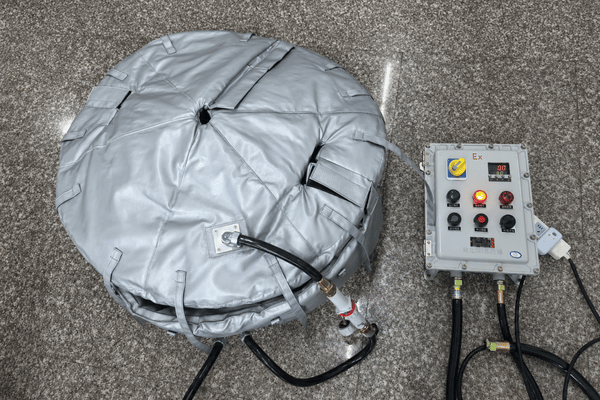
SYSTEM PROTOCOL
HANDLING RULES
Handling rules that protect the blanket
- Unfold the blanket fully before switching on, and never energise one that is rolled or folded over itself.
- Do not overlap two energised blankets; stacked heated faces build heat between them.
- Clear snow from the top surface before switching on so heat goes down into the work area.
- Never use the power cable as a handle, and keep the cable entry clear of tracked equipment.
- Store the blanket rolled or flat; permanent creases are what eventually break an element.
Electric Blankets, Hydronic Ground Heaters and Insulated Covers
People treat these three as competitors, and they are not. They work at different scales, and choosing the wrong scale turns a two-day frost problem into a week of one.
Decision factor
Electric heated blanket
Hydronic ground heater
Insulated cover
Heat source
Electrical element inside the blanket
Diesel or gas fired boiler circulating glycol through hose laid on the surface, the method described in US patent 10,669,782 B2
None; it only retains existing heat
Coverage per unit
3.41 m² (36.7 sq ft) for the standard model; linked for more
Thousands of square feet per trailer unit
Whatever the cover is cut to
Site services needed
A 120 VAC or 230 VAC outlet or generator
Fuel, a heavy electrical feed and hundreds of feet of hose
None
Setup effort
Unroll, plug in, weight the edges
Position the trailer, lay and reel hose loops, cover with blankets
Unroll and weight
Scattered work areas
One blanket per location, each on its own outlet
Serves one contiguous area at a time
One cover per location
Where it fails
Very large continuous areas with no circuit capacity
Small isolated work areas; the mobilisation is the cost
Ground already frozen through
The real decision axis is scattered work areas against one big one
One contractor on an excavation forum described the split exactly. He already owned a hydronic loop heater with roughly 1,000 ft of hose and rated it as working well, then explained why he was still shopping.
“This only works for one area… however, we have 50 scattered locations to thaw, so I am looking for something a bit more self contained.”
— Excavation contractor servicing 50 water connections, contractor forum thread
Another contractor in the same thread described his hydronic rig as “a small enclosed trailer with a water heater filled with glycol and it used a 60 amp 2 pole breaker”, plus 200 to 250 ft of hose to lay out and reel back in. Unlike a blanket that plugs into an outlet already on site, that is a mobilisation — and mobilisation is what costs you on a scattered job.
Where blankets win outright
His plan was to power blankets from the individual homes being serviced, since open flame was barred on those work areas. That is where blankets win outright: many small footprints, mains power already on hand, no fuel to handle and no hose reel to drag between locations.
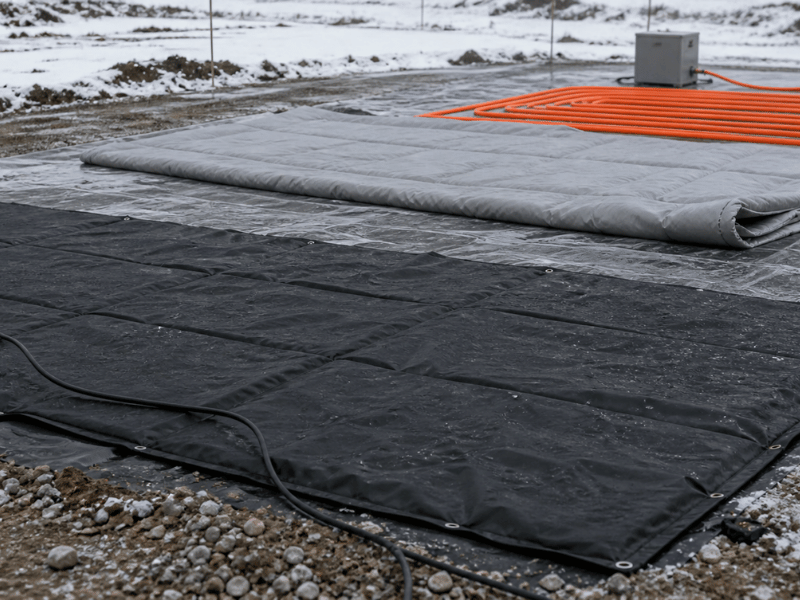
SITE ANALYSIS
SCATTERED LOCATIONS
Not sure which side of that line your job falls on? Work through the selection checklist before you rent or buy.
Open the selection checklistJobs Where a Heated Blanket Is the Wrong Tool
A heated blanket is a surface-conduction tool on the end of a power cord. Four situations sit outside that description, and each one has a better answer than ours. The trade-off is coverage against mobility, and more coverage is not always the right call.
Large continuous areas with no circuit capacity
Blanketing a full building pad means a circuit for every blanket, and site power normally runs out before the blankets do. At that scale the right tool is a trailer-mounted hydronic unit.
Sites with no mains power and no generator
Our blankets need an outlet. Where neither supply nor generator capacity exists, propane ground thaw heaters, another fuel-fired ground heater or a heated enclosure are the workable routes.
Deep frost against a short schedule
Surface heat travels downward by conduction, and soil hangs near its freezing point until the water inside it finishes changing phase. Patent literature on modular heated covers, such as US 2009/0127251 A1, describes the same surface-down mechanism. Where frost runs deep and the pour date is close, plan a combined approach instead of counting on surface heat alone.
Work that needs a variable surface temperature
Our blankets hold a fixed 70 °C (158 °F) setpoint. Processes that need an adjustable or lower surface temperature should be quoted as a different wattage build, or served by a thermostatically controlled product.
Why nobody can publish an honest thaw-depth number
Thaw depth per day is the figure buyers want most and the one worth trusting least. Soil has no single thermal conductivity: it changes with the material and again with how much water that material holds, so a wet soil carries heat very differently from the same soil dry. Heat moving into wet ground and heat moving into dry ground are simply not the same problem.
- Soil type and moisture change how fast heat moves down by a factor of several.
- Initial ground temperature sets how much energy the phase change needs before anything warms.
- Insulation over the blanket decides how much heat goes into the ground instead of the air.
- Run time is the only one of the four you control on the day.
What we will tell you is what the blanket delivers — a fixed 70 °C (158 °F) heated face, at a stated wattage, across a stated area. What that clears from your ground rides on the four variables above, and a supplier quoting one depth figure without them is quoting a sales number.
SYSTEM VARIABLES
THAW DEPTH FACTORS
Interactive Utilities
Engineering Calculation & Compatibility Tools
Evaluate your site requirements, calculate electrical loads, and compare supplier specifications before planning your cold-weather protection.
Ground Thaw Blanket Sizing and Run-Cost Worksheet
Calculate total wattage, current draw, and daily running costs based on your specific heated area and local power tariffs.
Launch Tool
Voltage, Plug and Circuit Compatibility Check
Verify if your existing 120 VAC or 230 VAC site power and plug configurations can safely support the required blanket loads without tripping breakers.
Launch Tool
Ground Thaw Blanket Supplier Comparison Checklist
Evaluate technical specifications, IP ratings, and manufacturing standards across different vendors to ensure compliance with site regulations.
Launch Tool
ORDER SPECIFICATION MODULE
Start Your Ground Thawing Blanket Quote
Send us the heated area, the supply voltage and the plug you use on site. Your quote returns within 24 business hours with wattage and current draw already calculated, reviewed by the engineer who would build the blanket.
Request a Quote
Not ready for a quote yet? Run your work area through the sizing and run-cost worksheet or the voltage and plug compatibility check first.
Knowledge Base
Frequently Asked Questions
At 120 VAC each 1500 W blanket draws 12.5 A, so plan one blanket per 20 A circuit with headroom. At 230 VAC the same blanket draws 6.5 A, so two fit the same breaker. Add the current draw of every blanket before you plan the run.
Each 1500 W blanket uses 1.5 kWh per hour of operation, or 36 kWh over a full day. Multiply that by your tariff for the running cost. It is usually a smaller number than the crew hours lost waiting for frost to leave on its own.
Yes. These blankets are built for continuous outdoor operation, are IP67 rated to IEC 60529 (EN 60529) and hold a fixed 70 °C (158 °F). Follow the handling rules above: fully unfolded, edges weighted, no overlapping units and no covering that traps heat against a stacked blanket.
Heated blankets hold a slab inside its protection period until the concrete reaches the strength it needs. ACI 306R-16 sets that threshold at 500 psi (3.5 MPa) before the concrete is allowed to freeze. Coverage at edges and corners matters more than the middle, because those faces lose heat two ways.
An insulated blanket holds in heat that is already there. A heated blanket adds heat from an electrical element. Ground that has already frozen through needs the second kind, and the two are frequently used together.
Yes. Blankets are built for 120 VAC or 230 VAC supply, with a 16 A (EU/UK) or 15 A (US) plug fitted to match. Tell us the supply and the plug at enquiry and the quote comes back built around them.
The standard model FLB-GTB-3010 is 3100 × 1100 mm (122 × 43 in) at 1500 W. Custom dimensions, voltages and wattages are available, so a blanket can be built to a trench width or a slab footprint instead of the other way round.
Samples ship in 5-10 working days. Small-batch orders ship in 10-25 days and production runs are scheduled at 15-25 days, both confirmed with your quotation.
30% T/T deposit, with the balance due before shipment. Terms for repeat orders are set out in the quotation.
Yes. The sample itself is free and you cover the express freight. Samples ship in 5-10 working days once the specification is agreed.
Renting suits a single winter job on a site you will not return to. Buying wins once blankets are used across more than one season, because a blanket is reusable, rolls up for storage and has no per-day charge. Work out your own break-even from the run hours you expect rather than from a rental counter’s quote.
Yes. Cartons, cable labelling and printed markings are part of the build specification, and they are quoted alongside size, voltage and wattage.
Put a thin polyethylene sheet between the heated face and any fresh or delicate surface. On turf, crews commonly lift and store sod before thawing and relay it afterwards. The blanket runs at a fixed 70 °C (158 °F), so the barrier is what protects the surface finish.