Get in touch with FlexBlanket Company

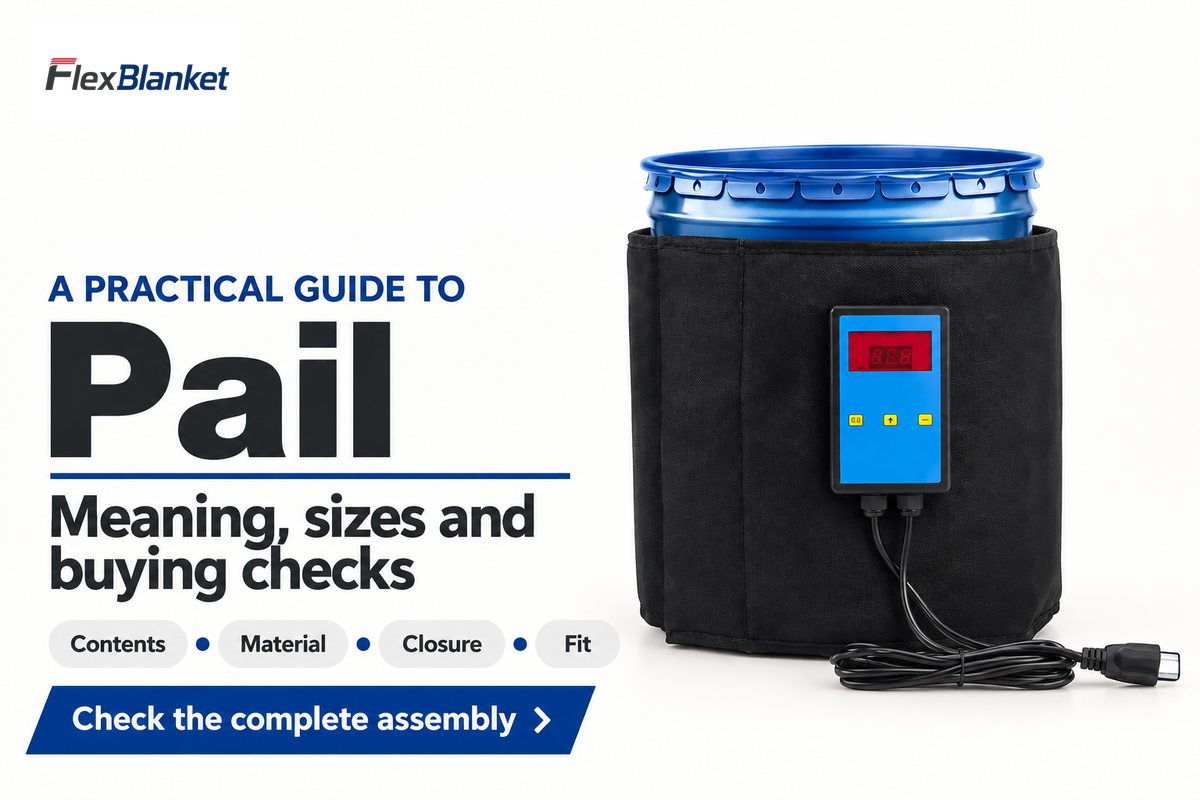
A pail is a usually cylindrical handled container that holds or carries liquids and other substances. Its other name is bucket. Knowing the differences in capacity, material, closure and physical fit is important when buying a container. The name says very little about these differences.
Quick answer
A pail is a bucket-like container with a handle. Choose the container for its contents and intended use, then compare the complete body-and-lid price. Measure the actual vessel before matching it to a shelf, dispenser or heating blanket.
At a glance
- Pail and bucket overlap in everyday English.
- A gallon label needs a US or imperial basis.
- Body material, lining and closure each affect selection.
- A lid may be priced separately from the container.
- Heater fit requires actual dimensions and a suitable application.
What is a pail used for?
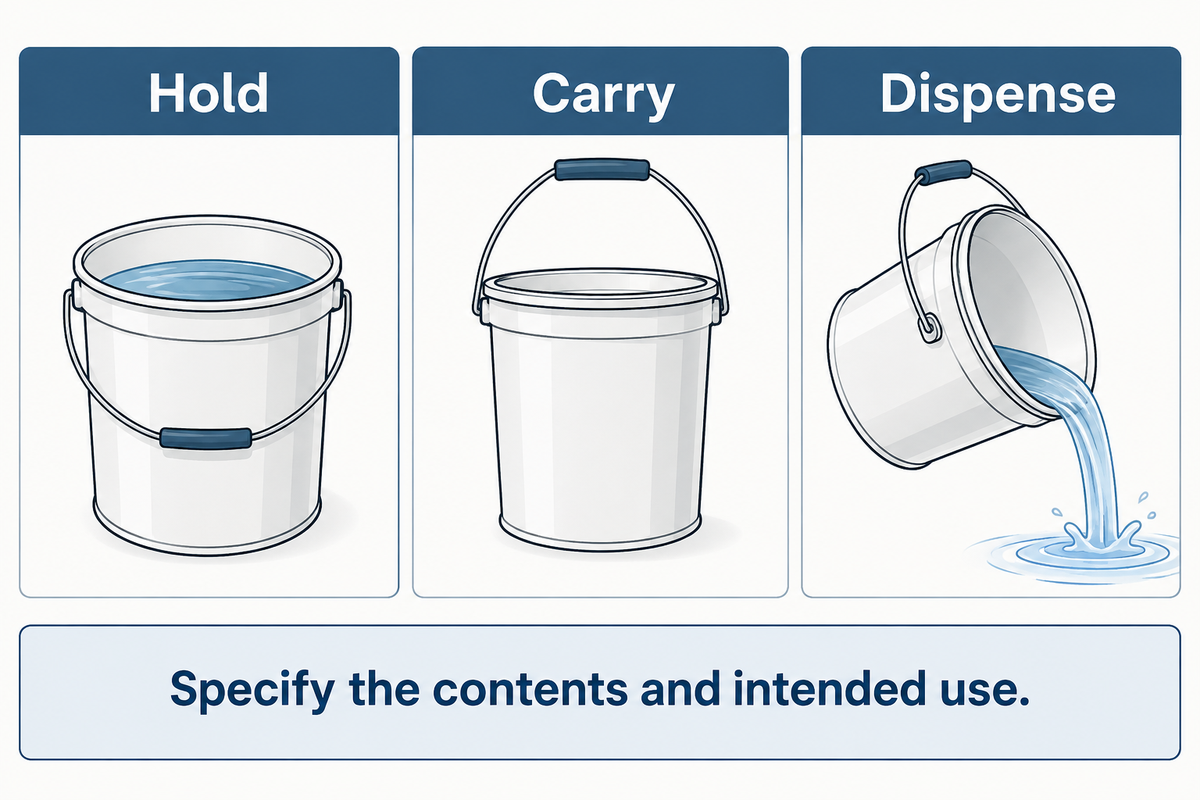
A pail container holds, carries or dispenses a material. An open container can carry water, or collect solid items. A packaging version adds a matching closure for its intended contents. In a workshop or food operation, the specification of a container comes from the job, before its color or catalog name.
Merriam-Webster’s definition describes the known handled form, and also recognizes a second meaning, i.e. the quantity held. That explains the phrase “a pail of water,” but it supplies no fixed measurement. A recipe or purchase order needs an actual volume.
Compare carrying clean water to a work area with storing an ingredient for long-term production. The first task needs usable capacity and a manageable filled container. For the second, we need a container suitable for the food contact conditions, and a closure. Buying both by the word “bucket” gives no solution to these differences.
Pail vs. bucket: what actually differs
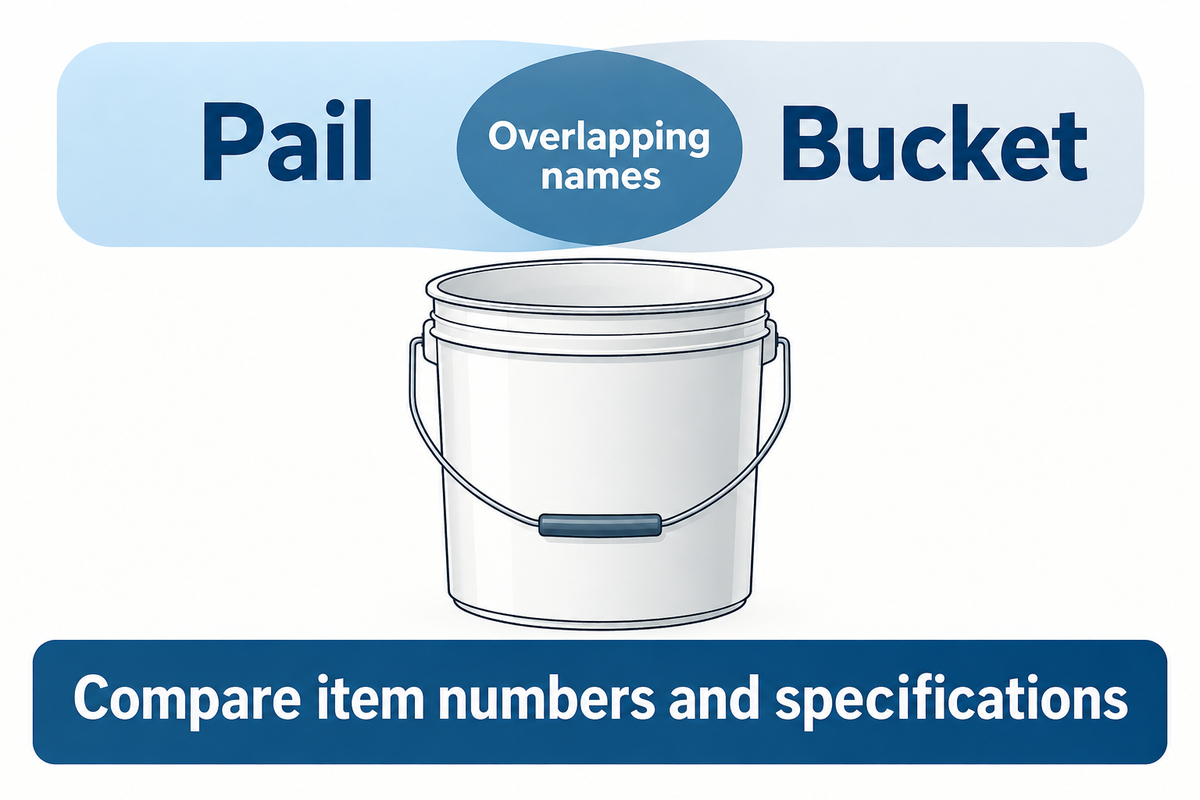
Pail and bucket are overlapping words in the English language. Sellers may use one label for industrial packaging, and another for household products, but that usage doesn’t always apply to lids, size or shape. Compare item numbers and specifications when two listings use different names.
An English dictionary explains the meaning of pail and its current usage. A technical specification answers a narrower purchasing question. For example, ASTM D4504-94(2025) covers a defined class of molded polyethylene open-head containers for transporting nonhazardous goods. Its scope includes nonreusable pails with capacities of 1–7 gallons. That classification does not turn every product called a bucket into a different object.
When one quote says “plastic pail” and another says “plastic bucket,” keep both in the scope until drawings and closure details help resolve the discrepancy. Conversely, two products with identical names can still need different lids. Wording serves as a starting point and the assembled product is what you purchase.
Plastic or steel: choose the material for the contents
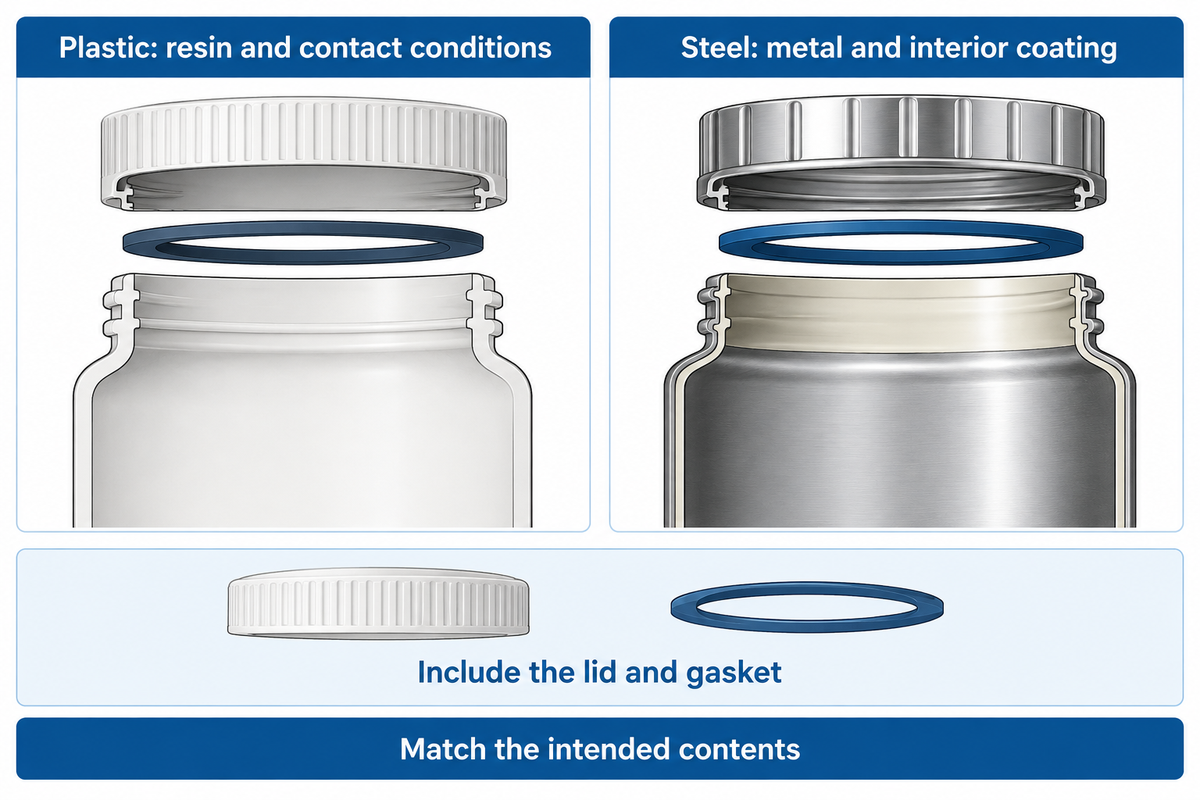
Plastic and steel containers need different material checks; however, neither of the two labels defines suitability with respect to different substances. With plastic, identify the type of resin and the intended contact conditions. With steel, identify the kind of interior coating and metal it’s made of. Include the lid and gasket because they may be in contact with the contents during handling.
The selection of plastic pails often starts with HDPE product listings. The name of the resin leaves the food type, temperature, and exposure time undetermined. Steel has a similar trap: Cary’s 26W5BN listing describes its body as unlined and distinguishes a rust inhibitor from a lining. Those terms should be kept separate for the purchase order.
“Materials for the manufacture of the pails should be compatible with the intended contents.”
A food buyer needs documentation for plastic buckets describing the type of food and contact conditions. A maintenance buyer ordering a steel container for a process liquid needs the actual lining specification and compatibility basis. Neither buyer benefits from an unsupported ‘premium quality’ statement. Record the material combination quoted by the supplier, and don’t change that when comparing prices.
Pail sizes, liters and physical dimensions
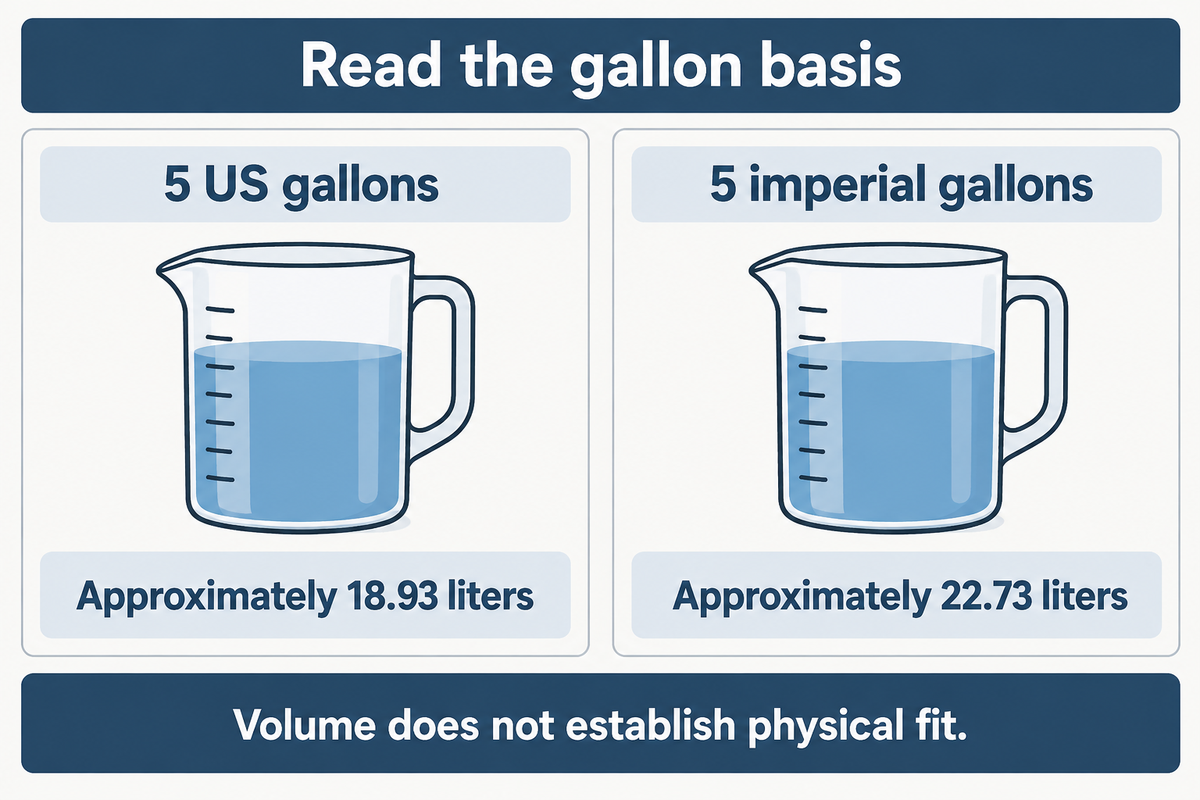
Pail size can mean either volume or physical dimension. However, physical dimensions can dictate a poor fit, such as a heating blanket being too small to wrap around a pail, or too large to fit within its straight-wall space. Catalogs can round a five-US-gallon class to 19 liters, but that label doesn’t provide the clearance around a handle or beneath a rim.
How many litres are in a pail?
A five-US-gallon pail is approximately 18.93 liters, according to NIST’s conversion factors. Using NIST’s published conversion factors, 5 US gallons is approximately 18.93 liters, whereas 5 imperial gallons is approximately 22.73 liters. The unit of measure in the product specification needs to be read before a conversion is made. The same gallon number can describe a different quantity.
| US gallons | Liters, rounded |
|---|---|
| 0.5 gal | 1.89 L |
| 1 gal | 3.79 L |
| 1.5 gal | 5.68 L |
| 2 gal | 7.57 L |
| 2.5 gal | 9.46 L |
| 3 gal | 11.36 L |
| 4 gal | 15.14 L |
| 5 gal | 18.93 L |
| 6 gal | 22.71 L |
If a buyer needs to put a five-US-gallon container into a metric purchasing system, the calculation is 5 × 3.785412 = 18.92706 liters, rounded to 18.93 liters. Enter the supplier’s nominal size with that conversion. Do not silently replace the item with a 20-liter vessel: the volume label and its dimensions may differ. Working fill also requires space for the intended closure and handling, so a unit conversion alone doesn’t set the filling line. Keep the product drawing with the order so the receiving team can verify the item against the drawing.
As a specific dimension comparison, Bucket Outlet lists its five-gallon plastic body at 14.5 inches, and Berlin Packaging lists steel item 1273 at 13.56 inches. These are two model specific heights. They show why a shelf or heater should be selected from the actual drawing.
Choose the opening, lid and handle
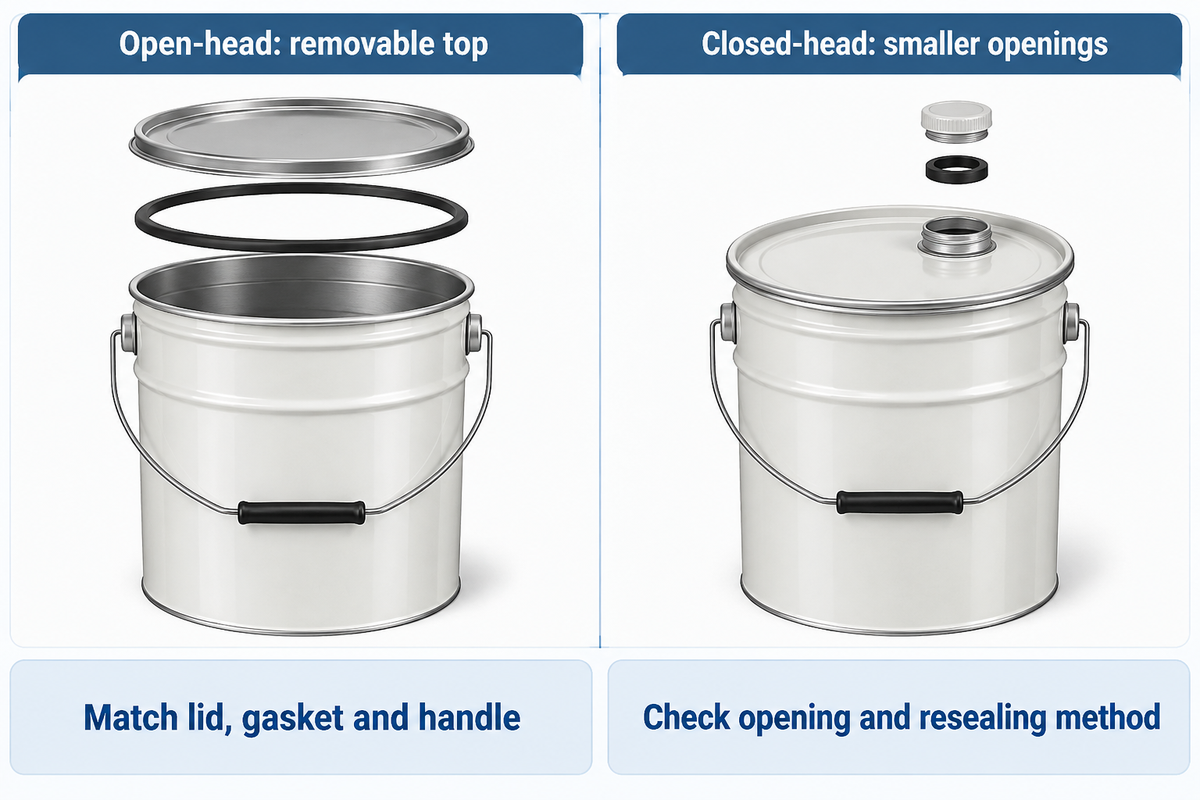
On an open-head design, a removable top provides access. On a closed-head design, access is through smaller openings used for filling or dispensing. Select the opening most appropriate to how the material will enter or leave. Then consider the matching lid, gasket and handle arrangement. A design that stores well may still be awkward to empty at a workstation.
Repeated access makes it useful to compare the supplier’s intended opening and resealing method. General Bottle’s five-gallon listing cautions that other manufacturers’ lids aren’t compatible with theirs. A diameter that looks right isn’t a reliable way to establish a secure seal.
A discussion on a machining forum about messy coolant pouring shows an example of dispensing: the owner was interested in a better spout or a pump because the container allowed the liquid to run down. This is a useful task description, not a pump recommendation. Identify the dispensing attachment for the liquid and the workplace.
Resealing also differs from qualification for repeated shipping. The cited class is nonreusable. Assess the filled weight and consider the actual lifting task; NIOSH’s lifting guidance addresses weight and grip quality. For a two-handed lift, NIOSH offers an equation; for one-handed lifting, it can’t provide a limiting value.
Food, chemicals and shipping: three different checks
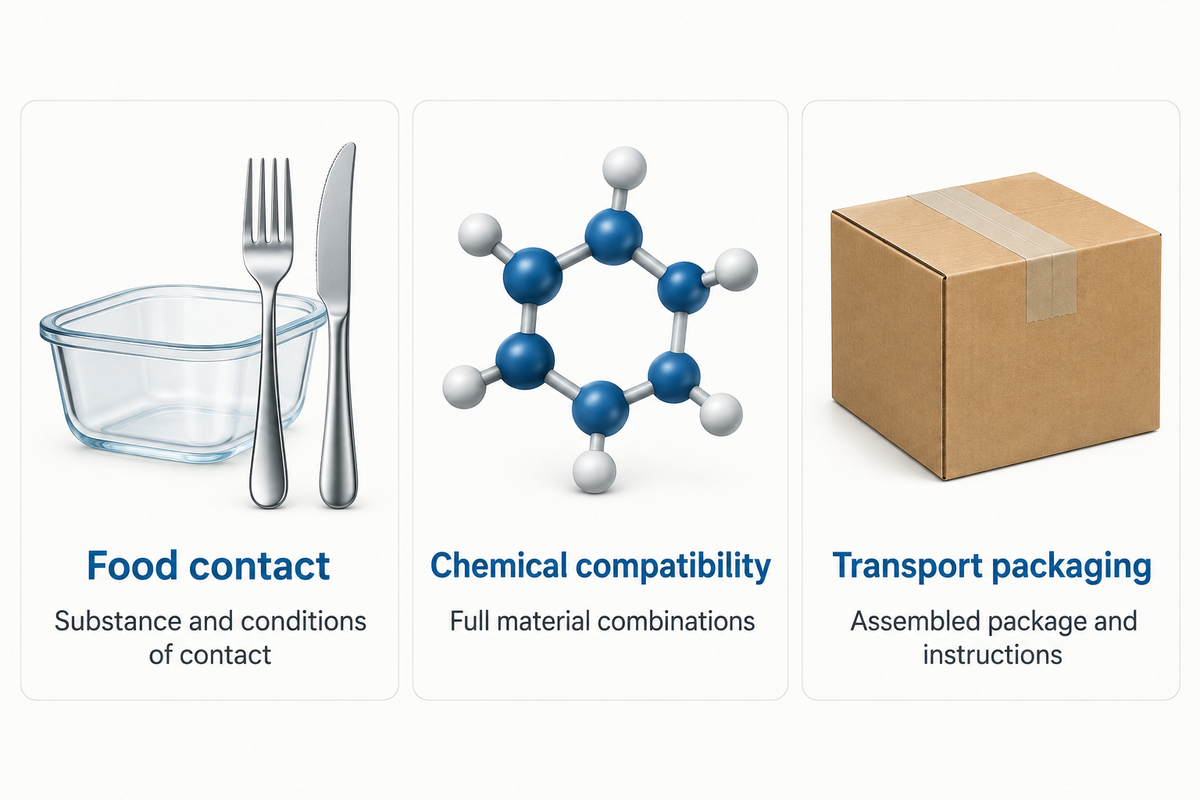
Food contact, chemical compatibility, and transport packaging raise different issues. Food documentation answers questions about the substance and conditions of contact. Chemical compatibility answers questions about full material combinations. Transport qualification addresses the assembled package and its instructions. These checks help compare quotes; workplace requirements can add further constraints when hazardous contents are involved.
The FDA tables of food types and conditions of use distinguish room-temperature storage, hot filling, refrigeration and other conditions. A food-grade catalog label should therefore be matched to the proposed application. A recycling code alone does not establish that match.
Suppose a food producer switches from using a refrigerated ingredient to a hot-filled ingredient. Maintaining the same nominal bucket size doesn’t resolve the new contact condition. The quality function needs the filling temperature and contact time; the purchasing function needs the supplier documentation for the body and closure. The useful comparison is the complete assembly under the new condition. The product family name, color, and/or resin label don’t define that condition. The buyer can maintain the container shape while choosing an assembly documented for the new condition. That avoids making a production change on the strength of a familiar label.
A 2013 interpretation by PHMSA illustrates packaging film added to the underside of a closure of a steel drum. The closure instructions had to be updated to reflect the change. The lesson is specific: This interpretation points to the importance of ensuring packaging instructions describe the assembly supplied; it doesn’t permit arbitrary changes to other shipping containers.
Flammable contents require a container that meets the workplace conditions and ignition source requirements. Provisions of OSHA address this separately. Flammable-liquid applications should be routed through the site’s safety personnel before selecting a container or adding heat.
What does a pail cost, and where can you buy one?
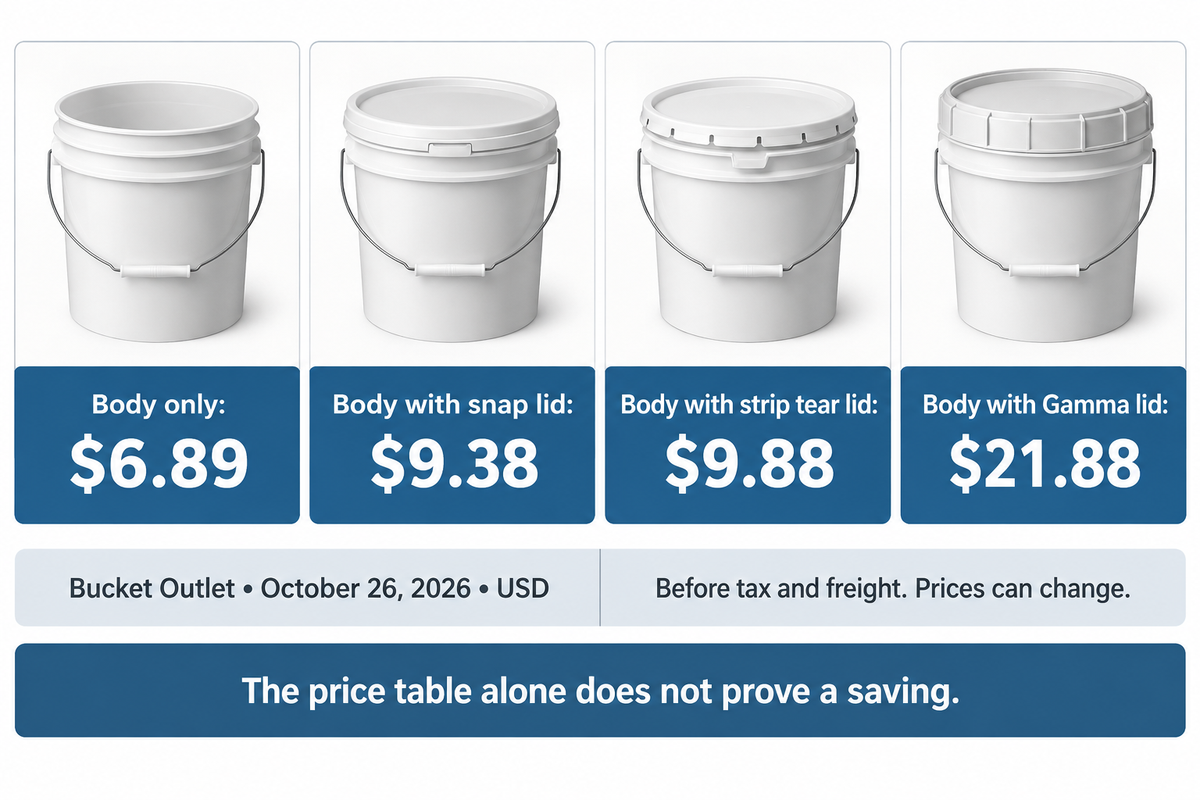
Bucket Outlet lists a five-gallon plastic body for $6.89, before tax and freight. The total cost to purchase is important to consider, as the cost of the closure changes the overall cost. Options provided by Bucket Outlet give a good small-quantity example, by providing three different lids, all in combination with the five-gallon plastic body.
| Purchase option | Listed total | Difference from body only |
|---|---|---|
| Body only | $6.89 | — |
| Body with snap lid | $9.38 | $2.49 |
| Body with strip tear lid | $9.88 | $2.99 |
| Body with Gamma lid | $21.88 | $14.99 |
Comparing the cost of a body with a Gamma closure to a body with a snap closure gives $21.88 – $9.38 = $12.50 per complete set. That is the purchasing decision to justify, rather than comparing the Gamma set against a body without a lid. An operator who opens a container frequently may deem a different closure more convenient; however, finance needs to understand what that closure is buying. Compare how the closure is opened and secured during the actual task before accepting the higher quote. Opening convenience, intended resealing use and suitability for the contents decide whether the added expense is useful; the price table alone does not prove a saving.
Where can you buy pails in small quantities?
Packaging distributors and bucket retailers sell small-quantity options; industrial suppliers also offer case and pallet purchasing. To start, an operator should contact a supplier that lists a body and closure together. With the example provided above, Bucket Outlet’s product page lists the individual options, as opposed to a bulk quote.
Prior to placing your order, make sure to compare the delivered total and quantity break. See what the current lead time is at checkout or on the quotation. Catalog pages can contain old messages regarding in-stock inventory. For a building or maintenance shop, it might be practical to use a locally available container, as long as the documented use and closure correspond with the task. Pick the store that meets the required specification.
When a pail needs a heating blanket
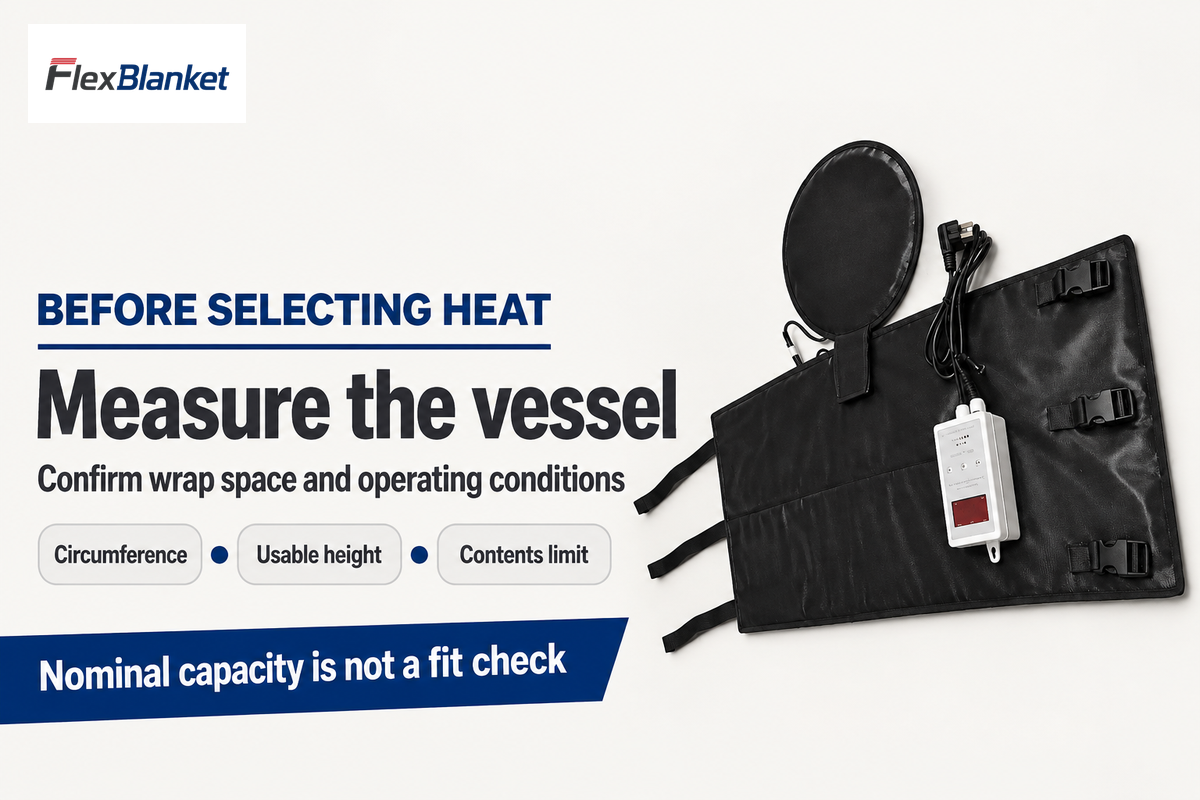
A pail requires heating to control the temperature of the contents when it needs to keep a material workable, for example. Select the blanket that matches the actual vessel and the allowed conditions of the contents. Nominal capacity, controller range and heater wattage describe different aspects of the choice.
For example, FlexBlanket’s pail heating model specifications cite model FLB-BH-5 as a 19-liter/five-gallon-class blanket measuring 1000 × 400 mm rated at 400 W with 120/230 VAC options. The same product webpage indicates that buyers should check the actual dimensions of the circumference, taper, handles, and available height.
Compare that 400 mm blanket height with the plastic body’s listed 14.5-inch overall height: 14.5 × 25.4 = 368.3 mm. Keep in mind the blanket is even taller than that before the handle and rim clearance. A five-gallon fit has not been demonstrated, so address this as a mismatch. The container model selector tool helps organize the measurements for that discussion.
Temperature control needs the same care. A dial’s maximum setting isn’t a permitted plastic-wall or bulk-product temperature. FlexBlanket’s standard dry-indoor units aren’t presented as hazardous-location equipment. Flammable contents or a classified area require a separate suitability assessment. In ordinary process applications, the heating-blanket temperature controller guide explains the control side of the selection.
A practical pail selection checklist
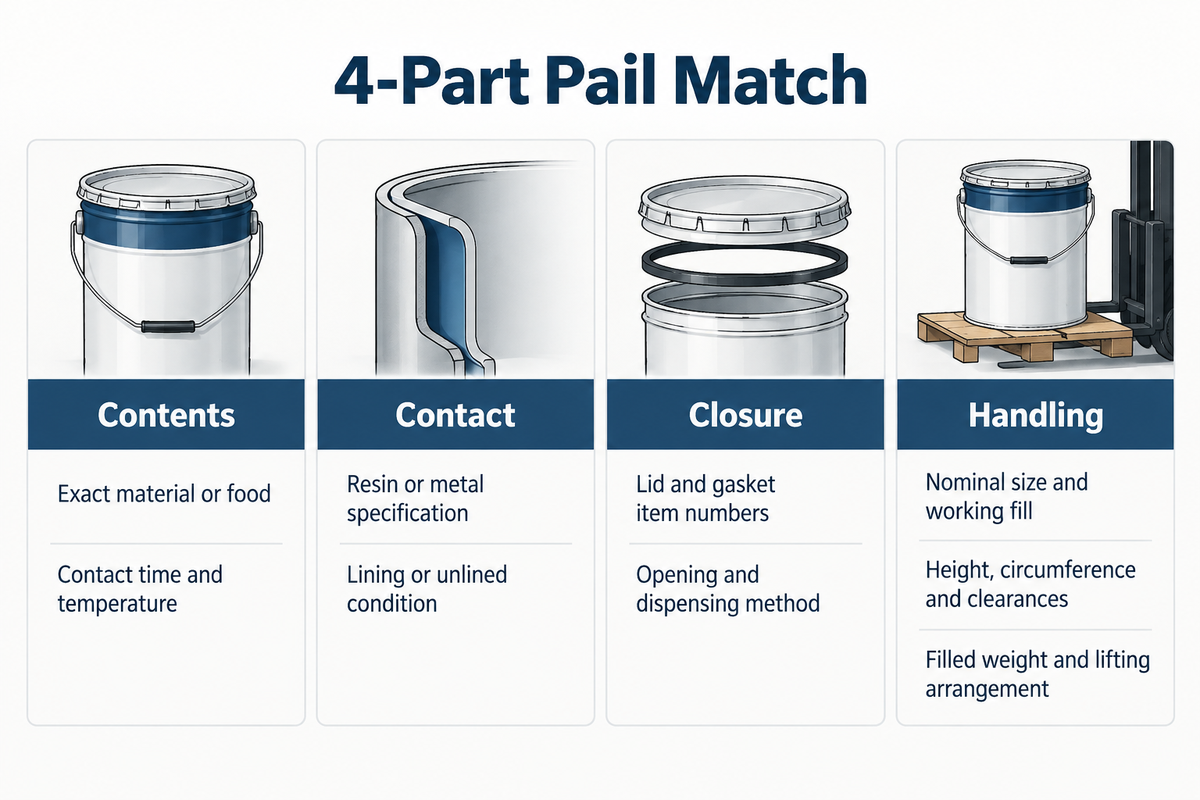
A useful pail specification connects the contents, contact materials, closure and handling arrangement. Compare these elements before accepting the quoted price. The table below turns a general request such as “5 gallon bucket with lid” into precise acquisition information for procurement, quality, and the people that will be using the container.
4-Part Pail Match
This quote-comparison aid should be used to determine what elements of an assembly are still unresolved. The next step is to resolve that unresolved element with the person responsible; a check mark shouldn’t be substituted for product qualification or a regulated use case review.
| Part / parameter | Record this | Owner and next action |
|---|---|---|
| Contents / identity | Exact material or food | Quality: match intended use |
| Contents / conditions | Contact time and temperature | Quality: compare documentation |
| Contact / body | Resin or metal specification | Procurement: retain exact item |
| Contact / interior | Lining or unlined condition | Quality: settle compatibility |
| Closure / assembly | Lid and gasket item numbers | Procurement: quote together |
| Closure / access | Opening and dispensing method | Operator: check the actual task |
| Handling / capacity | Nominal size and working fill | Production: set filling requirement |
| Handling / geometry | Height, circumference and clearances | Engineering: resolve equipment fit |
| Handling / load | Filled weight and lifting arrangement | Operator: assess transport to workstation |
Which pail should I use?
Locate a container with a documented application, complete closure and dimensions matching your requirements. For food-contact applications, start with the intended food-contact conditions. For an industrial liquid, start with compatibility of the contents and the workplace requirements. For a heated vessel, include wrap space and allowed temperatures, and then select the heater.
Then provide the complete delivered price to finance. A cheaper body with the wrong lid doesn’t complete the purchase. With respect to a heating inquiry, transfer the settled dimensions and process requirements into FlexBlanket’s bucket-heater quotation brief.
Key takeaway
Buy the specified body-and-closure assembly, then match its actual dimensions to the job. A shared pail name or nominal gallon size cannot settle those decisions.
Pail FAQ
What is a bucket?
View answer
A bucket is a container used to hold or carry materials, often with an open top and a handle. In everyday English, it overlaps with pail. The word alone does not tell you the material, capacity, lid type or suitability for food, so check the actual product description before buying one for a particular job.
What’s another word for pail?
View answer
A thesaurus will commonly list bucket as a synonym for pail. Container is a broader term, while tub, can and pot can describe different shapes or purposes. When ordering packaging, keep the supplier’s exact product name and item number: changing the word on a purchase order does not guarantee that two containers have the same dimensions or closures.
Is pail a word?
View answer
Yes. Pail is an English word for a handled container, commonly called a bucket, and it can also mean the amount that such a container holds. That second meaning has no fixed volume. A pail of water could mean different quantities depending on the container, so use a stated capacity when a measurement matters.
How do you spell a bucket pail?
View answer
Spell the container p-a-i-l. Pale sounds the same but usually describes a very light color or someone lacking color. Use pail for the container and pale for the physical appearance; neither word tells you a product’s material, capacity or closure.
What does food-grade pail mean?
View answer
Food-grade describes suitability for food contact under specified conditions; it does not mean that every food, temperature or cleaning method is covered. Ask the supplier to confirm the intended food type, contact time and temperature for the actual container and matching lid. The body, lining and gasket all matter. Do not turn a general catalog label into a claim that an assembled pail has an individual FDA certificate, or that an unknown used container is suitable for food.
Does a pail always have a lid?
View answer
No. Pail and bucket overlap in usage, and catalogs use the labels differently. Some pails are sold without lids, while a bucket may have one. Check whether the listed price includes the matching closure and whether it suits your use.
Can you heat a plastic pail?
View answer
Yes, if the pail and heater suppliers confirm the container, contents and operating conditions. A controller’s adjustment range is not a safe-temperature rating for plastic. Check the container material, usable wrap height, circumference, contents limit and temperature-control arrangement before selecting a heater. A nominal five-gallon size is not enough to establish fit, and a general-purpose heating blanket should not be assumed suitable for a hazardous location or a washdown area without the appropriate rating and installation review.
- Identify the contents and permitted process conditions for a heating enquiry.
- Measure the actual vessel and usable wrap space.
- Send the dimensions, voltage and control requirements with the enquiry.
Heating for your selected container
FlexBlanket supplies heating blankets. For honey applications, use the bucket and honey heater selection guide to develop the heating specification once the container and application are defined.
Our perspective: Our view is that FlexBlanket sells heating equipment, not the third-party containers that are compared here. Dimensions and prices are attributed to examples found in catalogs in October 2026.
References & Sources
- D4504-94(2025): Molded Polyethylene Open-Head-Pails for Industrial Shipping of Nonhazardous Goods ASTM International, public abstract and scope.
- Guide to the SI, Appendix B.8: Conversion Factors National Institute of Standards and Technology.
- Revised NIOSH Lifting Equation National Institute for Occupational Safety and Health, 2024.
- Food Types and Conditions of Use for Food Contact Substances U.S. Food and Drug Administration.
- Interpretation Response 13-0009 Pipeline and Hazardous Materials Safety Administration, February 28, 2013.
- 1910.106: Flammable Liquids Occupational Safety and Health Administration.