Get in touch with FlexBlanket Company

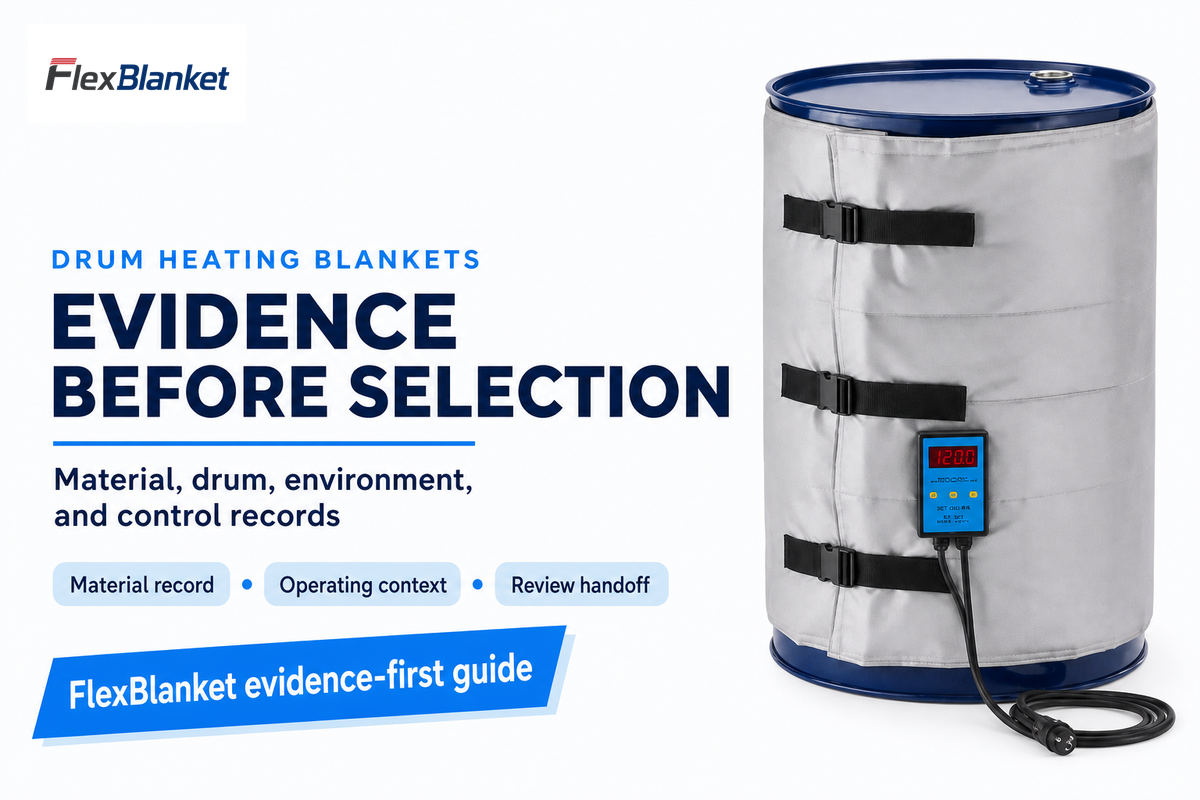
Updated August 2026. Drum Heating Blankets are a category of external equipment discussed for drum-temperature management, but their name does not establish a heat-up time, a material result, or suitability at a specific site. This guide helps industrial teams assemble the evidence needed before an application-specific solution review.
Quick Specs
| Guide type | Evidence-first educational guide |
| Decision input | Material, drum, environment, and control records |
| Not supplied here | A universal heating time, rating, compatibility finding, or approval |
| Next step | A documented solution brief after unknowns are resolved |
Drum Heating Blankets should be evaluated against the material, container, environment, and measurement context; a product category by itself cannot prove timing, compatibility, or site suitability.
Key points before a review
- Start with the material document and the process condition that must be protected.
- Record the drum, fill condition, exposed environment, and measurement basis before discussing a result.
- Use electrical, enclosure, and classified-area language only within the scope of the exact equipment and site records.
- Pause the discussion when material hazard information calls for a responsible process-safety review.
1. What Drum Heating Blankets Change, and What They Do Not
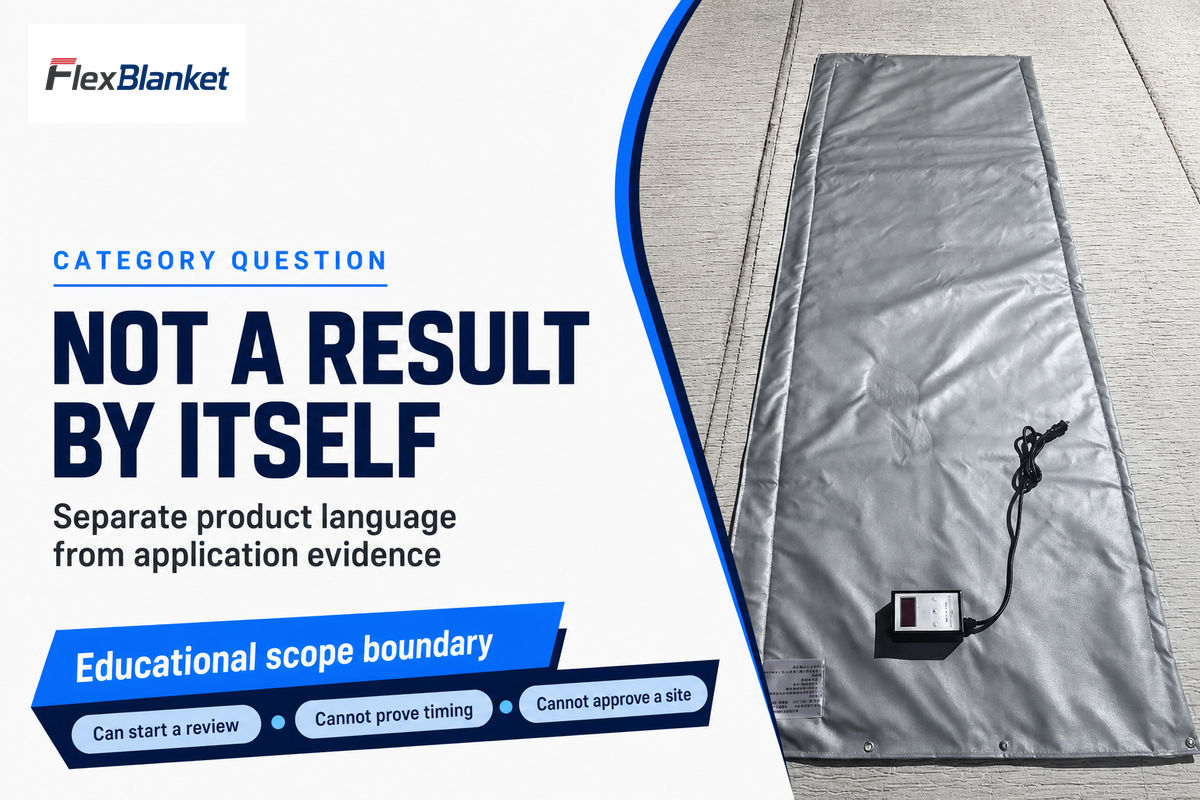
Drum heating blankets introduce an external source of heat to a container-heating conversation, but they don’t by themselves define the material condition, the observation point, the operating window, or the outcome a process requires. The U.S. Department of Energy frames process heat as heat transferred within an industrial operating system, which is a useful boundary for this guide. DOE process-heat basics With that earlier review boundary established, the first task is to separate what the heater category can start from what it cannot prove.
This system-level view prevents a familiar shortcut. “Heated barrel blanket” and “drum heater” are useful search and purchasing terms, yet neither tells a reviewer whether the goal is a hold condition, an easier transfer, a cold-exposure contingency, or another process need. A blanket can be relevant to each discussion without settling any of them.
| The category can start a question about | The category cannot establish on its own |
|---|---|
| Whether controlled heat is being considered for a drum. | A material-specific temperature target or flow result. |
| Which application facts need collection before a review. | A universal warm-up time or heat-distribution result. |
| Whether source records should be requested from the relevant owners. | Compatibility, hazardous-location suitability, or an installation instruction. |
For procurement and operations teams, this distinction is productive rather than restrictive. It separates the educational task, getting the right facts on one page, from the solution task; readers can see which records belong to the equipment-selection stage without turning this guide into a product specification.
2. Start With the Material, Not the Blanket
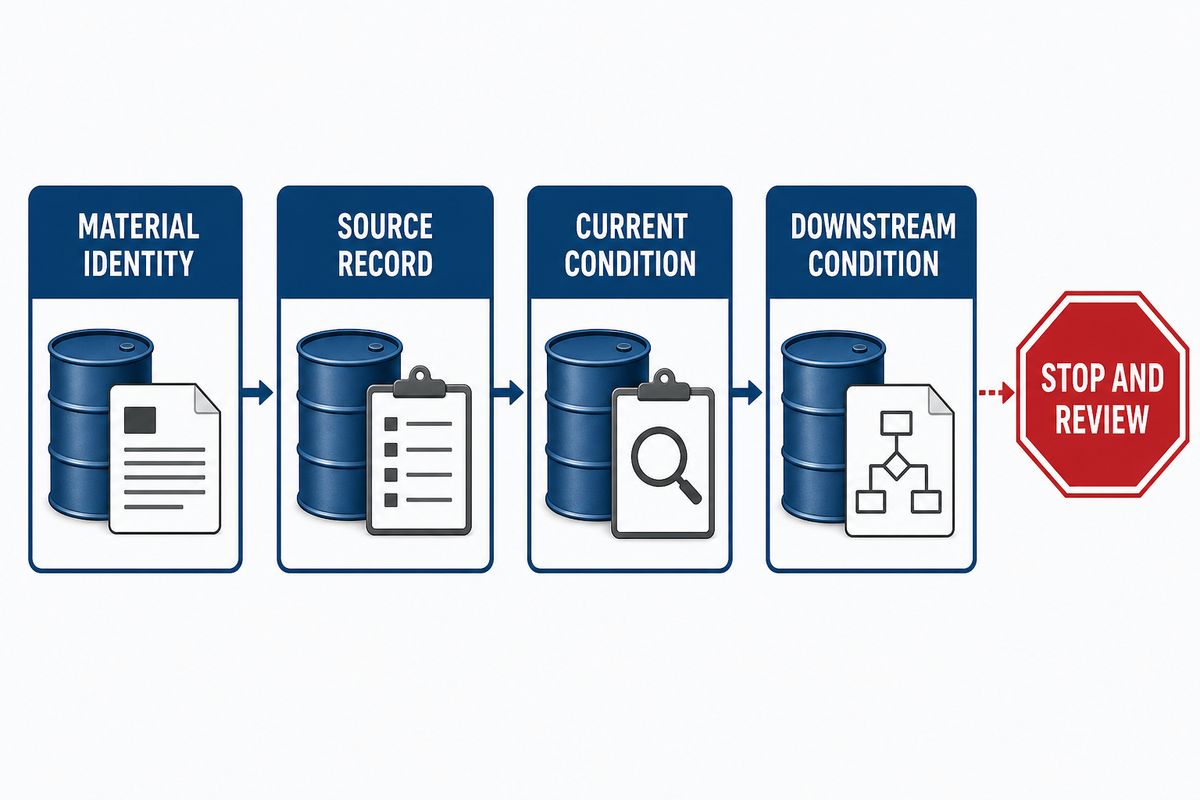
The material document should define the temperature question before a drum-heating discussion becomes a viscosity or transfer claim, because temperature-property methods have stated scopes and do not transfer automatically to every drum content. ASTM D341, for example, is limited to petroleum oils and liquid hydrocarbons with known temperature-viscosity points. ASTM D341-20 That distinction carries the previous section’s equipment-selection boundary into the material record.
The limitation does not make temperature-viscosity information unhelpful. It tells the reviewer to ask whose record governs the actual material and what it says about the current state, intended process condition, and handling limit. Different coatings, oils, adhesives, food ingredients, and chemicals may call for different records. The guide should not convert one method’s scope into a generic promise that a heated drum will become pourable or process-ready.
Can container heaters improve viscosity control?
Container heaters may be part of a viscosity-control process when the material document and measurement basis define the result, but the phrase alone does not prove performance. Record the material identity, the source of any temperature-viscosity relationship, the observed starting condition, the required downstream condition, and the point where that condition will be checked. That “55 gallon drum heating blanket” label cannot fill in those fields.
Stop when the material document calls for a hazard review
If a safety data sheet, technical sheet, or site hazard review indicates self-heating, decomposition, gas evolution, or reactive-material concerns, stop the heating discussion and route the application to the responsible process-safety review. HSE guidance on reaction hazards describes how decomposition and gas evolution can create pressure hazards in storage contexts. This is a conditional escalation boundary, not a statement that every drum or every blanket has these risks. HSE reaction-hazard guidance
The worksheet should preserve unknowns. If a target condition has not been supplied by the material owner or process owner, state that it is unknown. Replacing it with a remembered value, a prior project, or an assumption from a similar liquid turns a source-record gap into an unsupported conclusion.
3. Map the Drum, Fill Level, and Heat-Loss Conditions
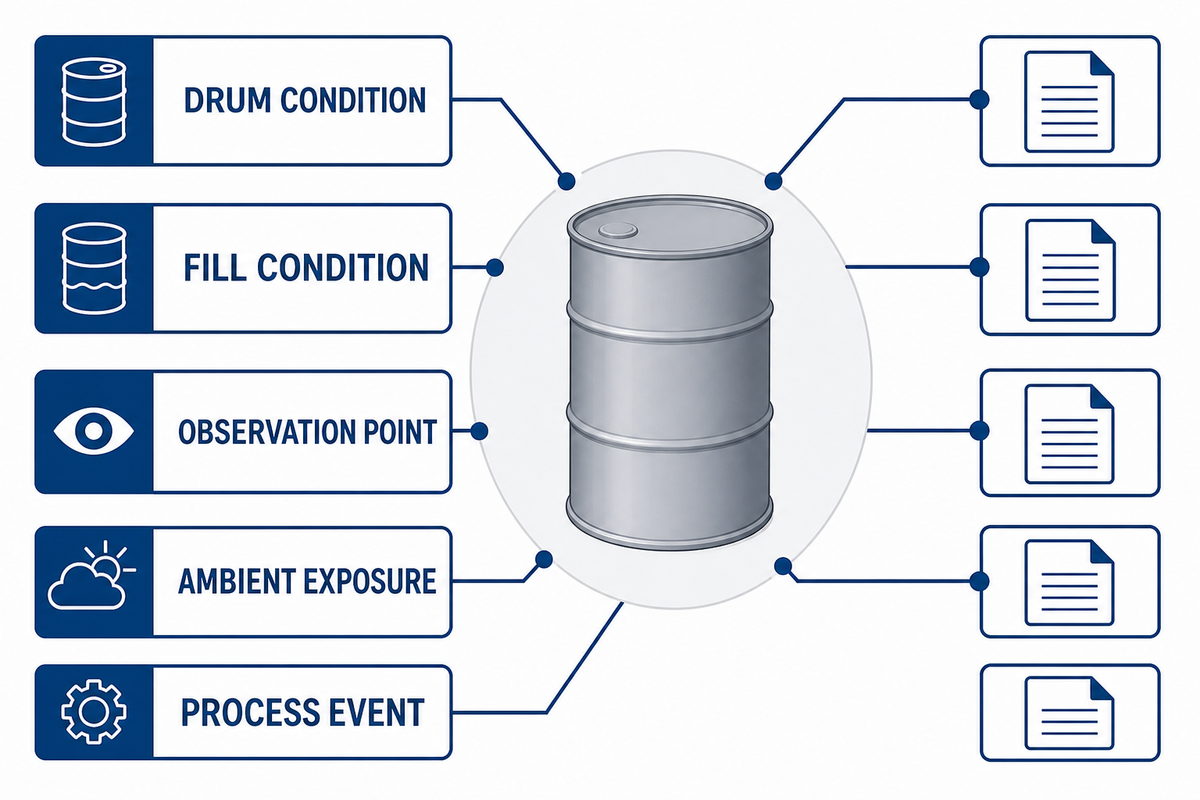
Drum geometry, fill condition, and surroundings change the inputs to heat-loss reasoning, so a responsible review records construction, exposed area, starting state, ambient exposure, and insulation context before anyone offers a heating-time expectation. ORNL’s wall heat-loss technical guide treats factors such as surface area, temperature difference, wind, geometry, and emissivity as inputs rather than constants. ORNL wall heat-loss guide
Nominal drum capacity alone isn’t a thermal brief. The conversation around a metal drum heater can change when the actual fill level, storage location, container construction, surface condition, wind exposure, or insulation arrangement changes. The right outcome isn’t a spreadsheet result in this article. It’s a clear record of the variables the responsible technical review must consider.
Record these physical facts before a time discussion
- Drum material, condition, closure condition, and nominal container format.
- Observed fill condition and whether it’s expected to change during the operating window.
- Current observation point and the time at which that observation was made.
- Ambient exposure, including indoor or outdoor context, wind, contact with a floor or rack, and insulation or enclosure context.
- The process event that would define a useful result, such as holding, transfer, or another documented condition.
The engineering reason for writing these down is straightforward: the boundary conditions are part of the problem. Reviewers may compare blanket-style heating, a drum heater band, or insulation later, but the comparison should begin with the same factual brief rather than a universal result borrowed from another container.
4. Choose the Right Evidence for Temperature Control
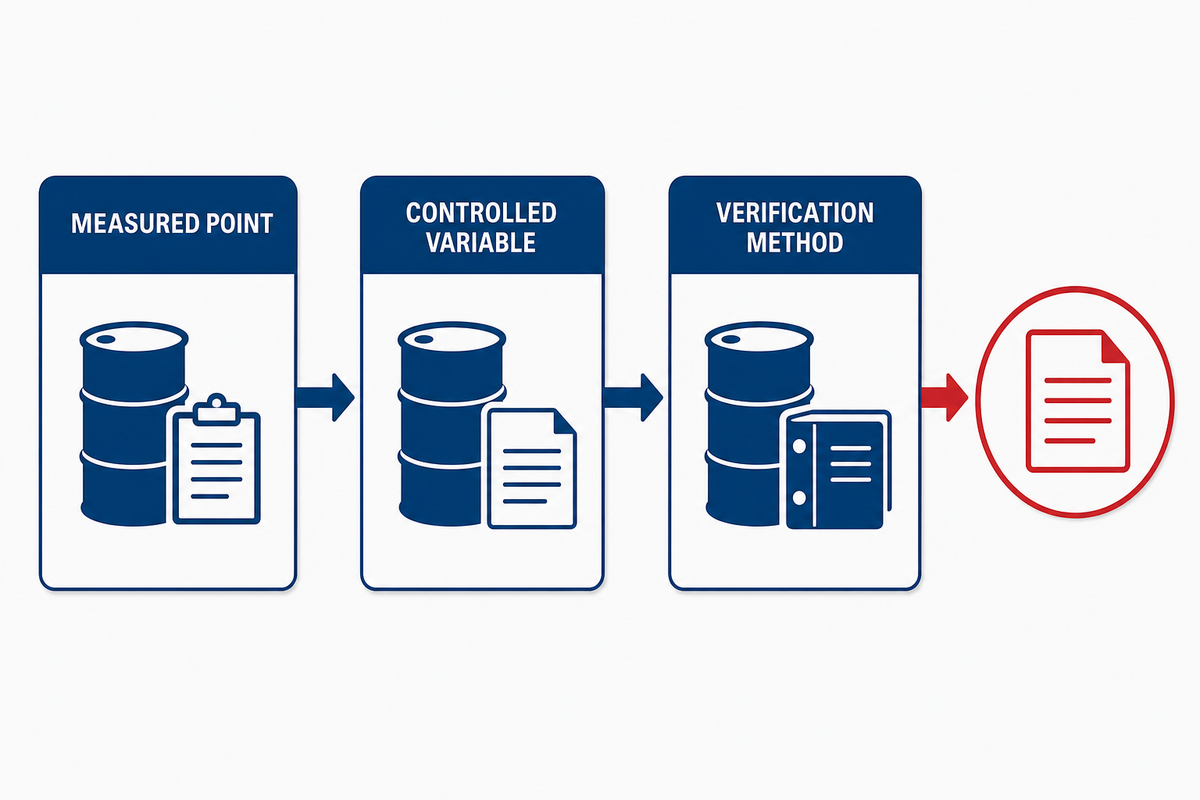
Temperature-control statements are reviewable only when the measured point, controlled variable, and verification method are named, because an unreadable setpoint cannot show what part of the material or process has actually been observed. DOE’s industrial process-heating resources place assessment and monitoring within a wider operating-system context, not outside it. DOE process-heating systems Those boundary-condition records from the previous section now become the basis for a control review.
In practice, the same word—temperature—may mean several things. It may describe a container surface, an accessible material point, an outlet condition, or a downstream process reading. Any of these can be useful if it is labelled. Trouble begins when a displayed temperature is treated as proof of a different location or condition without a documented measurement basis.
How should temperature control be verified?
Start by identifying what is being measured, where it is measured, what variable the control logic uses, and what acceptance method the responsible team will use. Then preserve the measurement time, the operating state, and the source record that defines the relevant condition. It is an evidence request, not a claim about a particular sensor, controller, or blanket configuration.
| Evidence field | Question to record | What remains unproven if absent |
|---|---|---|
| Measured point | Is the reading from a surface, material point, outlet, or another stated location? | That the reading represents the condition that matters to the process. |
| Controlled variable | What does the controller receive and act on? | That a displayed value is the material target. |
| Verification method | Who checks the condition, by what documented method, and at what operating state? | That the intended condition was reached or maintained. |
One disciplined sentence in a solution brief can avoid a great deal of confusion: “This reading describes this location, at this time, using this method.” It does not replace a site procedure, but it makes the remaining gap visible to everyone in the review.
5. When Full Coverage, Band Heating, or Insulation Belong in the Conversation

Full coverage, band heating, and insulation belong in the same conversation only after the team has defined the material, geometry, exposure, and evidence target, because heat-transfer reasoning depends on boundary conditions rather than on a universal equipment ranking. MIT’s treatment of combined conduction and convection through a cylindrical region illustrates the role of geometry, material properties, convection, and temperature difference. MIT thermodynamics notes That control-evidence boundary is what keeps the comparison tied to a stated observation rather than a category label.
For an industrial buyer or procurement team, the risk is a mismatch between a familiar label and the actual use case. A “55-gallon” description does not document the drum’s measured geometry, fill state, contact condition, exposure, or the material’s allowable limits. Those gaps can make a neat catalogue comparison look more certain than the source records allow.
Decision rule: compare heating approaches by the evidence question each one creates, not by a universal “best” label.
The useful comparison is therefore conditional. “Which one is best?” asks for a conclusion the reviewed sources don’t provide. “Which unanswered question would change the review?” keeps the discussion tied to its actual evidence. ORNL’s technical guide reinforces this posture by listing multiple heat-loss inputs rather than declaring one arrangement a winner. ORNL heat-loss inputs
| Conversation topic | Evidence question to resolve | Claim this guide will not make |
|---|---|---|
| Full coverage | What contact area and heat-loss conditions are documented for this drum and operating context? | That coverage alone guarantees uniformity or a result. |
| Band heating | Which material, drum, and measurement facts define the intended thermal path? | That a band approach is universally faster or preferable. |
| Insulation | Which exposure and heat-loss variables would the insulation context change? | That insulation itself reaches or maintains a target. |
The outcome should be a question-led review, not a catalogue disguised as an engineering conclusion. This preserves the existing solution page’s role in application-specific configuration while giving the reader a more useful way to prepare for that discussion.
6. Operating Boundaries: Environment, Container, and Electrical Review
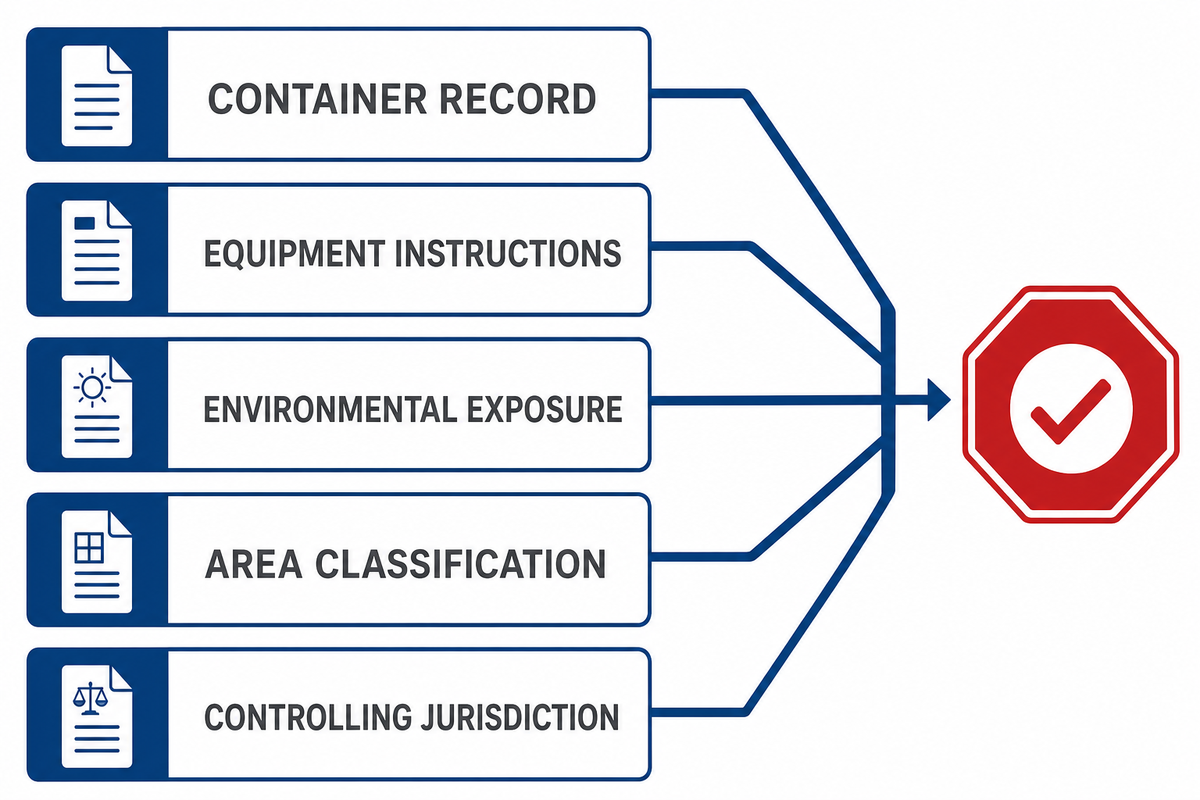
Environment, container, and electrical conditions require document-led verification rather than assumption, because the exact equipment instructions, listing or labeling context, installation conditions, and applicable site classification determine what must be reviewed. OSHA requires electrical equipment to be suitable for its use and used in accordance with its listing or labeling instructions. OSHA 29 CFR 1910.303 That conditional comparison now becomes an operating-boundary review.
For a poly drum, a silicone drum heater discussion, an outdoor location, or a wet process area, do not let the product term substitute for the source records. Ask for the relevant container information, exact equipment record, installation instructions, environmental exposure, and the responsible site reviewer. The guide intentionally does not convert product wording into a compatibility or installation finding.
Can container heaters be used for hazardous locations?
Hazardous-location use cannot be decided from a generic heater category, a marketplace label, or an enclosure term. In the United States, OSHA 1910.307 addresses equipment in hazardous classified locations; the applicable area classification, exact equipment record, installation context, and qualified site review remain necessary. OSHA 29 CFR 1910.307
An IP designation has a separate scope. IEC 60529 concerns degrees of protection provided by enclosures for electrical equipment. It can be a relevant record, but it is not a complete hazardous-location determination for a site, substance, or product. IEC 60529 IP Code
U.S. shipyard-employment stop box
Within the U.S. shipyard-employment standard, OSHA 1915.173(c) states that drums or containers containing toxic or flammable liquids or gases must not be stored or used where they are subject to open flame, hot metal, or other sources of artificial heat. This is a sector- and jurisdiction-specific boundary, not a universal industrial rule. Readers outside that exact context should follow the controlling local and sector requirements with the responsible qualified parties. OSHA 29 CFR 1915.173
Where explosive-atmosphere questions are present, jurisdiction also matters. HSE’s ATEX overview describes workplace and equipment frameworks for explosive atmospheres in its own regulatory context. It supports a stop-and-verify posture, not a cross-jurisdictional approval claim. HSE ATEX overview
7. The Drum Evidence Ownership Map
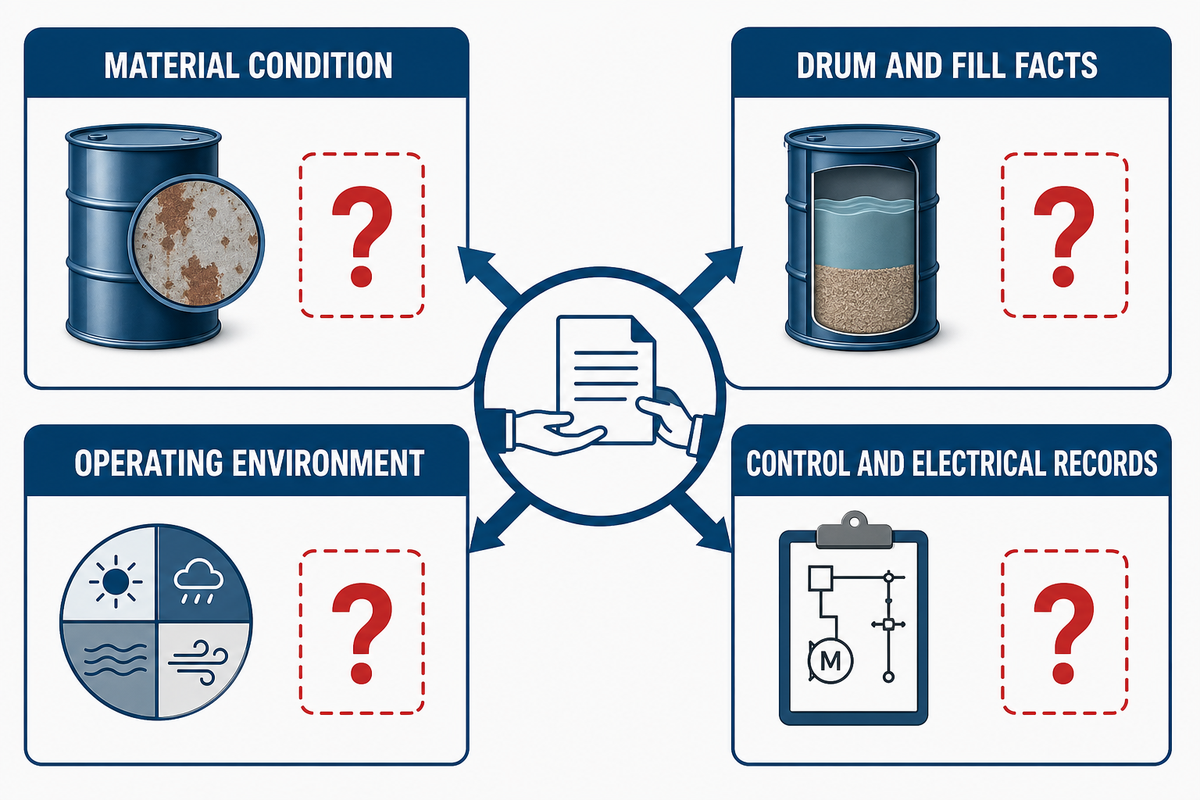
The Drum Evidence Ownership Map is FlexBlanket’s transparent preparation method: collect material condition, drum and fill facts, operating environment, and control/electrical records before asking for an application-specific solution review. If an input is unknown, mark it as unknown and pause the recommendation rather than replace it with an estimate. That stop-and-verify rule turns the preceding jurisdiction and equipment records into one preparation sequence.

The map deliberately stops short of selection. Its job is to make a solution conversation more specific without copying the existing solution page’s product specifications, model choices, quotation process, or configuration structure. The four groups keep different owners’ source records from being flattened into one vague request for a “drum blanket.”
RFQ checklist — copy these evidence fields into an application brief:
| Parameter category | Recommended range | Why it matters | How to verify |
|---|---|---|---|
| Material identity | Exact name and revision | Identifies the process subject | Provide the controlled material record |
| Material temperature information | Applicable source value and unit, or explicitly unknown | Keeps targets evidence-led | Attach the source record and its scope |
| Starting condition | Observed value and unit, or explicitly unknown | Prevents invented heating targets | State point, timestamp, and process owner |
| Drum construction | Actual material and condition | Defines container-review context | Provide current container records and inspection facts |
| Fill condition | Current status and expected change | Changes the heat-loss context | Record status with time and operating state |
| Environmental exposure | Indoor/outdoor, wind, water, insulation context | Sets operating boundaries | Provide site conditions and responsible reviewer |
| Area classification status | Applicable site record, or explicitly unknown | Prevents suitability inference | Attach current classification information |
| Control evidence | Measured point and controlled variable | Makes the control claim reviewable | Attach the verification method |
| Electrical evidence | Exact instructions and listing/labeling context | Supports an application review | Attach the applicable equipment record |
After the record is complete, a technical reviewer can distinguish confirmed facts from questions that still need resolution. These are the four evidence inputs before a solution review. That’s more valuable than a filled-in form that hides uncertainty, and it supports a cleaner handoff to the application-specific solution discussion.
8. Seasonal Planning: Gather Evidence Before the Cold-Season Deadline
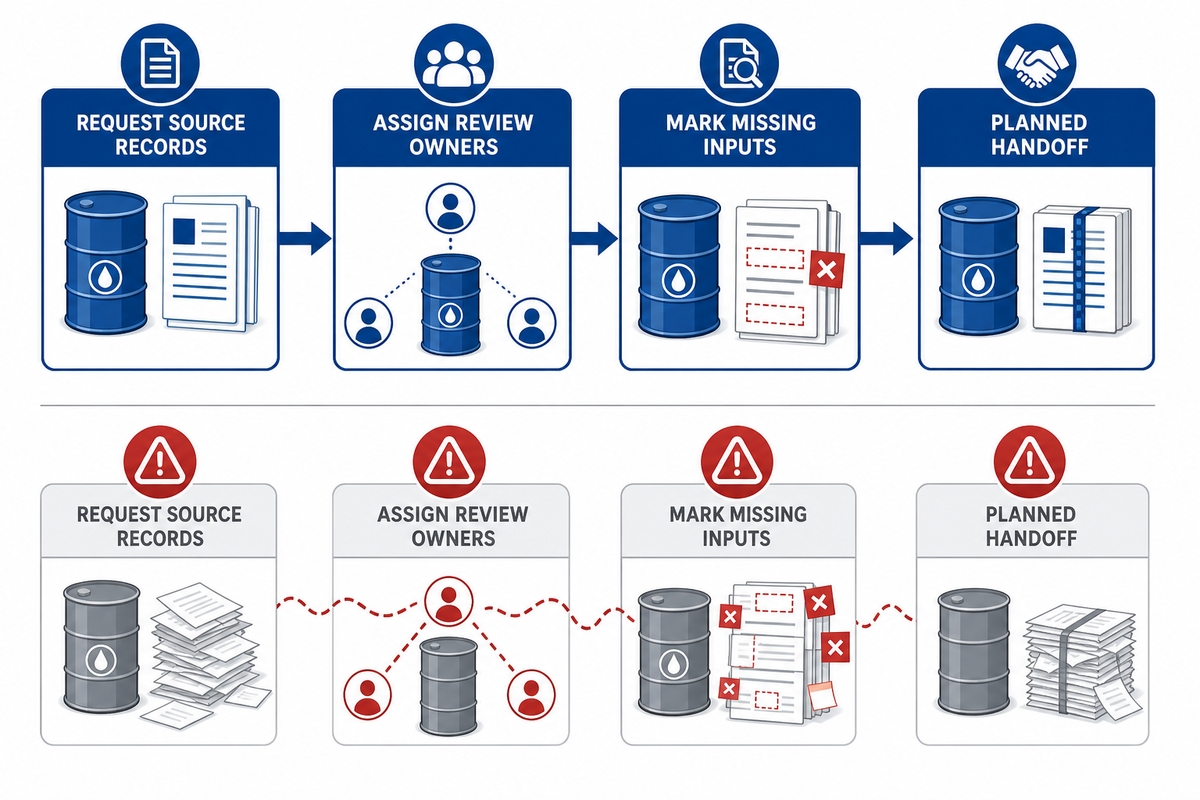
Seasonal planning for drum heating blankets should begin with evidence gathering before cold-weather urgency compresses the review, because the material document, drum facts, operating environment, and control basis take time to collect and reconcile. The planning value is in earlier preparation, not in a claim that a blanket will deliver a particular cold-weather result.
An industrial buyer may see a 55-gallon drum on a production or warehouse list and assume the application is already defined. That shortcut creates a documentation gap: the label says nothing about the current fill condition, exposed wind or water, measured point, or responsible electrical review. If procurement waits for the first cold-weather delay, those missing records can turn a planned review into rework.
Phase-A query observation for this guide showed interest patterns that can be used as a dated planning cue, but they are not a market forecast, operating metric, or measure of equipment effectiveness. The practical response is modest: ask the material owner for the necessary source records before a cold-season deadline, confirm who owns electrical and process review, and identify missing container or measurement information before the first urgent request.
That approach also reduces avoidable rework. An incomplete brief often returns to the requester with the same questions: what is in the drum, how full is it, where will it operate, and what does the temperature reading represent? FlexBlanket uses the Drum Evidence Ownership Map to turn those questions into a planned handoff instead of an emergency guess.
9. From Education to a Solution Brief
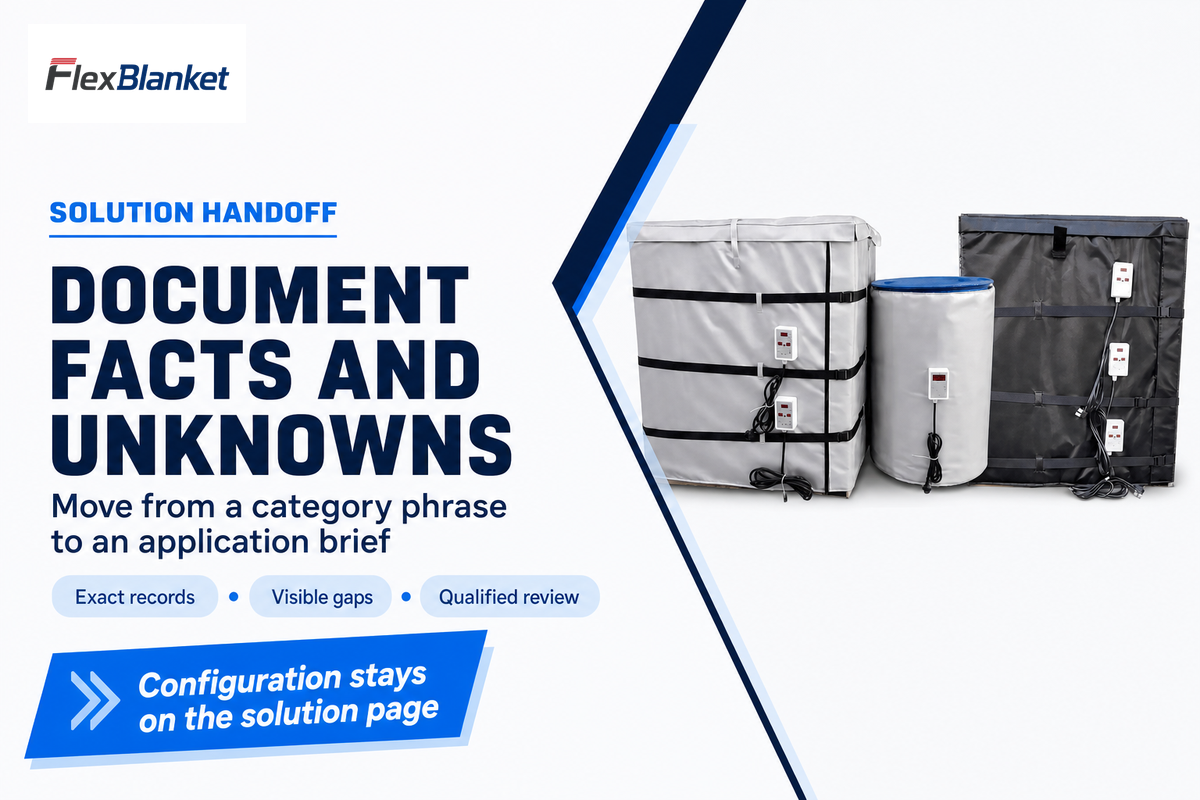
A solution review should begin only after the Drum Evidence Ownership Map shows what’s documented and what remains unresolved, so the discussion can move from a generic product phrase to the actual material, drum, environment, and evidence needs. This guide ends at that handoff; it doesn’t replace configuration, specifications, quotation preparation, or site approval.
The risk at handoff is a mismatch between a broad request and the records a qualified reviewer actually needs. For example, an industrial buyer may ask procurement for a “30-gallon” or “55-gallon” heater before anyone has confirmed container construction, current fill state, environmental exposure, or what the measured temperature represents. Because those facts can change the review, the responsible team should preserve the source documents and mark every unknown instead of guessing.
FlexBlanket’s role at this stage is to receive a specific evidence package, not to turn this educational article into an approval. The U.S. Department of Energy describes process heating as a system-level subject; that is a useful reminder that the heater name is only one part of the operating context. U.S. Department of Energy process-heating overview
When those inputs are ready, use them to review a drum-heating-blanket solution brief. Bring the exact documents and unknowns with you. A well-defined question is safer and more useful than a generic request for a barrel heater blanket.
FAQ
Can container heaters improve viscosity control?
Container heaters may be part of a viscosity-control process when the material document defines the target and the measurement basis shows where the result will be checked.
A material-specific review begins with the actual material identity, the source of any temperature–viscosity information, the current condition, the desired downstream condition, and the point where that condition will be checked. ASTM D341 has a defined petroleum-oil and liquid-hydrocarbon scope, so it cannot be used to generalize a result for every industrial material. Keep unsupported targets, flow claims, and heating times out of the brief.
Can container heaters prevent materials from freezing?
Freeze protection is an application objective that requires the material, actual exposure, measurement point, drum condition, and operating controls to be documented before a result is discussed.
A product category does not establish whether a particular material can be protected from a particular exposure. The review should identify the governing material document, the actual environmental conditions, the drum and fill facts, the control evidence, and the responsible site reviewers. If the record is incomplete, describe the gap rather than treating a cold-weather concern as proof of performance or suitability.
Can container heaters be used for hazardous locations?
Hazardous-location use requires the applicable area classification, exact equipment record, installation context, controlling jurisdiction, and review by the responsible qualified parties before any use decision is made.
A generic heater category, a marketplace description, or an IP term is not a hazardous-location determination. OSHA 1910.307 addresses equipment in hazardous classified locations, while IEC 60529 describes enclosure-protection degrees. Treat those as scope-bound inputs and obtain the controlling local, sector, and site-specific review before any conclusion about use. The current site classification record must govern the decision.
How should a drum heater be stored?
Storage and handling instructions should come from the exact product record and the responsible site procedure, with equipment condition and ownership recorded before reuse or return to service.
Generic storage wording should not replace the manufacturer’s instructions. Preserve the exact instructions, record the equipment condition before reuse, and keep site handling requirements with the application file. The review record should also identify the equipment by its exact model or identifying information, the condition observed before storage, the location and responsible owner, and whether any site procedure adds a condition of storage, movement, inspection, or return to service. Where any required instruction is unavailable, mark it unavailable and request the exact source rather than filling the gap with a general practice.
What types of container heaters are available?
Blanket-style wraps, band-style contact heating, insulation, and other approaches belong in a condition-based comparison for the stated operating context, not a universal ranking or product-selection conclusion.
The useful question is what evidence would change the application review for each approach. Geometry, exposed surface, ambient conditions, material records, and the measurement basis can all matter. This guide does not rank approaches or turn an overview into a product-selection conclusion.
What information should be ready for a solution review?
A solution review needs the material condition, drum and fill facts, operating environment, measured point, and exact control and electrical records, with unknowns clearly marked.
The Drum Evidence Ownership Map groups those records so the reviewer can see what is known and what is not. Include the material record, observed condition and point, container facts, environmental exposure, site classification status where relevant, and the exact control and equipment records. Mark unavailable fields as unknown.
Transparency note
FlexBlanket provides this educational preparation guide. It doesn’t provide a heat-up calculation, a material compatibility finding, an installation instruction, or a site safety approval. Those decisions require responsible qualified parties to review the exact material, equipment, and site records.
Related application page: drum heating blanket equipment-selection records.
References & Sources
- Process Heat Basics U.S. Department of Energy.
- Process Heating Systems U.S. Department of Energy.
- ASTM D341-20 ASTM International.
- Wall Heat Loss Calculator guide Oak Ridge National Laboratory.
- Combined Conduction and Convection Massachusetts Institute of Technology.
- 29 CFR 1910.303 Occupational Safety and Health Administration.
- 29 CFR 1910.307 Occupational Safety and Health Administration.
- 29 CFR 1915.173 Occupational Safety and Health Administration.
- IEC 60529: Degrees of protection provided by enclosures International Electrotechnical Commission.
- ATEX and explosive atmospheres UK Health and Safety Executive.
- Reaction and product testing guidance UK Health and Safety Executive.